Border crossing brief and operating conditions
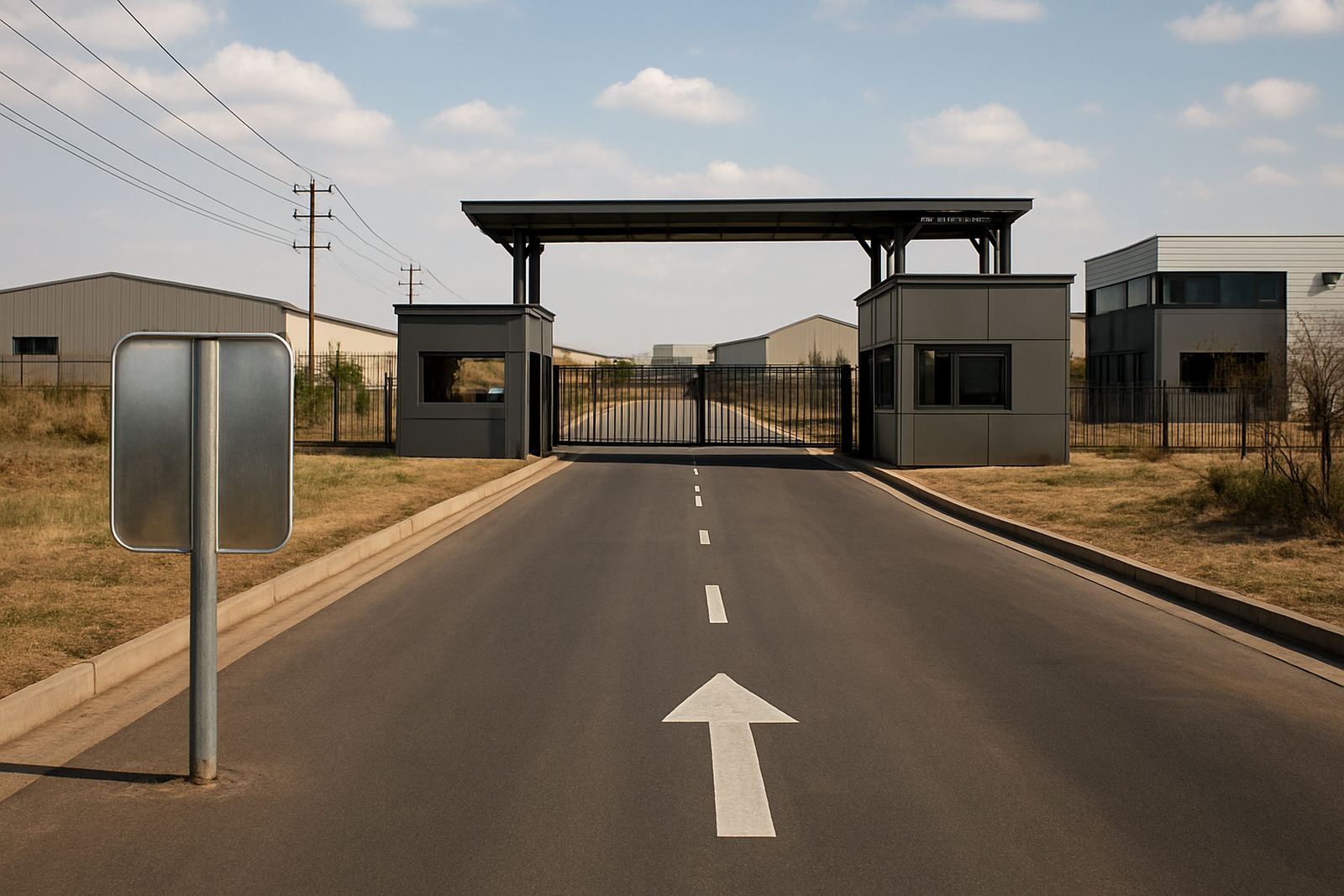
The client was a public infrastructure operator in Lusaka needing a clearer wayfinding system for a controlled border crossing used by freight, public service vehicles and pedestrian traffic. The brief was practical: reduce bottlenecks, make lane choices obvious earlier, and give travellers the right information before they reached the decision points. There was also a strong compliance requirement, because any sign placed in the wrong position can interfere with security, customs checks or vehicle stacking. We worked from the understanding that if a driver has to stop and think at the last moment, the whole system slows down.
The site had several constraints. Traffic volumes changed during the day, and the crossing had periods of heavy queuing followed by sudden movement. There was dust from road traffic, strong sun exposure and the usual wear that comes with an outdoor border facility. Security teams needed signs that could be read quickly from a distance, while border personnel needed information boards that were easy to maintain and update. The team also wanted the layout to work for trucks, minibuses and pedestrians without mixing the messages.
What we mapped, measured and confirmed on site
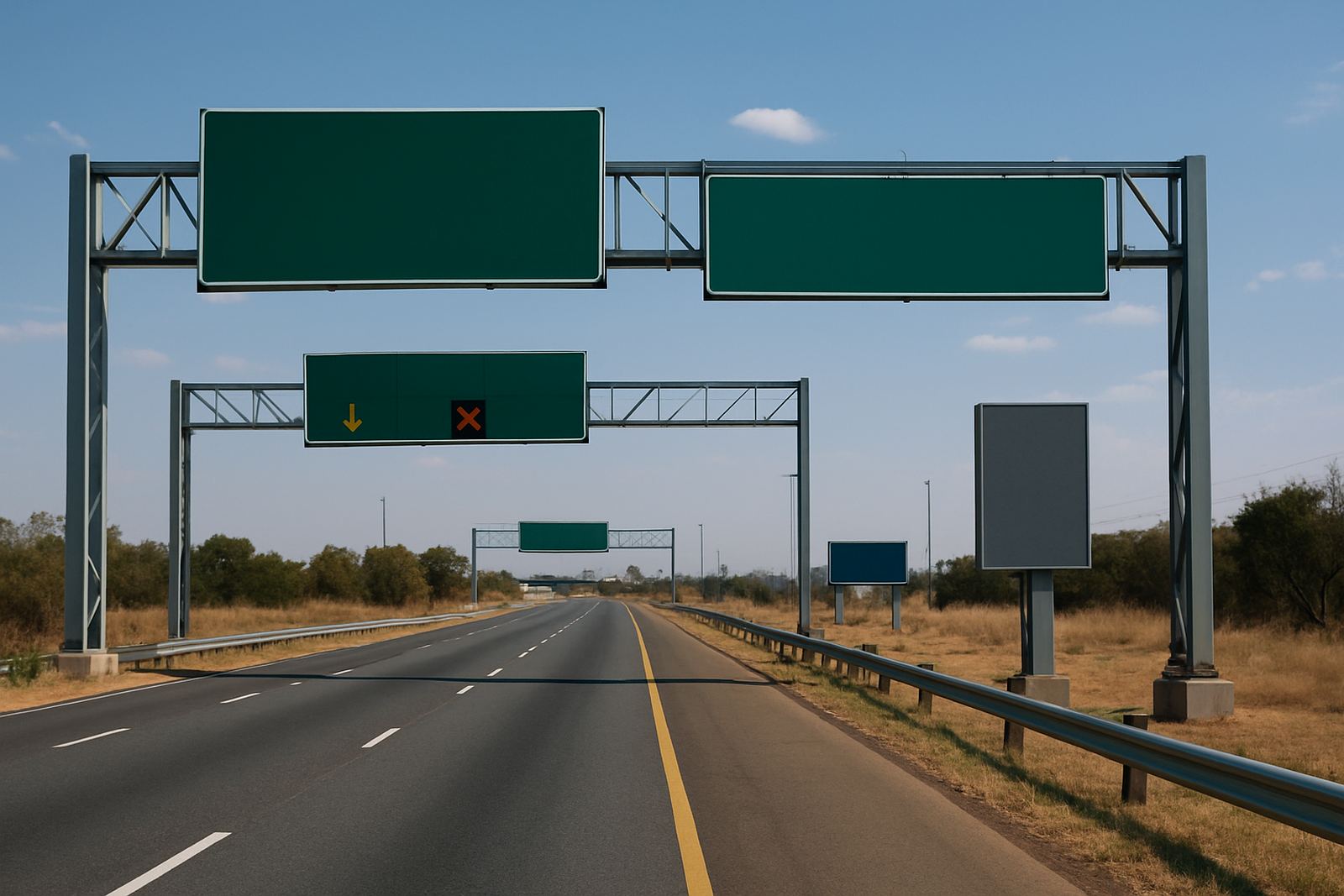
Our first task was a site survey and circulation review. We measured approach distances, checked sight lines and recorded the points where drivers start choosing lanes. We also looked at where people naturally paused, because those are the places where public information signs have to work hardest. From there we developed a sign schedule and location plan that matched the movement pattern rather than forcing a generic layout onto the crossing. It was a careful job, and a bit fiddly in places, because several signs needed to be read at speed from mixed vehicle heights.
The specification phase covered message hierarchy, panel sizes, mounting heights and reflective performance. For the traffic signs we proposed aluminium composite and galvanised steel support members where required, with high-intensity reflective sheeting for night visibility. For public information panels we used printed vinyl over rigid substrates with anti-graffiti protective film in the higher-touch areas. Directional panels were kept simple and bilingual where needed, with strong contrast, standard symbols and enough spacing to remain readable in dusty conditions. We also planned for maintenance access so the client would not need to dismantle half a lane just to replace one panel.
- Approach and merge signs sized for long-range reading at vehicle speed
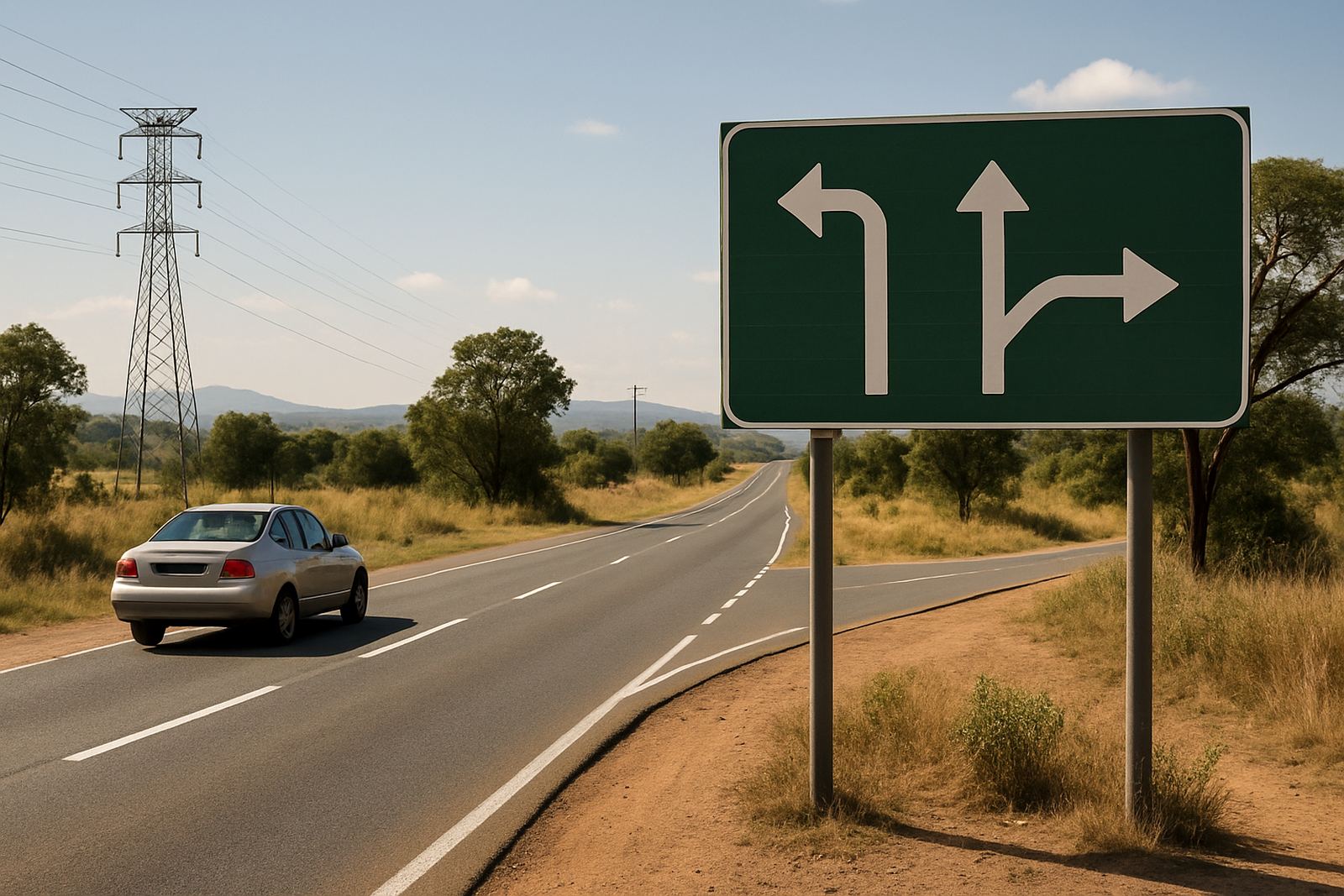
- Lane assignment boards placed before the final decision point
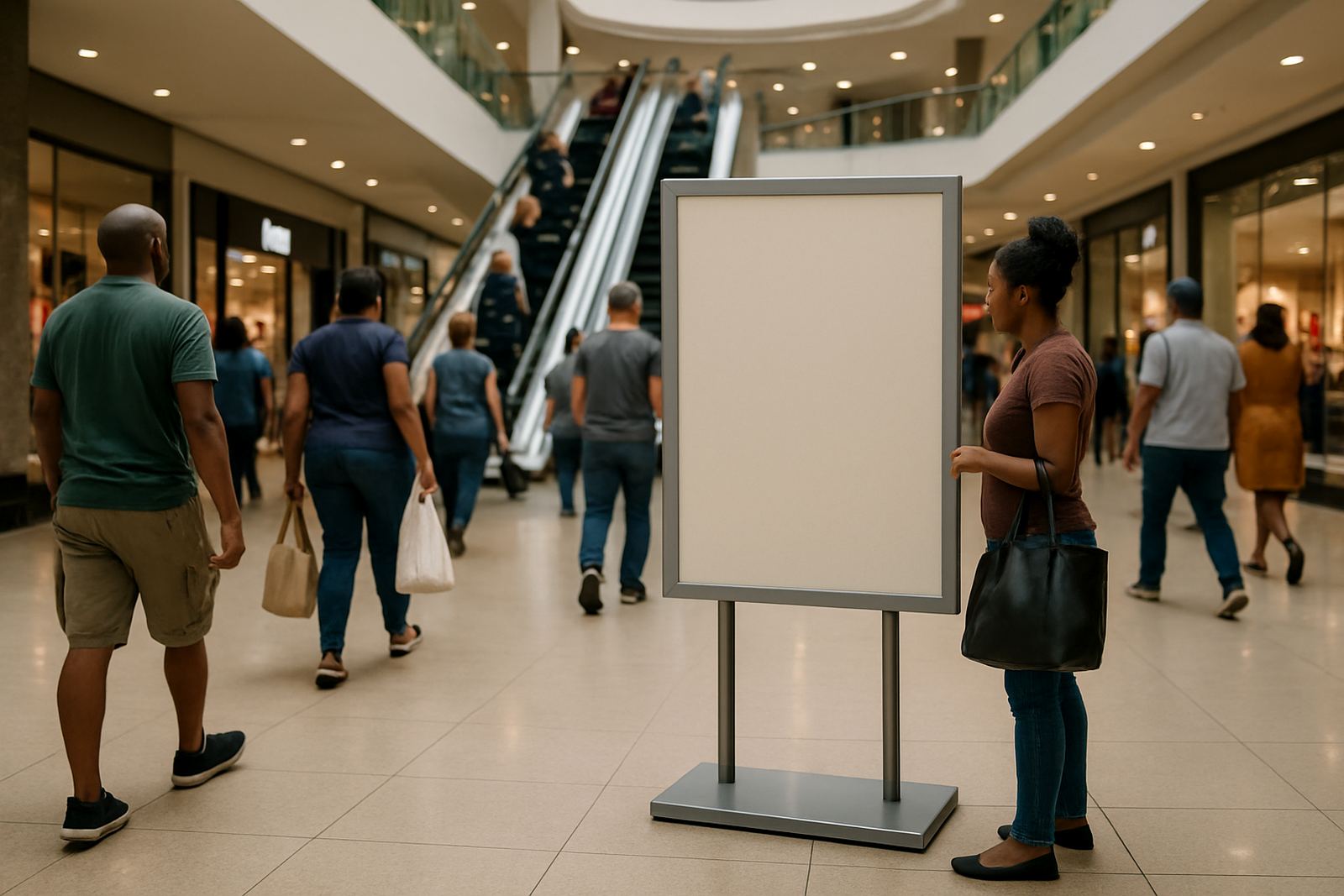
- Public information panels at pedestrian and inspection holding areas
- Reflective faces for after-dark visibility and low-light conditions
- Modular mounting details for easier replacement and maintenance
Materials and fabrication built for border use
Because the crossing sits in an exposed outdoor environment, material choice mattered as much as graphic layout. We specified corrosion-resistant metals, UV-stable print systems and fixings suitable for repeated wind loading and vibration from heavy vehicles. Where a sign needed to be seen over traffic and security barriers, we used fabricated frames with clean edges and solid anchoring points. For smaller notices and controlled information boards, we used rigid panels that could be changed without rebuilding the full structure.
The fabrication package included traffic direction signs, public notice panels, overhead support elements, freestanding wayfinding boards and a set of supporting labels for operational areas. We coordinated the manufacture of the sign faces, structural supports and fastening details together so the final installation would fit first time. That sounds straightforward, but on border sites one small mismatch can hold up an entire bay. We checked every critical dimension before dispatch and kept spare fixings on hand for the site team.
- Aluminium sign faces with anti-corrosion treatment
- Galvanised steel posts and structural brackets for exposed areas
- High-intensity reflective finish for night-time visibility
- UV-stable print layers and protective overlaminate
- Field-replaceable panels for faster maintenance response
Installation and coordination across a live crossing
Installation had to be staged around active operations, so we planned the works in sections to avoid blocking the crossing. The schedule ran over six weeks from survey to handover, with fabrication overlapping the approval and preparation stage. That allowed us to shorten the on-site install window and reduce interference with traffic movements. We coordinated access with site management, worked around peak crossing periods and kept the rigging sequence tight so each sign could go up in the right order.
For the larger boards and support frames, the rigging plan included safe lift points, temporary traffic control and final alignment checks. We also briefed the installation team on visibility angles, because a sign can be perfectly level and still be wrong if it sits too far back or too high. The final read-through was done from the driver approach, pedestrian path and inspection zone. That last check caught a couple of small adjustments, which saved later call-backs.
- Week 1: survey, traffic flow review and sign location plan
- Week 2: design development and approval support
- Weeks 3 to 4: fabrication and print production
- Week 5: staging, packing and site mobilisation
- Week 6: installation, alignment and handover
Results at the crossing
The finished system improved clarity at the point where drivers and pedestrians make their most important decisions. Lane choice became easier to understand earlier, and public information was positioned where people actually had time to read it. The client wanted less hesitation, fewer wrong turns and cleaner queue behaviour, and the outcome supported that. Border staff also reported that the new layout made instructions easier to repeat because the signs now matched the working sequence on the ground.
Another useful result was durability. The materials and fixings were selected for a demanding environment, so the signs hold up to dust, sun and regular cleaning better than lighter duty products. That matters in a controlled crossing, because worn-out graphics create uncertainty and uncertainty creates delays. The system is now set up for practical maintenance rather than full replacement every time one panel ages.
What we would repeat on the next border project
If we were doing a similar border wayfinding package again, we would keep the same approach: survey first, message hierarchy second, fabrication and rigging after the operational sequence is agreed. The biggest lesson is that border signage must be designed around movement, not just around aesthetics. If the flow changes at different hours, the signs must still make sense to a first-time visitor at night or in bad weather. That means fewer mixed messages, stronger placement discipline and a sign schedule that is easy to maintain over time.
We would also keep working closely with operations teams from the start, because they know where confusion begins. In our experience the best controlled-crossing signage is the kind people barely notice, because it does its job quietly. That is the point. Clear directions, fewer stops and no unnecessary second guessing.
Deep3 project support for wayfinding and public information
Deep3 Signage Consultants handles signage strategy, site surveys, wayfinding planning, material specification, structural coordination, approval support, fabrication management, installation management and project handover for public and commercial sites. For border crossings, logistics facilities, municipal projects and large developments, we build systems that can be specified properly and installed without confusion. From Modderfontein, Johannesburg, we work across Gauteng and elsewhere in Africa where a site needs signs that can take real use.
If your project has traffic movement, security controls or public information requirements, we can shape the sign package around the way the site actually works. That includes printed vinyl, routered Perspex, aluminium, brass, fabricated 3D lettering, pylons, road signs, billboards and LED video screens when required. The key is always the same: clear information, correct placement and a plan that the site team can live with after handover.
Key facts
| Project | Lusaka Border Wayfinding |
|---|---|
| Client type | Public infrastructure operator at a controlled crossing |
| Location | Lusaka, Zambia |
| Timeline | 6 weeks from survey to handover |
| Primary scope | Traffic management and public information signage |
| Core materials | Aluminium, galvanised steel, reflective faces and UV-stable print systems |