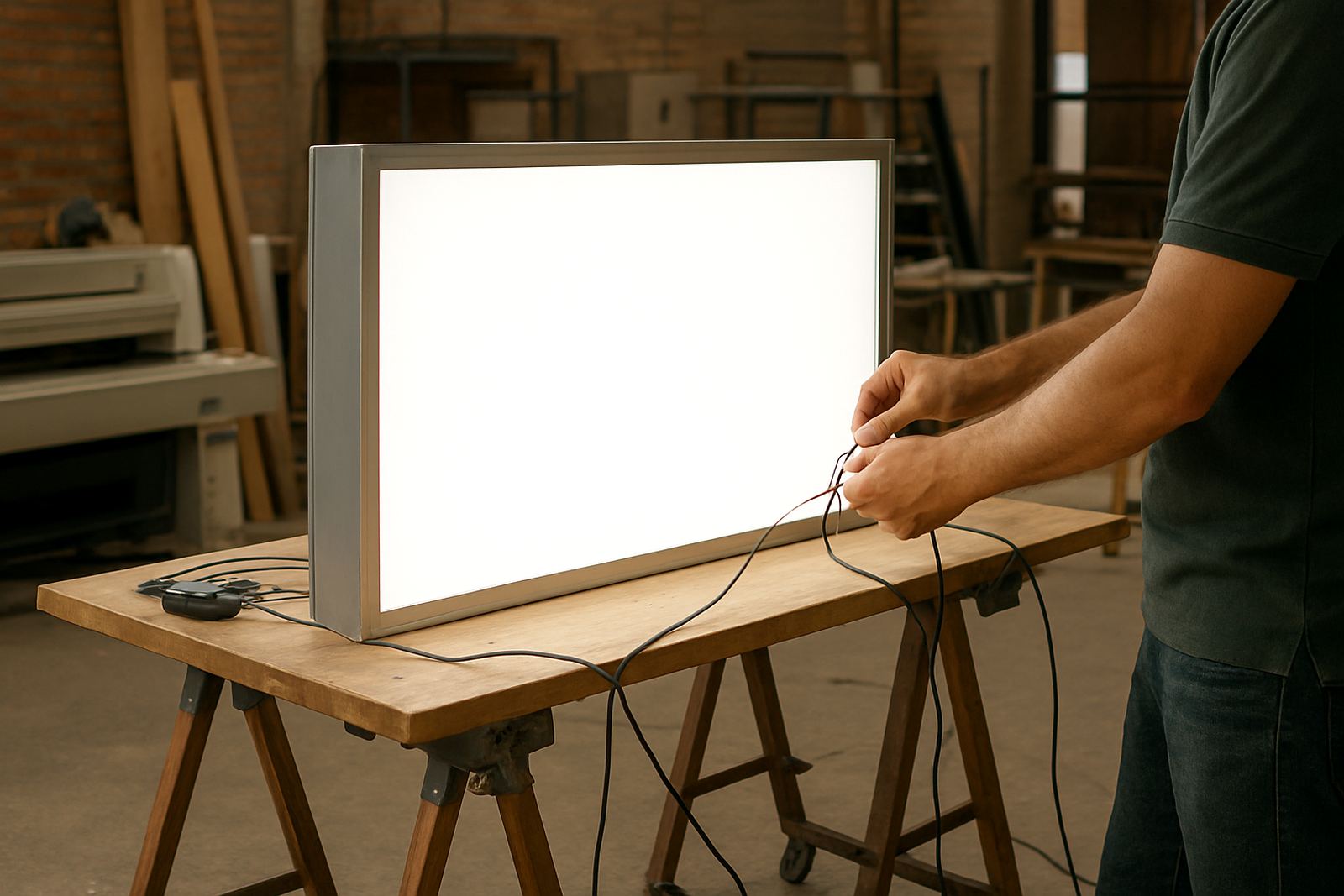
Illuminated faces that keep working after dark
Light box signs are enclosed illuminated signs with a translucent face and internal LED lighting. They are used where a business needs a message to stay visible after sunset, during load-shedding, and in wet or dusty conditions. The cabinet can be wall mounted, suspended from a canopy, fixed to a steel frame, or built as a double sided unit for roadside viewing from both directions.
For retail frontages, service stations, motor dealers and quick-stop sites, a light box gives clean visibility without the clutter of exposed fittings. The face can carry logos, directional messages, tenant names or promotional panels, and the cabinet can be finished in powder coated aluminium, galvanised steel or a mixed metal build depending on the site and budget.
Sizes, shapes and face options for different sites
There is no single standard size because each frontage has different sightlines, mounting heights and local rules. Small wall mounted boxes often start at about 600 x 400 mm, while larger forecourt and roadside units may run to 3 m wide or more. Depth is usually 100 to 200 mm for most cabinet builds, though deeper boxes may be needed where large LED modules or extra stiffening is specified.
Face options include flat acrylic, routed translucent panels, printed vinyl over translucent sheeting, or a combination of solid and clear sections. You can also choose single sided or double sided construction, internal white reflectors, and hinged access panels for maintenance. For sites close to the coast, we normally look at corrosion resistant fixings and proper sealing because salt air will work its way into weak joints quick enough.
- Common formats: wall mounted, projecting, hanging, freestanding and double sided roadside units
- Common depths: 100 mm, 150 mm and 200 mm, depending on size and lighting layout
- Common face finishes: printed vinyl, translucent acrylic, routered Perspex, or mixed graphic panels
Where light boxes suit best in Gauteng and beyond
These signs suit sites that need a clear visual point of contact from a moving car or from across a forecourt. They are often used on retail centres in Sandton and Midrand, industrial access roads in Germiston, forecourts in Pretoria and Centurion, and highway-facing sites where the message must be legible at speed. In Durban and other coastal areas, we allow for higher humidity and more aggressive environmental wear on fixings and electrical parts.
Light boxes are also useful for municipalities and property developers that need standardised tenant identification, directional wayfinding or entrance markers. Where the sign is part of a larger scheme, we can coordinate it with pylon signs, wall signs, road signs and directional boards so the site reads clearly from the street through to the parking area.
- Retail frontages and shopping centres
- Forecourts, fuel canopies and convenience stops
- Commercial parks, estates and municipal entrances
- Roadside branding where daytime and night-time visibility both matter
Installation, power and site coordination
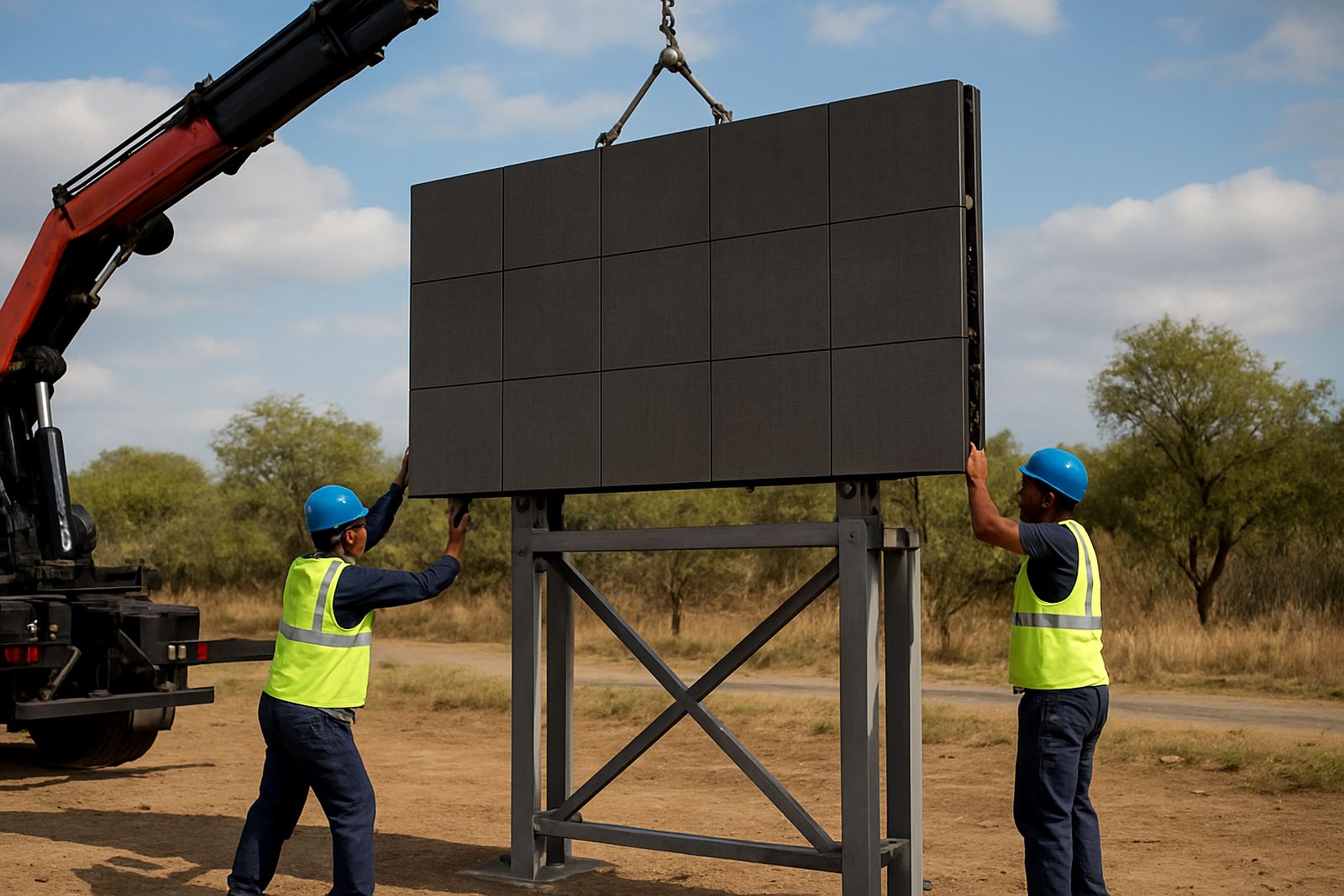
Installation starts with a proper site survey, because the fixing method and power route need to suit the wall, canopy or steel frame on site. We check substrate condition, mounting heights, wind loading, access for rigging and whether the sign needs to be installed over live trading hours or after closing. If scaffolding, cherry pickers or traffic control are required, that is planned before fabrication is signed off.
Most modern light boxes use low energy LED modules running on 12 V or 24 V systems through a suitable driver or transformer. We coordinate the electrical inputs with the site electrician or building team, and where a backup supply is available we can specify integration for essential branding during outages. If the site has gas-lit features nearby, or old signage infrastructure, these are isolated and checked so there is no conflict with the new install. Cable entry, drainage, and access for future servicing must all be allowed for before the box is closed up.
What to check before you order
A good order starts with the right information. If the brief is incomplete, the sign can be the wrong size, too bright, or difficult to service later on. We normally ask for the exact wording, logo artwork, preferred finish, fixing position, and whether the sign must be visible from one approach or both. It also helps to know if there are landlord rules, municipal approvals, or estate guidelines that limit height, brightness or projection.
- Confirm the final sign size in millimetres, not just an estimate
- State single sided or double sided viewing
- Check the mounting surface, height and access method
- Confirm power source, cable route and weather exposure
- Ask for the preferred colour finish and face material
- Allow for maintenance access, especially on higher installs
If the sign is for a busy roadside site, ask for the reading distance and vehicle speed around the frontage. That helps with letter height, contrast and brightness. A sign that looks fine on a drawing may not read well at 60 km/h, so those details matter more than people think.
Care, servicing and long term performance
Light boxes are low maintenance if they are built properly, but they still need routine checks. Dust, insects and moisture can build up inside the cabinet, and loose fixings or failed seals can shorten the life of the illumination system. We recommend periodic cleaning of the face, inspection of all fixings, and a quick test of the power supply and lighting output, especially before winter or peak trading periods.
For coastal and high-pollution sites, it is wise to inspect seals and brackets more often. If a face panel fades, the print can be replaced without rebuilding the whole cabinet in many cases. If a lamp or module fails, access should be simple enough that repairs do not mean major downtime. That is one reason we plan the service side of the sign from the start, not after the box is already on the wall.
Key facts
| Product type | Illuminated light box sign for wall, canopy, hanging or freestanding use |
|---|---|
| Typical sizes | From about 600 x 400 mm up to 3000 mm wide or more, custom made to site |
| Depth | Usually 100 mm to 200 mm, subject to lighting and structural requirements |
| Lighting | Low energy LED internal illumination with suitable driver or transformer |
| Materials | Powder coated aluminium, galvanised steel, acrylic, translucent face panels and sealed fixings |
| Applications | Retail frontages, forecourts, roadside branding, entrances and wayfinding |