
From concept boards to buildable sign families
Our design development service takes the approved look and turns it into a practical package for fabrication and site work. We refine each sign family so the dimensions, letter heights, sightlines and finish choices all line up with the actual building, boundary wall or roadside position. That means less guesswork in the workshop and fewer surprises when the crew gets to site.
For projects in Modderfontein, Sandton, Midrand, Pretoria or further afield, we look at the same basics every time: where the sign will be seen from, how long it needs to hold legibility, and what it must survive. Coastal humidity, high UV, dust, vibration and municipal exposure all affect the final detail, so the design stage is where those issues get resolved properly.
- Hero signs, directional signs and regulatory signs developed as one coordinated family
- Artwork adjusted for viewing distance, lighting and mounting height
- Materials matched to the budget, site conditions and expected service life
- Fixing points, access panels and service clearances included in the drawings
What is included in the design development pack
The output is a working pack that can be used by fabricators, engineers and site teams. We prepare scaled layouts, face details, fixing notes and material callouts, then align the design with structural coordination where needed. If a sign is illuminated, we also factor in drivers, cable routes, access for maintenance and the effect of power interruptions on the installation schedule.
We do not leave the small details until later. A 3 metre pylon, for example, needs more than a nice rendering. It needs panel thicknesses, internal steel allowances, wind loading assumptions, base details and realistic access for future repairs. On a roadside sign, that can also include reflector performance, setback requirements and the relationship to municipal or developer standards.
- Scaled elevations, sections and key dimensions
- Material schedule with recommended thicknesses and finishes
- Fixing details for walls, steel frames, poles and bases
- Illumination notes for LED faces, light boxes and screens
- Maintenance access notes for future cleaning and servicing
How the process runs on a live project
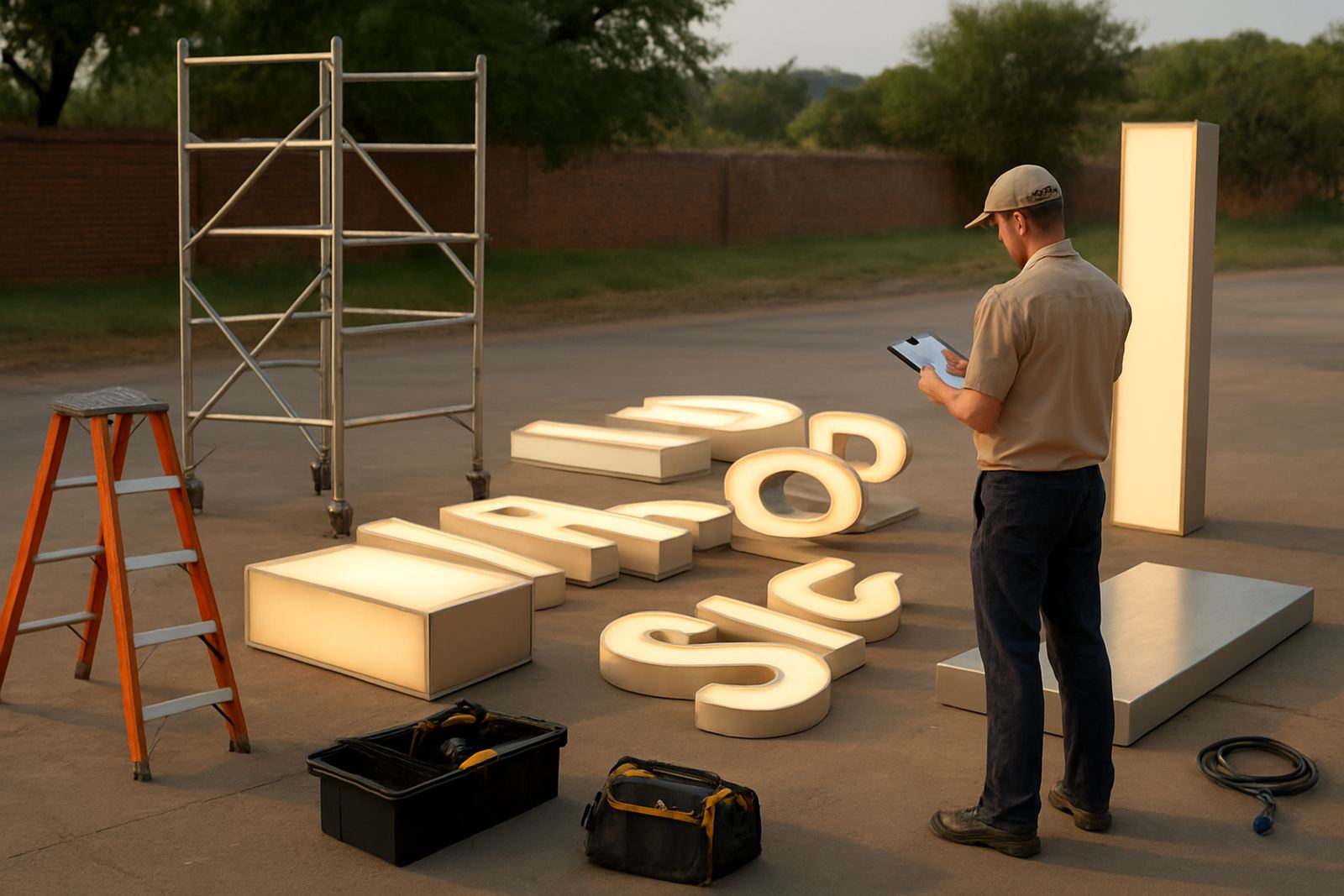
We usually start with the approved brief, site information and any existing brand standards. After that, our design and visualisation lead develops the sign set and our project engineer checks whether the proposed construction can be built safely and sensibly. If a location needs a site survey, we confirm available widths, heights, wall conditions, services nearby and any access limits before locking the drawings.
Once the first pass is complete, we review the artwork, fixings and material choices with the client. This is where we tighten up things like letter depth, contrast, backer panel sizes and the spacing between modules. If the site is in a windy corridor or on a busy municipal route, we allow for stronger frames and more secure mounting. Small changes here save time later, and they keep the install crew out of trouble.
- Brief review and site information check
- Draft design set with dimensions and material options
- Internal technical review and revision cycle
- Client sign-off before fabrication management starts
Legibility, structure and fixing detail matter
Good signage is not only about appearance. It has to be readable at the right distance, and it has to stay put. We set out letter heights, stroke widths and contrast ratios so the message remains clear in daylight, under LED lighting and at speed where vehicles pass by. For wayfinding, that means the signs need to work as a sequence, not as isolated objects.
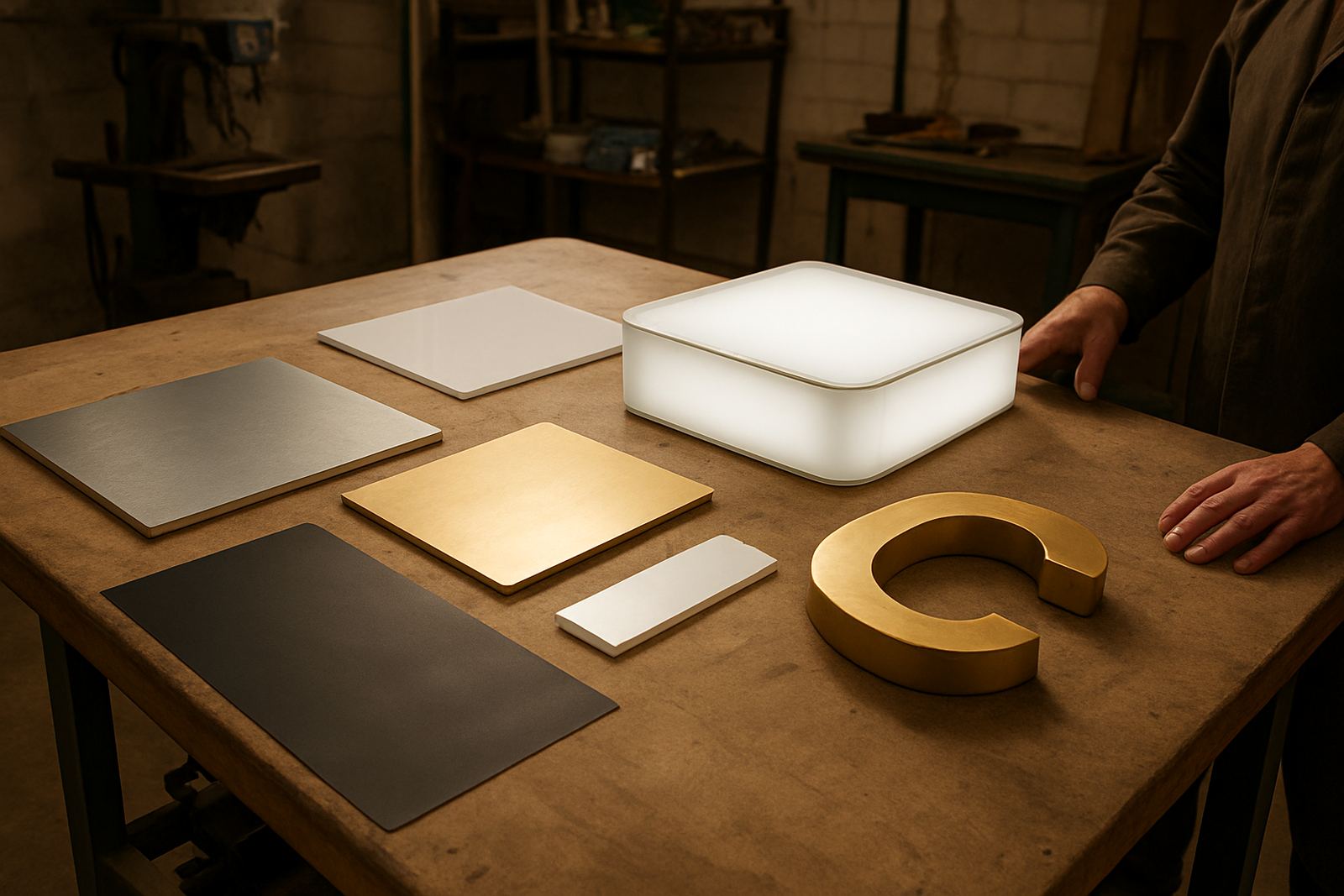
We also resolve the fixing method early. Face-fixed panels, concealed brackets, stand-offs, welded frames, base plates and anchor bolt layouts all affect cost and durability. In Johannesburg's weather, with hot days and sudden rain, materials move a little and fixings loosen over time if they are not detailed properly. That is why we specify the right aluminium, steel, Perspex or brass treatment for the job, and we allow for expansion where needed. A neat drawing is useful, but a buildable detail is what keeps the sign sound.
Turnaround times and pricing approach
Turnaround depends on the number of sign types, the level of technical detail and whether structural or approval inputs are required. A straightforward internal signage set may be turned around quickly, while a multi-site rollout with pylons, road signs and LED screens takes longer because each type has different engineering and service requirements. We will always give a realistic schedule rather than overpromising.
Pricing is based on scope, not guesswork. We allow for concept refinement, technical detailing, revision rounds and coordination with fabrication or installation teams. For larger developments, municipalities or regional rollouts, we can structure the work in phases so the most urgent signs are resolved first. That keeps the programme moving and helps clients manage budget without cutting corners.
- Simple sign family: usually quicker, depending on approval turnaround
- Multi-site or mixed-media project: phased timing with scheduled reviews
- Specialist items such as LED screens or structural pylons: longer lead time
- Clear scope notes provided before work starts, so there are no hidden extras
Maintenance planning from the design stage
We include maintenance thinking in the design stage because that is where access and replacement decisions are easiest to make. A light box with front access, for example, is simpler to service than one that needs full dismantling. On external signs, we consider wash-down access, corrosion resistance, replaceable modules and how often the site will need inspection.
As a practical guide, we normally recommend a first check after installation, then regular inspections every 6 to 12 months depending on exposure. Coastal sites, high-dust areas and roadside installations may need more frequent attention. For LED screens, service intervals are usually tighter because cable checks, cooling, brightness balancing and control gear need monitoring. A bit of planned care keeps the site tidy and reduces emergency callouts.
- First post-installation inspection after the sign settles in
- Routine visual checks every 6 to 12 months
- Shorter intervals for coastal, roadside or high-traffic sites
- Maintenance notes provided with the handover pack
Who handles the work
Our design development work is led from Modderfontein, Johannesburg, with support from our operations, engineering, fabrication and rigging team. That means the drawings are not made in isolation. They are checked by people who understand how signs are built, lifted and serviced on real sites across Gauteng and the rest of Africa.
For developers, brands and municipalities, that local input matters. We know what happens when a sign is designed without thinking about delivery trucks, tower access, wall conditions or the day-to-day realities of maintenance. By the time the design package is signed off, the sign should already feel like a proper working item, not just a concept on paper.
Key facts
| Typical sign families | Wall signs, pylons, road signs, light boxes, fabricated 3D lettering and LED screens |
|---|---|
| Common materials | Aluminium, brass, Perspex, steel, printed vinyl and composite panel systems |
| Detail level | Scaled elevations, sections, fixing notes, material schedule and maintenance guidance |
| Lead time | Depends on scope, revision count and technical input required |
| Maintenance interval | Initial check after installation, then every 6 to 12 months |
| Service area | Modderfontein, Johannesburg, Gauteng and projects anywhere in Africa |