
What LED screen integration covers
LED screen integration is more than choosing a bright panel and bolting it to a wall. It starts with the site conditions, the viewing distance, how the screen will be used, and what the structure can carry over time. We look at the full package, from pixel pitch and cabinet size to power supply, ventilation, service access and the way content will sit on the screen. If the screen is for a shopping centre, a developer entrance, a municipal site or a roadside pylon, the requirements are different, so the specification must match the job.
Our role is to help clients avoid the common problems that lead to glare, dead pixels, poor sightlines, overheating or access issues later on. We coordinate the screen with the sign structure and with the broader signage plan, so the result is practical for operators and safe for site teams. In coastal areas we also consider corrosion protection and sealing, while in Gauteng we look at dust, heat and load shedding impacts on the installation.
- Screen sizing and layout for the viewing distance
- Pixel pitch guidance for text, graphics and video
- Power load and backup planning
- Front or rear service access requirements
- Structural coordination with the steelwork or support frame
How we specify the screen for the site
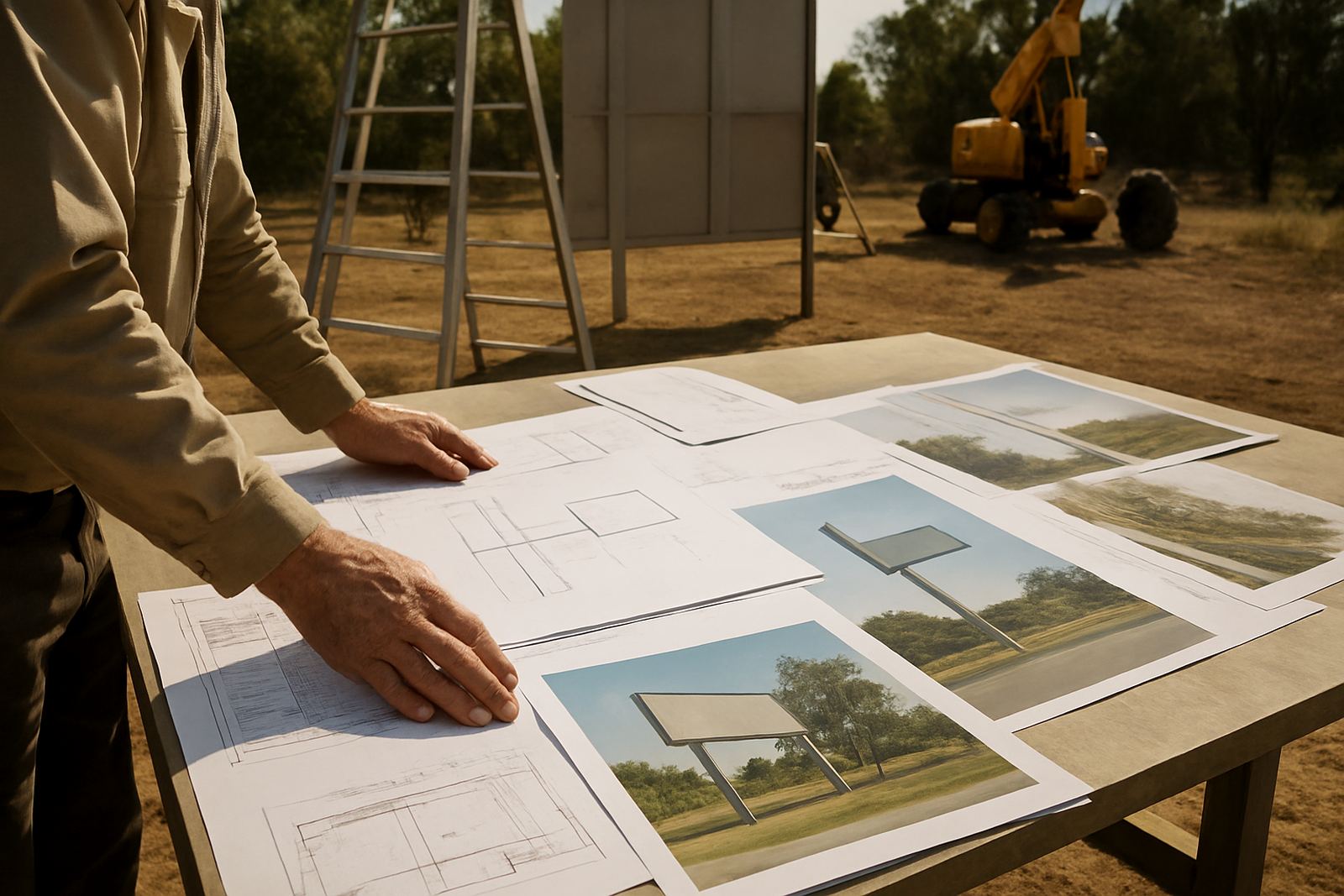
Every screen starts with a site survey or benchtop review of the available information, then we confirm the mounting position, exposure and operating conditions. A screen facing a road in Randburg is not the same as one under a canopy in Midrand, and a rooftop display in Centurion needs different wind and fixing considerations than a feature wall in Sandton. We check the surrounding structures, the viewing angles and any local restrictions that may affect visibility or approvals.
Specification includes the physical cabinet size, pixel pitch, brightness range, IP rating, service method and the likely maintenance route. For outdoor screens we usually consider a higher brightness level and weather protection suited to local dust or coastal humidity. For indoor or semi sheltered screens, the emphasis may shift to colour accuracy, content zones and finer pitch for close viewing. We also advise on where to place static brand panels, ticker bands or messaging zones so the content does not feel cramped.
- Pixel pitch matched to viewing distance and message type
- Brightness and contrast suited to ambient light
- Ingress protection for dust and rain exposure
- Access panels or rear walkways for servicing
- Display zoning for motion, text and branding
Structure, power and content planning
The screen must sit on a structure that is built for the load, wind action and long term use. We work with structural and electrical teams so the frame, anchors and supports are coordinated before fabrication starts. If the screen is mounted to a pylon, canopy, façade or a freestanding frame, we consider service weight, vibration and cable routes as part of the spec. That avoids last minute changes on site and keeps the installation process cleaner.
Power planning is equally important, especially where supply stability is a concern. We assess the expected load, surge protection, cabling routes and where backup power or controlled shutdown may be needed during load shedding. Content zones are planned at the same time, because the screen has to make sense for the message. Some sites need a full motion display, while others need a split layout with live information, branding and notices all working together. We help define what belongs on the screen and what should remain on a fixed sign panel, so the whole installation is easier to operate.
Our process from survey to handover
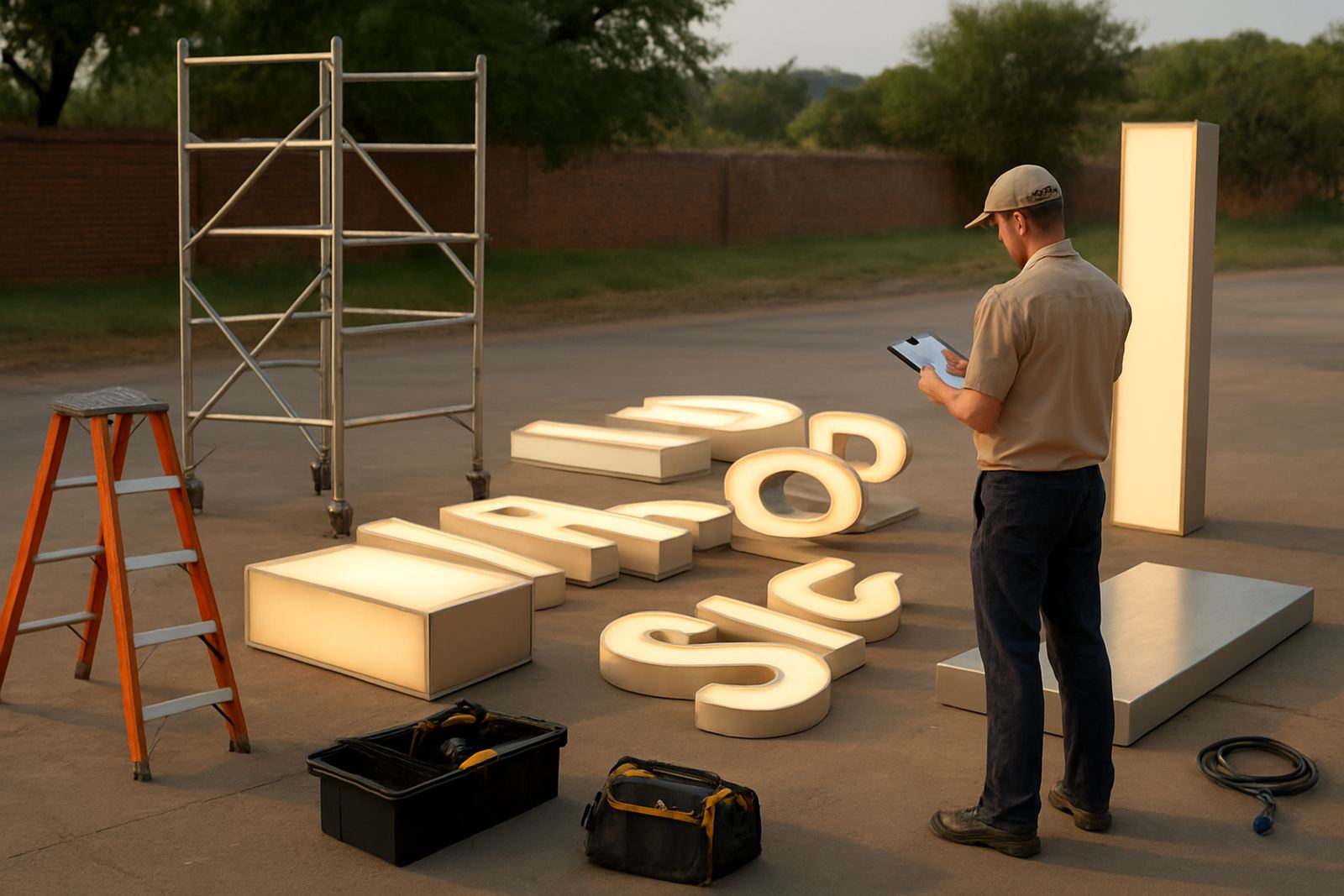
We keep the process simple and ordered. First we assess the site and confirm the brief. Then we develop the screen specification, coordinate the support structure, and flag any access or approval issues. Once the technical route is agreed, we manage fabrication, installation planning and the final handover so the client knows how the screen should be run and maintained.
Turnaround depends on screen size, structural complexity and the approvals required, but we always set a realistic programme up front. A smaller integration package can move faster, while large roadside or municipal screens need more time for technical coordination and sign-off. We keep clients updated through each stage, which helps when other trades are working on the same site.
- Briefing and site assessment
- Specification and technical coordination
- Structural and electrical alignment
- Fabrication and installation planning
- Commissioning, training and handover
Maintenance planning that protects uptime
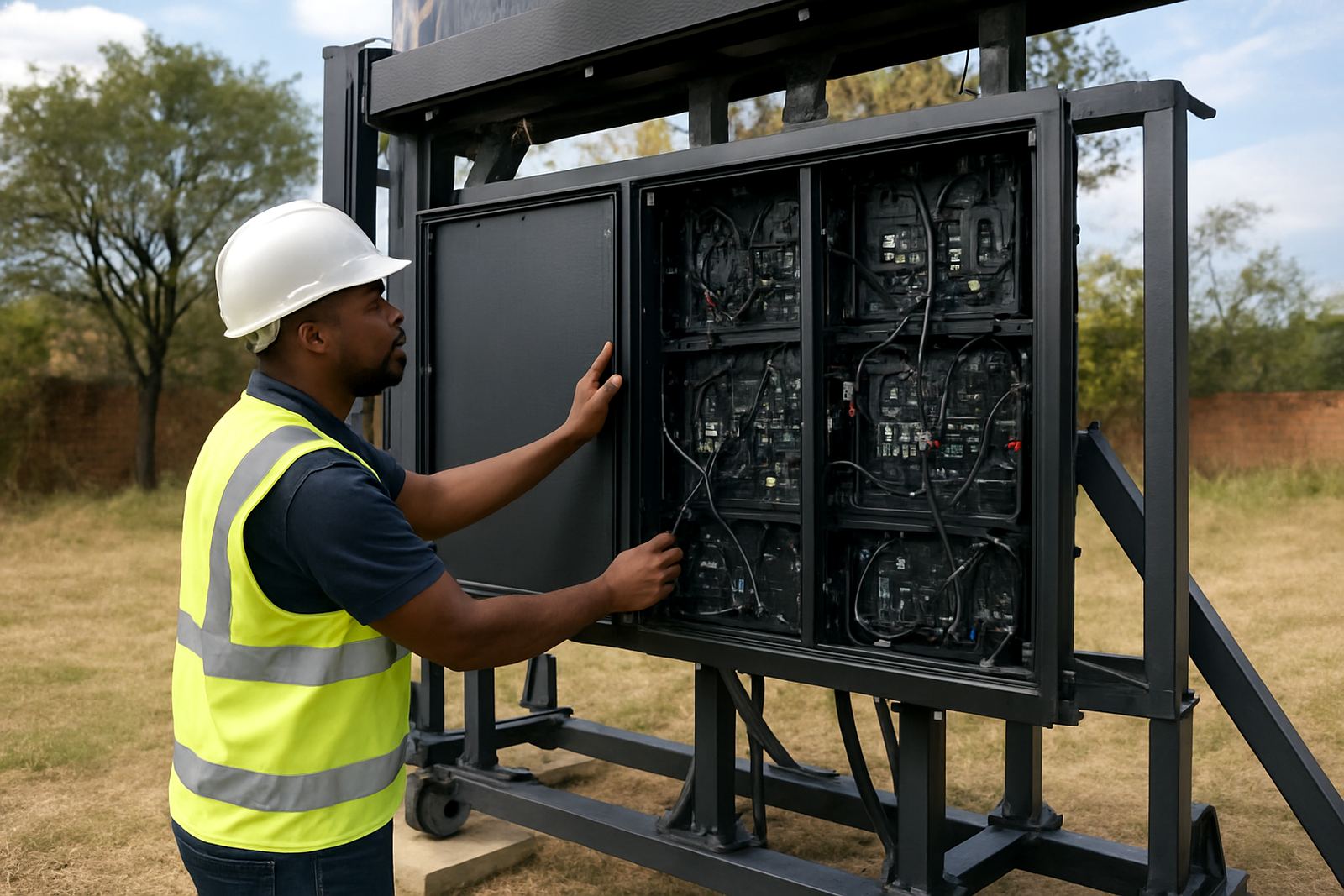
LED screens need regular checks if they are going to perform properly. We build maintenance planning into the project from the start, rather than treating it as an afterthought. That includes access points, safe servicing methods, cleaning intervals and a realistic plan for replacing modules or power components. Screens in dusty Gauteng conditions may need more frequent cleaning, while coastal sites in Durban can need closer attention to sealing and corrosion.
We usually recommend a visual inspection every month or two for busy sites, with deeper checks at longer intervals depending on use and exposure. This covers cabinet alignment, fixings, ventilation, cabling and visible pixel issues. If the screen is part of a public-facing development or municipal site, the maintenance plan should also note who has access, how faults are reported and what can be done without shutting the display down for long periods. A little regular care saves a lot of trouble later, and keeps the screen usefull for longer.
Pricing approach for LED screen integration
Our pricing is based on the scope of the integration work, not a generic rate. A compact screen with simple wall mounting and short cable runs will cost less than a large freestanding installation with structural steel, power upgrades and service access. We price by the actual site conditions, the technical risk and the amount of coordination needed across trades. That makes the numbers more accurate and easier to defend when a developer, brand or municipality needs approvals.
We can quote for consulting only, or for a fuller package that includes specification, coordination and installation management. Where the project is spread across several sites, we can also phase the work and budget accordingly. The aim is to give a clear, practical cost picture before fabrication starts, so there are no surprises when the structure or electrical works get underway.
- Consulting only or full project coordination
- Scope-based pricing for each site
- Allowances for structure, power and access
- Phased budgeting for multi-site programmes
Key facts
| Consulting scope | Pixel pitch, structure, power, content zones and maintenance access |
|---|---|
| Typical screen types | Outdoor billboards, façade screens, pylons and precinct displays |
| Viewing considerations | Distance, angle, ambient light and traffic speed |
| Environmental planning | Dust, rain, coastal humidity, wind and heat |
| Maintenance planning | Monthly visual checks, periodic deep inspections, fault response plan |
| Project coverage | Johannesburg, Gauteng and sites across Africa |