What Structural Coordination Covers
Structural coordination is the link between the sign concept and the real world. We assess how a sign will stand, hang or be fixed, then coordinate the support detail needed for safe installation. That includes the sign frame, base plates, posts, brackets, anchor bolts, gussets, footings and any interface with existing building steel or concrete.
For roadside signs, pylons, roof signs, gantries and LED video screens, the fixing strategy matters as much as the face of the sign. Wind load, height, ground conditions, access for rigging and maintenance all influence the final detail. In coastal areas such as Durban, corrosion protection becomes a bigger part of the specification. In high-wind or open sites around Pretoria and Gauteng, the footing and steel sections must be checked carefully, not guessed.
- Sign support concept and fixing detail review
- Footing, base plate and anchor coordination
- Steelwork and bracket interface checks
- Corrosion protection for inland and coastal sites
- Access and maintenance clearance planning
How We Coordinate the Support Detail
We start by looking at the sign type, size, position and site conditions. A 1.2 metre shop fascia sign has a very different support requirement from a 12 metre pylon or a large LED screen above a busy access road. Our team then works with the relevant fabricator, engineer, contractor or landlord requirements so the support detail suits the installation method and the site constraints.
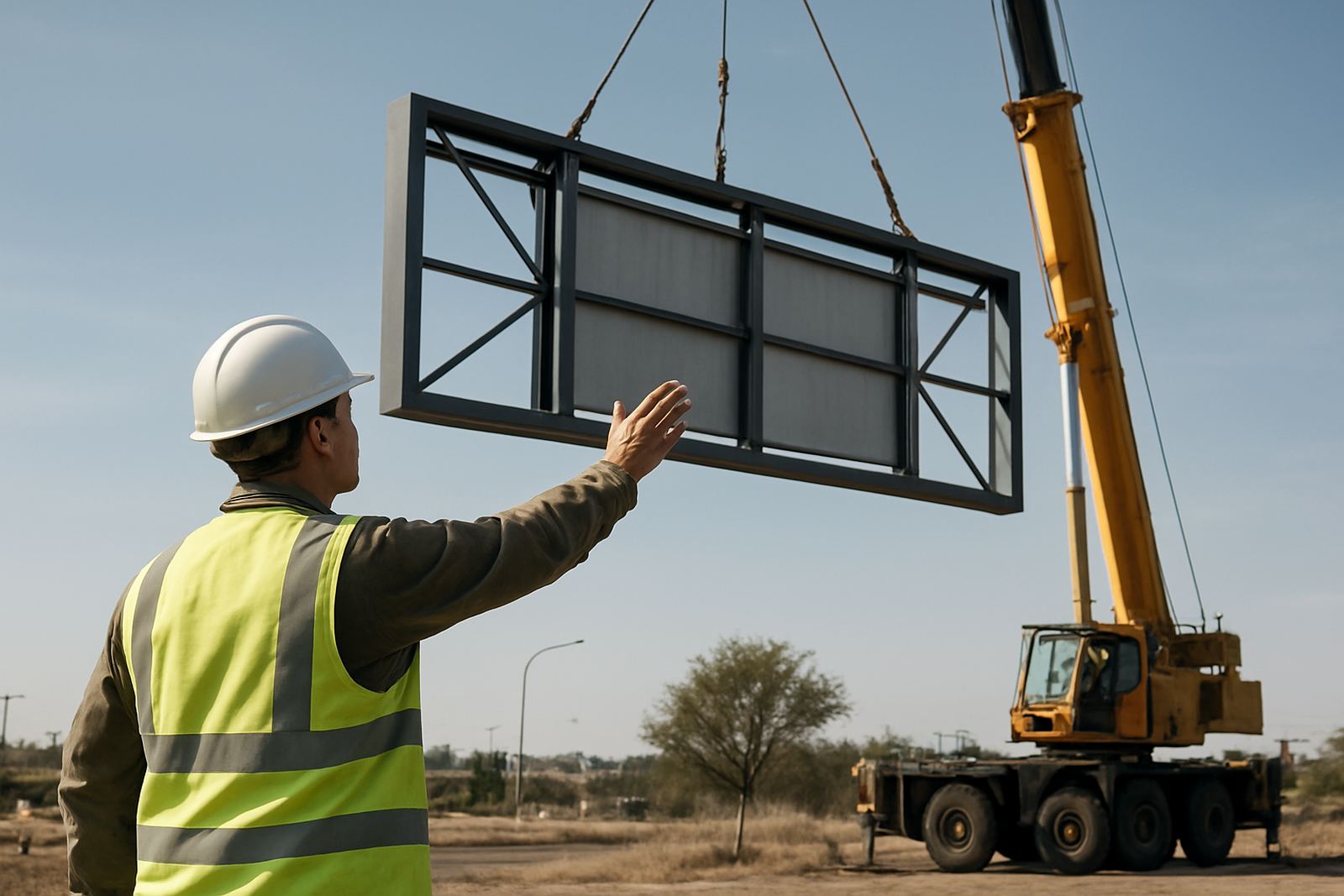
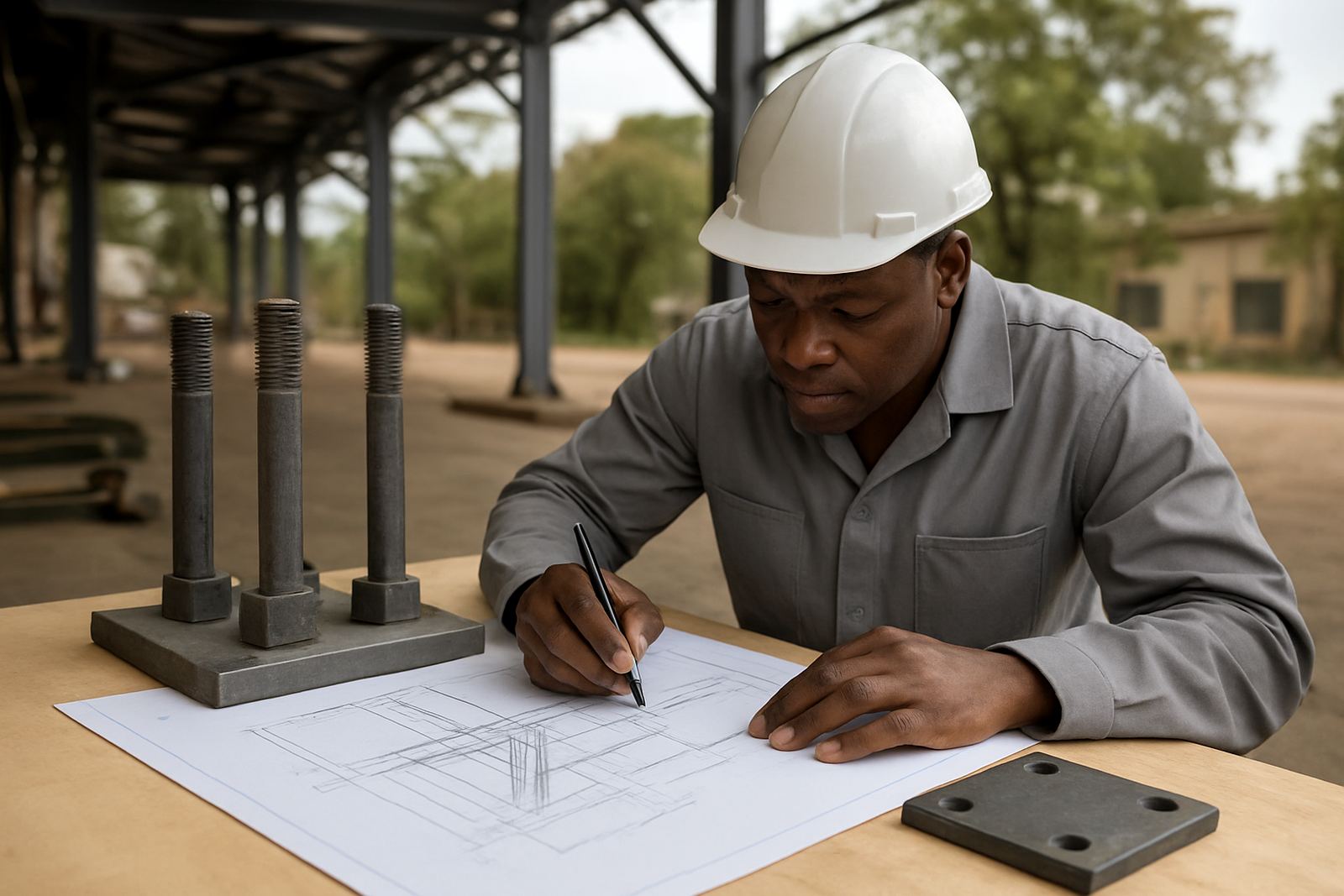
Where needed, we coordinate drawings and specifications for steel members, fixing centres, connection plates and footing dimensions. We also check that the proposed support system can accommodate expansion, vibration, service access and replacement of panels or electronic components. If the site is in a busy public area, we consider anti-vandal fixing, safe lifting points and realistic installation sequencing. No one wants a sign that looks fine on paper but is difficult to rig or maintain later.
- Load assumptions based on size, height and location
- Fixing methods matched to masonry, steel, concrete or hybrid structures
- Service access for bulbs, drivers, wiring, panels or screen modules
- Clearance for vehicles, pedestrians and emergency access
Site Surveys, Measurements and Approval Inputs
Good structural coordination begins on site. We carry out measurements, check existing building conditions and note anything that affects the final support detail. That can include slab thickness, parapet condition, wall construction, roof access, buried services, overhead lines, drainage falls and any visible cracking or corrosion. If the ground is soft, sloped or recently backfilled, that gets flagged early so the footing design does not become an afterthought.
We also prepare the practical information needed for approval support. This may include dimensions, fixing positions, elevations, site photographs and a summary of the support arrangement. For municipalities and commercial property owners, this helps reduce back-and-forth and keeps the process moving. In many cases the right detail saves time on site because the contractor knows exactly what is required before drilling begins.
Typical Specs We Coordinate
Every project is different, but the structural side often revolves around a few common items. For illuminated signs and billboards, we often specify galvanised steel framing, base plates, holding-down bolts and concrete footings sized to suit the imposed load and exposure. For building-mounted signs, stainless or galvanised fixings, packers and chemical anchors may be used where appropriate. For LED screens, we coordinate support frames that allow for ventilation, cable management and safe access panels.
- Hot dip galvanised steelwork for outdoor exposure
- Stainless or coated fixings in coastal and high-moisture areas
- Concrete footing coordination for freestanding signs and pylons
- Anchor bolt layout, centre lines and edge distance checks
- Bracket and cradle detail for LED screens, light boxes and projecting signs
- Allowance for wind movement, expansion and maintenance access
We keep the specification practical. A support detail must survive weather, time and day-to-day use. If a sign is close to the coast, exposed to heat, or installed where load-shedding affects access and lifting schedules, those realities should be built into the support plan from the start.
Our Process From Concept to Handover
We work in clear steps so the structural side stays organised. First we review the sign brief and the site conditions. Next we coordinate the support concept and confirm what needs to be measured, calculated or issued for fabrication. After that, we track the support detail through fabrication, installation and final handover. If changes are needed because of hidden services, unexpected steelwork or a site condition that was not visible initially, we deal with it quickly and keep everyone informed.
- Brief review and site condition check
- Support concept and fixing method coordination
- Fabrication detail review and issue control
- Installation sequence planning and rigging checks
- Handover notes for future maintenance and inspections
This approach suits developers, municipalities and brands that need signwork to perform over time, not only on installation day. It also reduces rework and helps avoid delays caused by missing dimensions or unclear fixing requirements.
Turnaround, Pricing and Maintenance Intervals
Turnaround depends on the complexity of the sign and the amount of site information already available. A straightforward fascia sign support review may be turned around in a few working days. Larger roadside structures, billboards or LED screen installations usually need more time because the support detail must be checked against access, footing conditions and installation method. If a project is urgent, we can phase the work so early information is issued first while the remaining detail is finalised.
Our pricing is based on scope, site access, number of sign positions, level of coordination required and whether additional documentation is needed for approvals or contractor issue. Simple projects are priced very differently from multi-site programmes across Gauteng or regional work beyond Johannesburg. We quote clearly so you know what is included and what is not.
For maintenance, we usually recommend a visual inspection every 6 to 12 months for smaller exterior signs, and every 3 to 6 months for high-exposure or high-load items such as pylons, billboards and LED screens. Coastal sites may need tighter inspection intervals because salt air accelerates corrosion. After severe storms, vandalism or any impact to the structure, the support system should be checked before the sign is returned to service.
Key facts
| Support types | Pylons, billboards, light boxes, building-mounted signs, LED screens and freestanding structures |
|---|---|
| Typical steelwork | Galvanised mild steel or stainless components where exposure demands it |
| Footings | Concrete footing coordination with anchor bolt layout and base plate detail |
| Fixings | Chemical anchors, mechanical anchors, bolts, brackets and welded connections |
| Inspection interval | 6 to 12 months for general exterior signage, 3 to 6 months for high-exposure assets |
| Working areas | Modderfontein, Johannesburg, Gauteng and projects across Africa |