When a launch needs to look finished by morning
Event activations usually start with a simple problem: the venue is plain, the time is short and the brand must still look properly considered. That might be a product launch in Sandton, a mall activation in Midrand, a festival field in Pretoria, or a roadshow moving between Durban and Gauteng. The signage has to guide people, carry sponsor messages and hold together under pressure from wind, rain, traffic and late changes from the client.
For that reason we treat event work as a planning exercise first and a build second. We look at entrance flow, photo points, registration queues, cable paths, loading access and where temporary fixings can be used without damaging the site. If the event is outdoors, we also factor in ballast, wind loading and the reality of load-shedding, because a screen or light box that goes dark during a speaker slot can undo a whole programme.
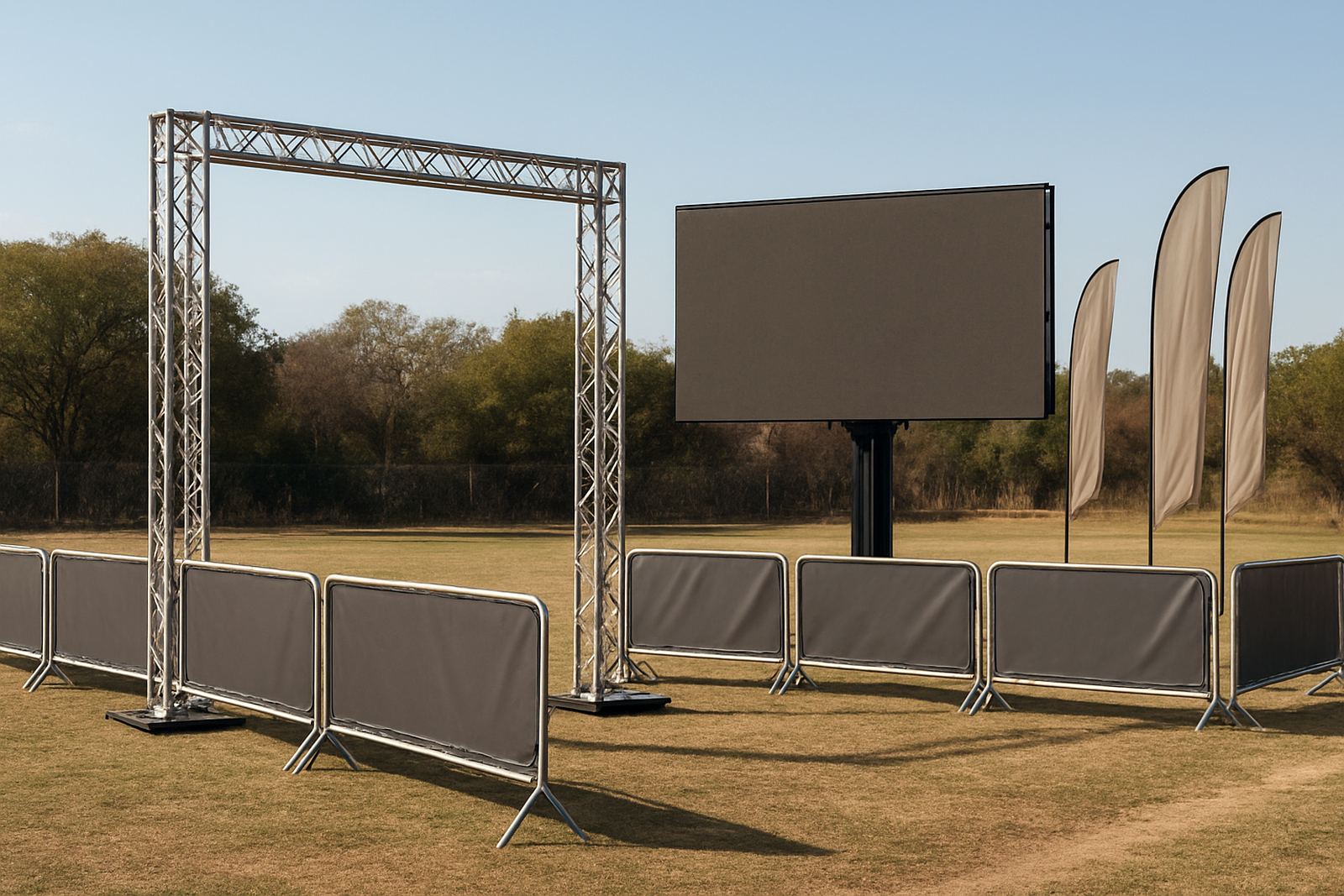
The usual kit for a strong activation
Every event has its own needs, but most activation setups use a combination of printed and illuminated elements. Some items are for wayfinding, others for atmosphere and some for live content. The exact mix depends on the size of the venue, the viewing distance and whether the installation is one day or stays up for a week or more.
- Printed vinyl for walls, counter wraps, floors and temporary backdrops
- Freestanding panels in ACM, foamboard or correx for short-term use
- Routered Perspex logo marks, directional blades and product call-outs
- Fabricated 3D lettering in acrylic, aluminium or brass finish
- Light boxes for entrances, sponsor walls and photo points
- LED video screens for stage content, live feeds and timed messages
- Pylons, posters and arrows for parking, registration and route control
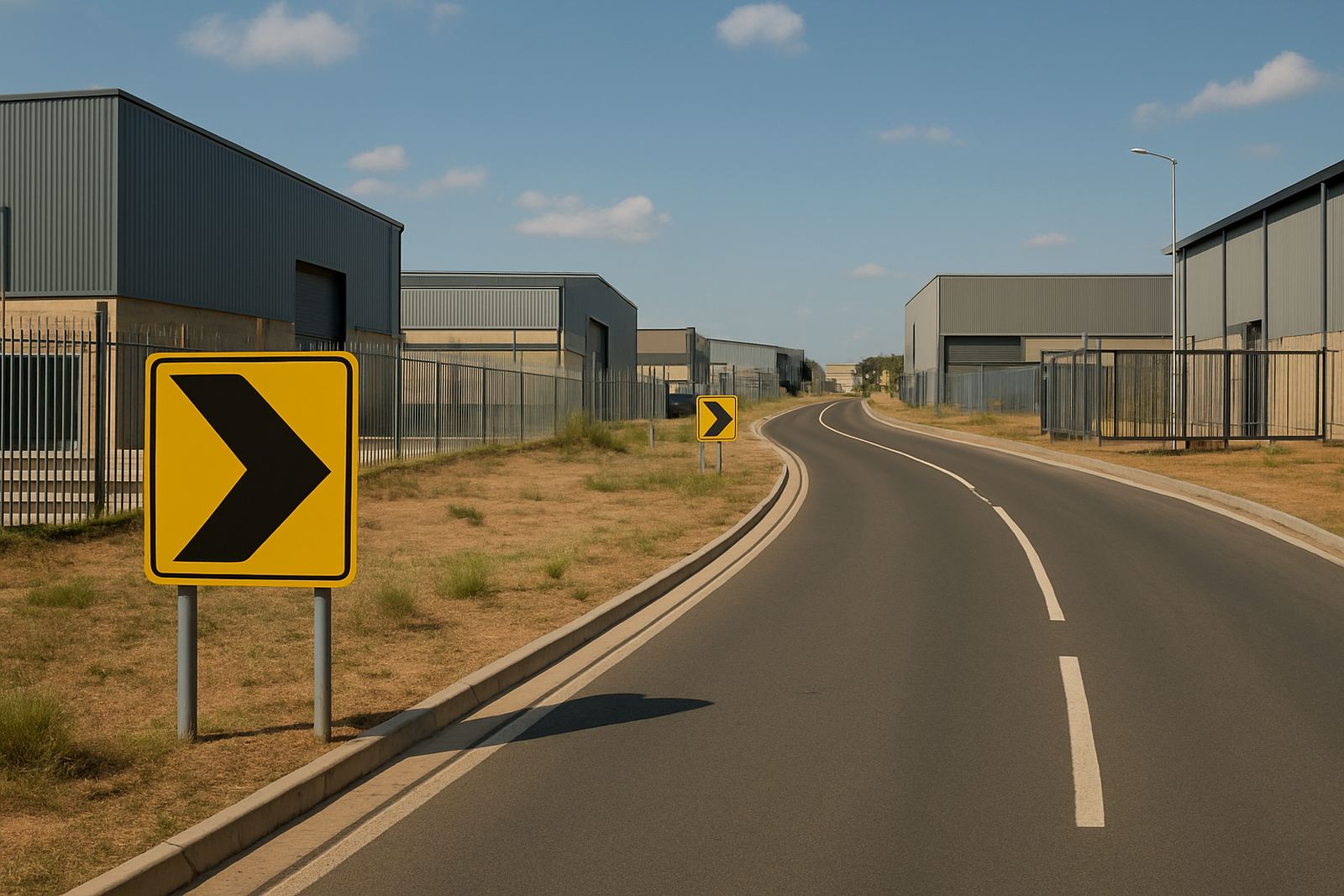
- Temporary road signs and approach signage for larger launches or festivals
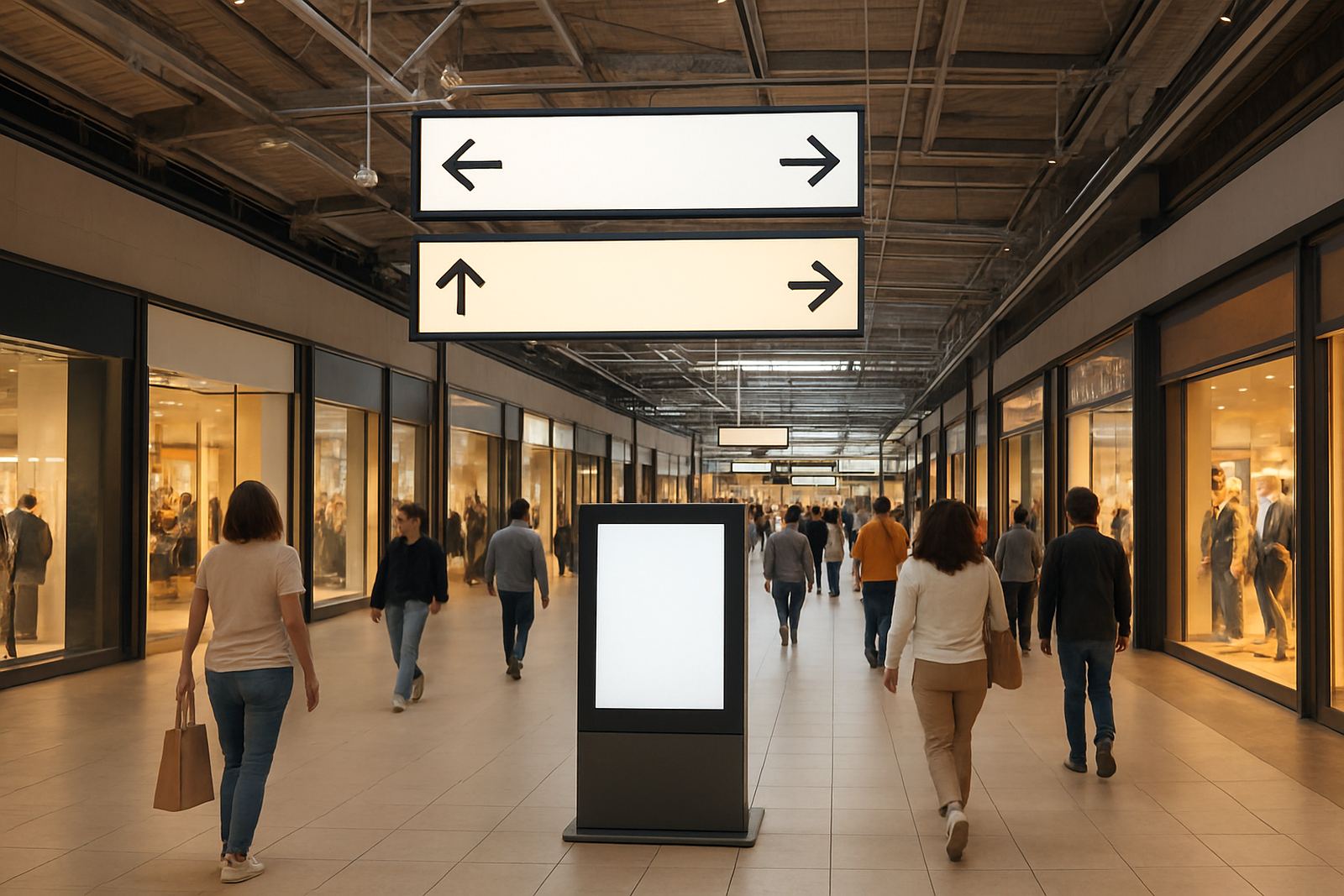
For corporate launches, a clean brand wall and one or two illuminated focal points are often enough. For a public festival, more signage is needed because people arrive from different directions and need to understand where to queue, where to park and where the nearest gate is. In those cases we often specify directional graphics in layers, so the first sign gets the driver in and the next signs get the crowd to the right place.
Layout planning that saves time on site
Good event signage looks simple because the decisions were made early. Before fabrication starts, we map the site and set out the main visitor journey. That means noting where people see the venue first, where they stop, where photos are taken and where staff need clear back-of-house access. If that is not done, the team ends up moving signs around on the day, and that costs money and creates confusion.
We also plan for practical matters such as stage sightlines, screen brightness, cable cover routes and the need for stable structures on uneven ground. In Gauteng that can mean hard standing at a retail centre one week and soft ground at a outdoor venue the next. On coastal jobs, humidity and salt air can affect fixings and finishes, so material choice matters even for short runs.
- Place key directional signs before the first junction, not only at the door
- Keep the entrance message short enough to read from a moving vehicle
- Use one consistent arrow style across all parking and entry boards
- Allow space for security checks and wristband or ticket scanning
- Position LED screens where glare from the sun will not wash out content
When the event includes sponsors or multiple stakeholders, we also recommend a clear hierarchy. One lead brand, one support line and a fixed approval path will prevent the usual last-minute shuffling of logos and copy. It may sound small, but at event speed it is often the differnce between a neat setup and a messy one.
Common mistakes that create avoidable costs
The most common mistake is assuming temporary means simple. A one-day activation can still need structural coordination, safe rigging and approvals if it sits in a public area or near traffic. Another issue is under-specifying the materials. Indoor board stock used outside can warp or mark quickly, and a lightweight sign that seems fine in the workshop may not stand up once the wind gets under it at an open venue.
We also see a lot of jobs where the message is overloaded. Too much text, too many logos and too many colours slow people down. Directional graphics must be read in a second or two. If the crowd has to stop and decode the board, the board has already failed.
Timing is another one. Event teams often leave sign-off too late, then want design, print, fabrication, delivery and installation inside a very tight window. That pushes up cost, increases risk and leaves little room for site adjustments. For larger activations, we advise allowing enough time for site surveys, material spec and test fitting before the bump-in date.
Budget ranges for temporary branding in Rand
Budgets vary widely because event activations can range from a few printed boards to a full branded environment with screens, structures and rigging. For a small indoor launch, basic printed graphics and a simple directional set may start from about R15 000 to R35 000. A more polished corporate activation with light boxes, cut lettering and site installation often sits between R45 000 and R120 000.
For larger public events, roadshows or festival villages, budgets can move from R150 000 to well over R500 000 once LED screen integration, structural steel, transport, installation management and de-rigging are included. Municipal requirements, access restrictions and night work can also change the figure. If the site needs extra ballast, traffic accommodation or weather proofing, that should be costed from the start rather than added later.
- Smaller launches and retail activations: R15 000 to R35 000
- Mid-size branded venues and product roadshows: R45 000 to R120 000
- Large festivals, public events and multi-zone activations: R150 000 and up
The best way to control spend is to decide what must be seen from far away, what must be touched at close range and what can be reused after the event. A sign that lasts for one weekend only should not be built like a permanent monument, but it still needs to be safe and neat.
How we handle the full event cycle
Our event activation support starts with signage strategy and site surveys, then moves into wayfinding planning, design development and material specification. After that we manage fabrication, installation and the handover. For LED screens we also plan integration, power coordination and content requirements so that the display fits the event schedule and the rigging is properly resolved.
From Modderfontein, we work on projects in Sandton, Midrand, Randburg, Germiston, Pretoria, Centurion and Durban, and we also travel for activations elsewhere in Africa when the brief calls for it. The point is not to overload the site with gear, but to make sure every board, screen and directional element earns its place. That includes the small details, like where the queue splits, where the sponsor wall starts and how the exit is marked once the crowd begins to leave.
For brands, developers and municipalities, the result should be straightforward: people know where to go, the event looks organised and the brand is visible without fighting the space.