What industrial parks need from signage
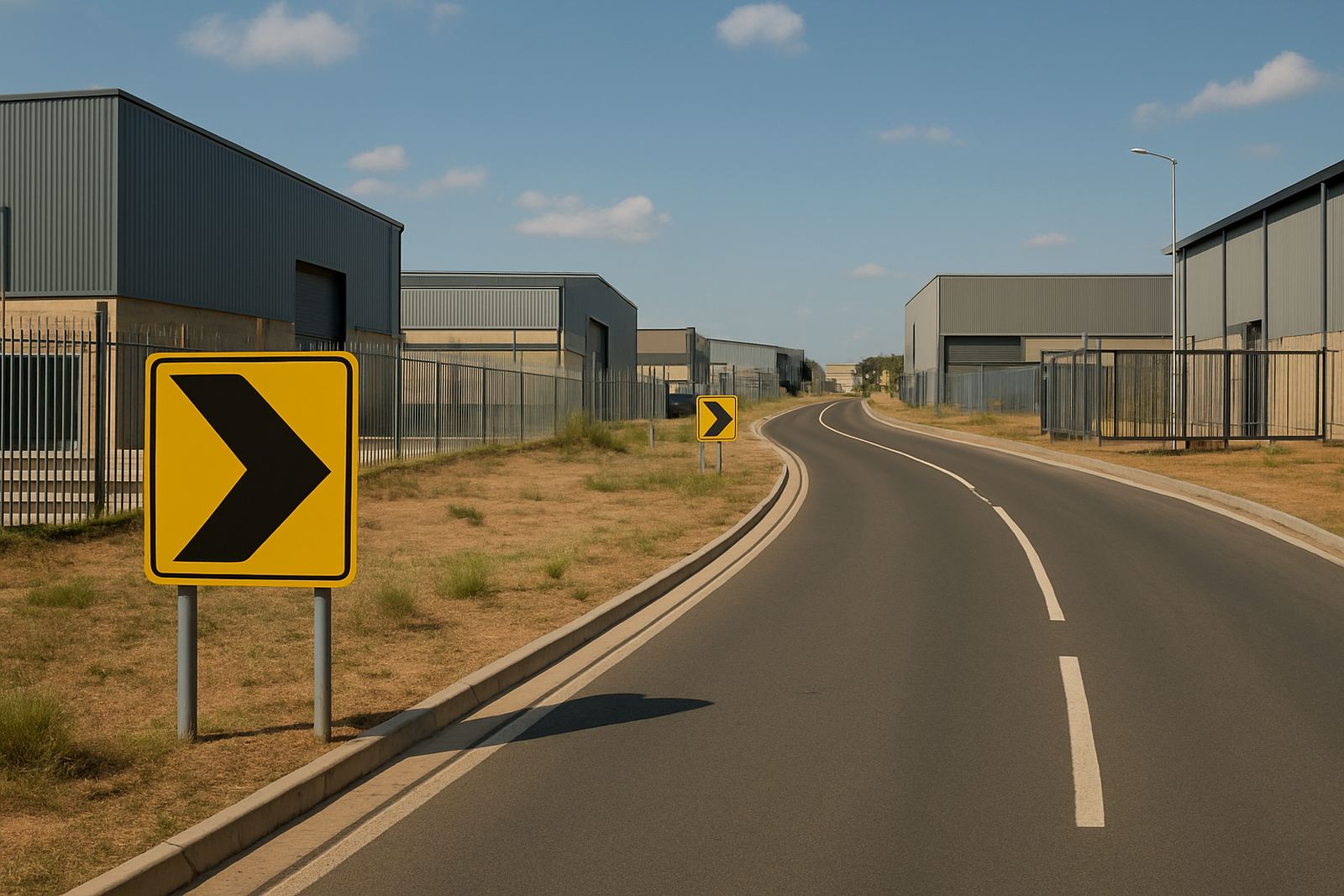
In a working industrial park, signage has to do more than carry a logo. It must guide heavy vehicles, separate visitors from staff, mark loading bays, point out exits and keep tenants visible from the gate right through to the back service yard. Good signage also helps security teams, contractors and delivery drivers move quickly without stopping in unsafe places.
For landlords and occupiers, the aim is simple: fewer wrong turns, clearer access control and less wear on fences, gates and kerbs. That means choosing materials that suit Gauteng sun, dust and the knocks that come with forklift traffic and reversing trucks. On coastal projects the concern changes a bit, with salt air and corrosion needing more attention on fixings and coatings.
We commonly see industrial park jobs in Modderfontein, Germiston, Midrand, Randburg and Pretoria where the brief includes both tenant identity and circulation. The right system usually starts with a site survey, because a sign that looks fine on paper can be too low for a truck route or hidden by a transformer, canopy or security wall.
Typical sign systems for logistics and factory sites
An industrial park normally uses a mix of directional, safety and branding elements. The final set depends on the size of the site, how many tenants are present and whether the park is owner-occupied or run as a managed estate. For bigger sites, we often specify signs in phases so the most urgent items can go up first while approvals and fabrication continue on the rest.
- Entrance monument signs and gate identity panels
- Directional boards for trucks, staff parking and reception
- Bay numbers, dock identifiers and loading zone markings
- Internal wayfinding for yards, warehouses and security points
- Fabricated 3D lettering for building fronts and control rooms
- Aluminium, brass or Perspex tenant panels where a cleaner finish is needed
- Road signs, safety signs and compliance boards for estate circulation
- LED video screens or digital notice panels for live messaging and tenant notices
For exposed sites, powder-coated aluminium and properly sealed fixings usually make more sense than light decorative materials. If a sign is meant to sit near a delivery road or yard, we plan for impact resistance and easy cleaning. In some cases, a light box is useful at the main entrance, but on deep industrial stands a routed face with internal illumination may be simpler to maintain.
How to plan layout before fabrication starts
Layout planning is where industrial park projects save or waste money. The first step is mapping how people actually move on site. That includes buses, staff cars, courier vans, articulated trucks and service vehicles. The second step is making sure each sign is visible at the point of decision, not after the driver has already missed the turn.
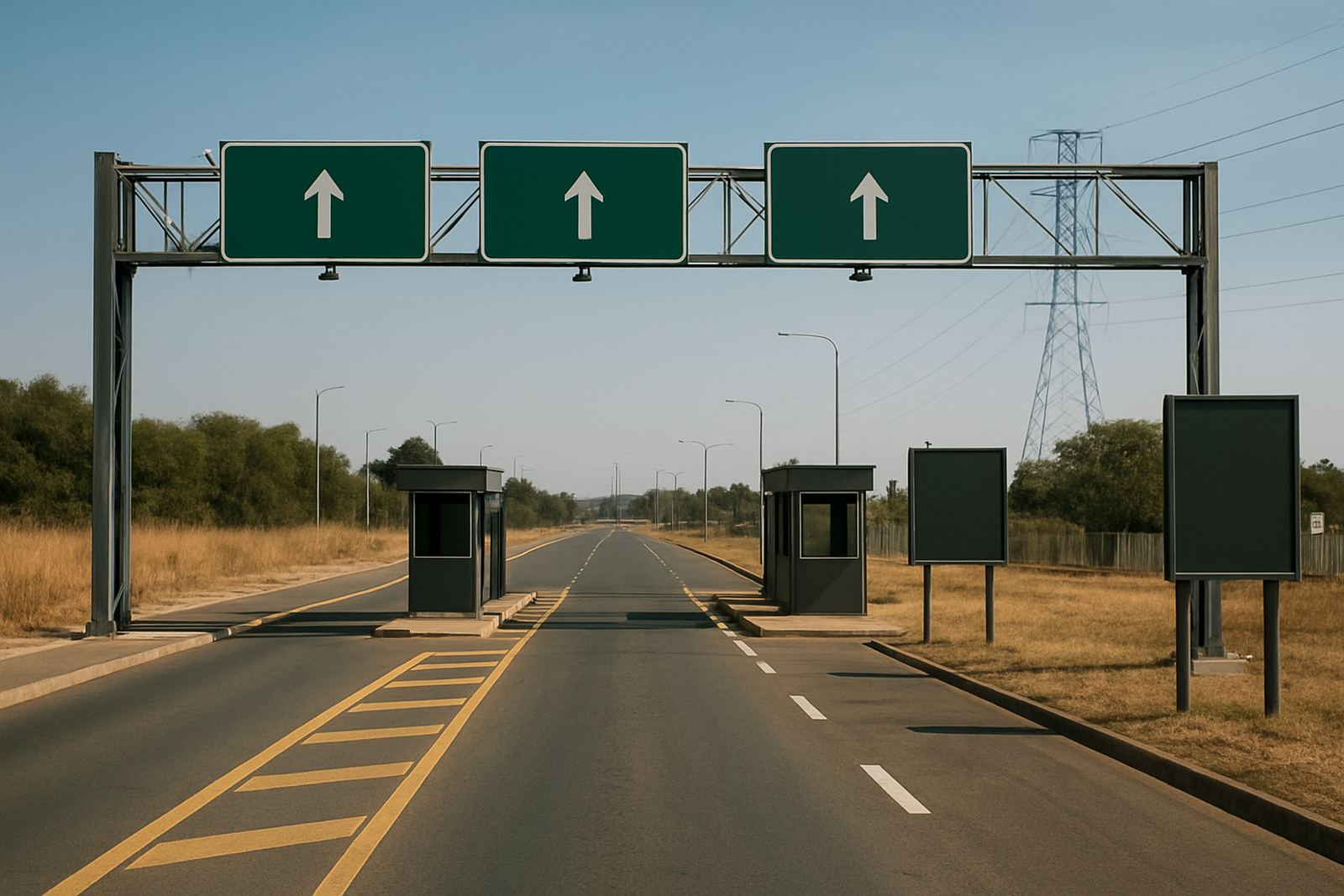
A proper plan usually considers line of sight from the road, turning circles, gate stacks, boom positions and the height of perimeter walls. In many parks the biggest error is placing signs too close to the entrance, where a truck cannot slow down safely. Another common mistake is using one large sign for everything, instead of breaking information into clear layers: entrance, direction, bay, safety and tenant identity.
We also look at maintenance access. If a sign needs a cherry picker or scaffold for every service visit, the long-term cost climbs quickly. On sites with regular power cuts, LED screens and illuminated signs should be planned with backup supply, surge protection and a maintenance schedule, otherwise dead pixels and failed drivers become a recurring cost.
- Keep truck-facing copy large and direct
- Use simple arrows and consistent naming across the park
- Allow space for future tenants or unit re-numbering
- Check municipal and estate approval rules before fabrication
- Plan cables, steelwork and service access before cladding goes up
Structural coordination, approvals and site rules
Industrial parks often sit under estate management rules, municipal signage controls and sometimes landlord design standards. That means the sign may need approval for size, mounting, content, illumination and placement. Where road-facing signs are involved, the structural side matters too, especially on large pylons, overhead features and any sign carrying wind load.
Our team handles material specification and structural coordination with the project team so the sign suits the substrate and the fixing method. A lightweight panel on a steel frame is not the same as a roadside pylon, and a screen at an entrance canopy needs a very different support detail from a wall-mounted board. For factories near busy arterial routes, the wind and dust load can be high, so structure and finish must be planned early.
Common site rules include working hours, induction, PPE, hot work control and lift access. In some estates, installation is only allowed during low-traffic periods or on weekends. That is normal. It just means the project schedule has to factor in delivery windows, rigging access and sign-off before site work begins.
Budget ranges for industrial park signage
Budgets vary a lot, but most industrial park clients want a clear starting point before they commit to drawings and approvals. A small directional or tenant package can start from around R25 000 to R60 000, depending on material choice and fixing detail. A larger entrance and wayfinding set for a warehouse estate often sits between R80 000 and R250 000.
For multi-building logistics hubs, fabricated lettering, illuminated entrance signs and several internal directional units can move the project into the R250 000 to R750 000 range. Road-facing pylons, compliance structures and LED screen integration can take a project higher again, especially where steelwork, electrical work and installation logistics are involved. A full estate package for a large industrial park can run from about R750 000 upwards.
Cheaper quotes often leave out approvals, crane time, electrical provision or maintenance access. That is where surprises start. It is usually better to price the whole job properly than to save on the sign and spend the difference on remedial work a few months later.
Installation, handover and long-term upkeep
Once the design and fabrication are signed off, installation needs to be clean and timed around site traffic. On active industrial sites, rigging is often the most sensitive part of the job because there are trucks moving, staff walking and security checkpoints to manage. Our installation management covers sequencing, access control and final positioning so the sign is set straight and secured properly.
Maintenance planning matters just as much. Dust build-up, vibration from nearby traffic and weather exposure all shorten the life of poorly specified signage. LED screens need cleaning access, cooling checks and electrical inspection. Static signs need periodic fastener checks and repainting or resealing where the site environment is harsh. If the park is near the coast, corrosion monitoring becomes part of the routine.
At handover, it helps if the client receives a clear record of what was installed, where it sits, and what needs checking over time. That makes future upgrades easier when units change, tenants move or an access route is reworked.
- Request a site survey before choosing sizes or materials
- Separate truck guidance from pedestrian wayfinding
- Use durable finishes for dust, sun and frequent washing
- Allow for future tenant changes and new bay numbering
- Plan maintenance access at the same time as the structure