
What mining camps usually need on site
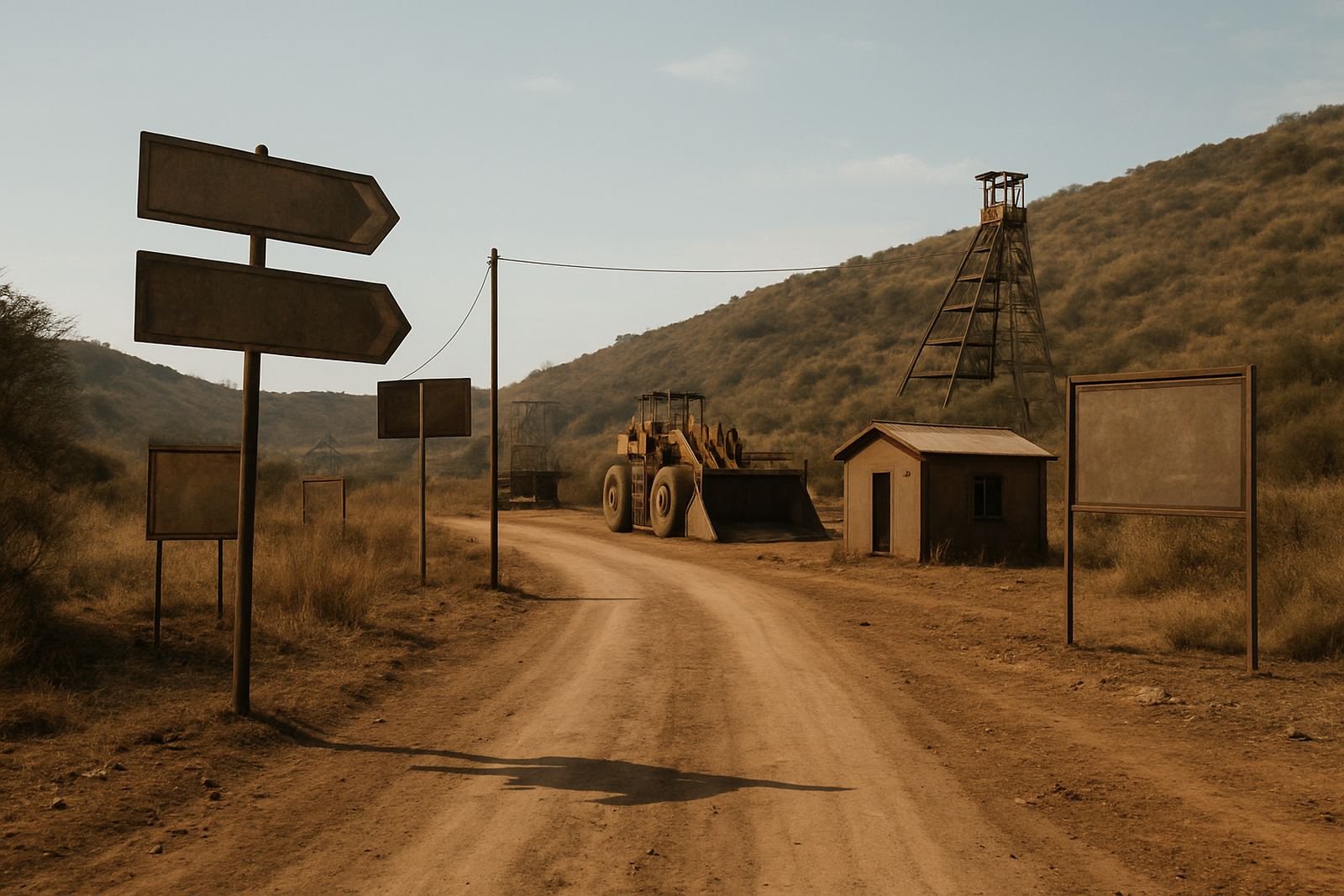
Mining camps are not one sign on a gate and a few direction boards. They are networks of access roads, guardhouses, parking areas, muster points, kitchens, ablutions, offices, laydown yards, workshops and restricted zones that all need to be read quickly, day and night. The sign system has to work for contractors, staff, visitors and emergency teams, often in poor light and with dust on every surface.
For remote or semi-remote sites, we usually plan the sign package around movement and control first, then add branding where it makes sense. That means gate identification, traffic direction, speed control, pedestrian warnings, hazard boards, emergency assembly signs and wayfinding for camp facilities. In a processing area or plant edge, the same logic applies but with stronger focus on exclusion zones, permit areas and equipment risk points.
A good mining camp sign package also has to tolerate practical problems: solar gain, vibration, corrosion near coastal or humid regions, and damage from delivery vehicles. If the sign is too fine, too shiny, or fixed poorly, it will not last long. In these conditions, simple and clear usually beats decorative every time.
Typical equipment for camps and remote operating bases
The right mix depends on the size of the site, the vehicle traffic and whether the camp is near a processing plant, pit access road or accommodation compound. We specify signage that can be fabricated in sections, packed safely and installed with minimal interruption.
- Entrance and security signs in aluminium, Perspex or composite board
- Directional signs for reception, clinic, laundry, kitchen, ablutions and parking
- Hazard boards, no entry signs and PPE requirement boards
- Steel-framed pylons for main access points and road junctions
- Reflective road signs for speed, stop, yield and turning control
- Fabricated 3D lettering for camp identity, block names and facility markers
- Light boxes or backlit cabinets where night visibility is critical
- Temporary contractor signs for project phases and changing access rules
In some camps, a small LED video screen is worth considering at a central point such as the main dining area, admin entrance or security gate. It can be used for daily notices, shift changes, safety alerts and visitor instructions. It should however be treated as a controlled asset, with proper mounting, ventilation and power planning. In areas with load-shedding or unstable supply, backup power and surge protection matter more than people expect.
Layout planning that keeps people moving safely
The best mining camp signage is planned from the route map, not from memory. We start with a site survey and identify the main decision points: where vehicles enter, where pedestrians cross, where visitors check in, and where people often get confused. On a busy site, one bad junction can create a tailback, a security problem or a safety incident.
We normally group signs into three layers. First is the arrival layer, which tells people where to stop, sign in and park. Second is the movement layer, which directs traffic through the camp and out to plant or accommodation areas. Third is the control layer, which handles danger points, restricted access and emergency procedures. If the site is large, we also recommend numbered zones or colour-coded blocks so that drivers and contractors can find a location faster.
At this stage we also look at mounting heights, line of sight and night visibility. A sign that is perfect on paper can fail if it sits behind a parked truck, or if the reflective face catches glare at the wrong angle. Our project team coordinates structural support, fixings and installation method so the sign works in real site conditions, not just in a drawing set.
Materials that stand up to dust, rain and rough handling
Mining camps are hard on materials. UV exposure, abrasive dust, cleaning chemicals and moisture all shorten the life of poor-quality signage. For that reason we choose materials based on the actual environment, not just appearance. Aluminium panels are often a strong choice for long-life directional and regulatory signs. Routered Perspex can be used where a cleaner finish is needed. Brass or fabricated metal details can be added for reception or executive areas, although these are best used selectively in tough outdoor zones.
Printed vinyl is useful for replacement panels, door signs and temporary messages, but it needs proper lamination and a sound substrate. For permanent outdoor signage, the fixings matter as much as the face material. Stainless steel fasteners, galvanised steel frames and correct spacing help prevent failure in windy conditions. Near coastal operations, corrosion protection becomes essential, even if the site itself is inland but supplied from a humid region.
Where lighting is required, we specify serviceable LED systems with access for maintenance. A sign that cannot be opened or repaired on site becomes expensive very quickly. That is a common mistake. The other one is using a material that looks fine in a showroom but chalks, warps or fades after a few seasons. We plan for those realities from the start, because camps do not have time for repeat work.
Common mistakes on mining camp projects
Many camp projects run into trouble because signage is treated as a finishing item instead of an operational tool. The result is usually last-minute changes, missing approvals and signs that do not match the actual routes on site. Another issue is inconsistent naming. If one drawing says Plant Gate and another says West Access, people will make the wrong turn. It sounds small, but it causes confusion every day.
- Starting fabrication before the route plan and approvals are settled
- Using too many fonts, colours or panel sizes across one site
- Ignoring night-time visibility and reflective performance
- Placing signs where trucks, dust or vegetation block them
- Leaving out contractor and temporary phase signage
- Under-specifying frames, foundations or wind loading
We also see projects where the client wants one standard sign for every purpose. That often creates clutter. A camp needs a system, not a pile of boards. Clear grouping, consistent placement and properly sequenced messages will do more for safety than oversized graphics ever will.
Budget ranges for mining camp signage in Rand
Budget depends on the size of the camp, how many entrances and junctions need control, and whether the site requires permanent structures or mostly standard boards. For a smaller remote camp with basic wayfinding, security and safety signs, a practical starting range is often around R85 000 to R180 000. That usually covers design development, materials, fabrication and installation of a modest package.
For a larger mining camp with multiple zones, directional pylons, reflective road signs, illuminated identification and a more involved approval process, budgets often sit between R250 000 and R750 000. Where the package includes LED screen integration, structural steelwork or several access points across a broader site, it can move higher. It depends on the number of decision points more than the number of signs alone.
Remote locations can add transport, lift equipment, site accommodation and installation labour costs. If the camp is far from Gauteng, or if rigging must happen during narrow site windows, the quote needs to reflect that. We usually recommend allowing a contingency of 10% to 15% for route changes, extra fixings, permit adjustments or last-minute additions. That cushion saves stress later.