Where interchange signage usually fails
At a busy station or rank, people are often reading while walking, carrying luggage, or watching for a taxi, train, bus or feeder vehicle. If the first sign is too small, badly placed or blocked by structure members, passengers make last minute decisions that slow the whole facility down. In Johannesburg and Pretoria we often see facilities with mixed sign styles, poor daylight visibility and messages that change from one entrance to another.
Transport interchanges also take a beating. Dust, rain, coastal humidity in Durban, vibration from traffic, and regular cleaning all affect the life of materials. We plan signage so it survives real use, not just the opening day.
Typical equipment set for stations and ranks
The equipment mix depends on the scale of the facility and how people move through it. Some interchanges need simple wayfinding only, while larger nodes need a full set of directional, regulatory and public information signs.
- Entrance identity signs and zone markers for bus, rail and taxi access points
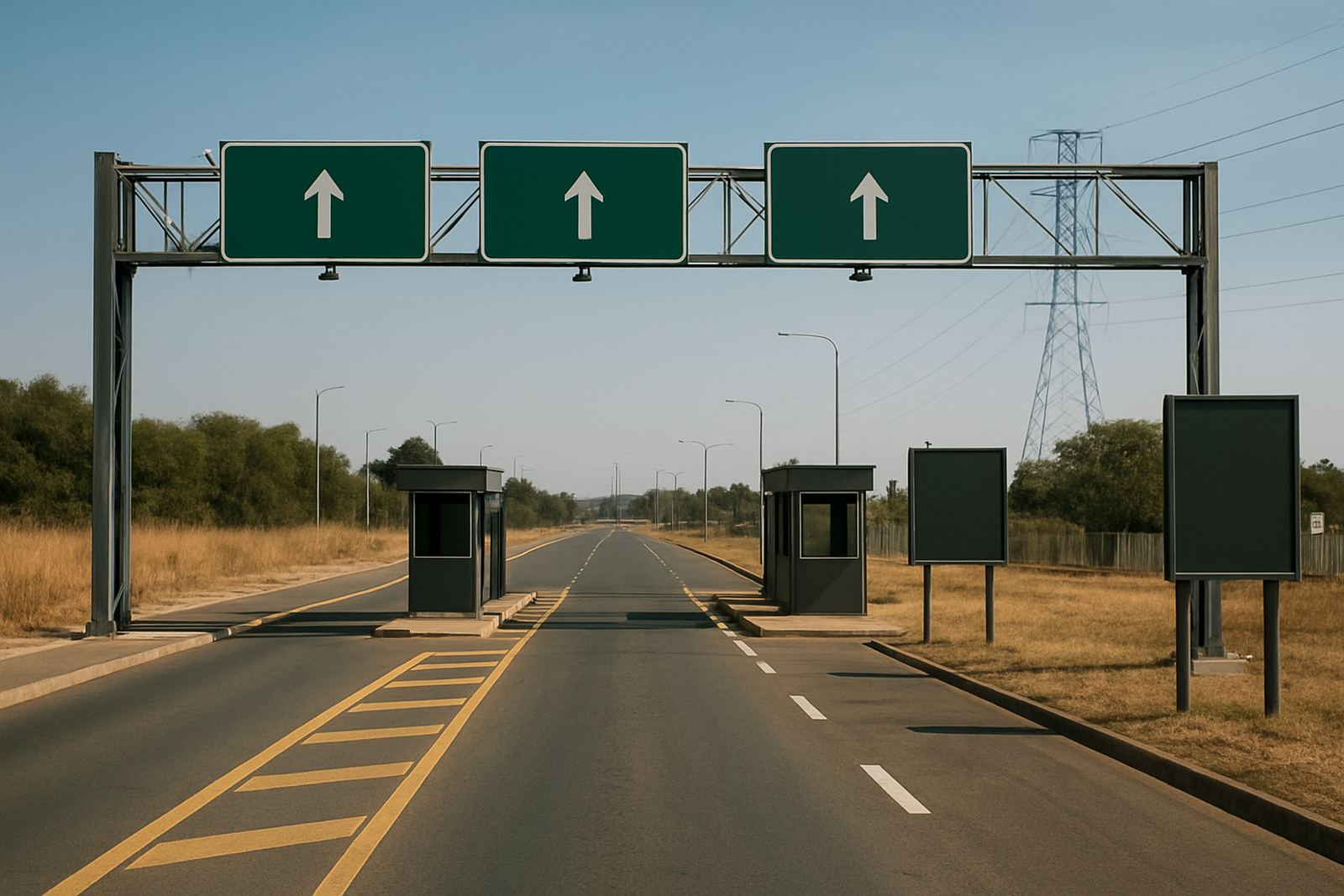
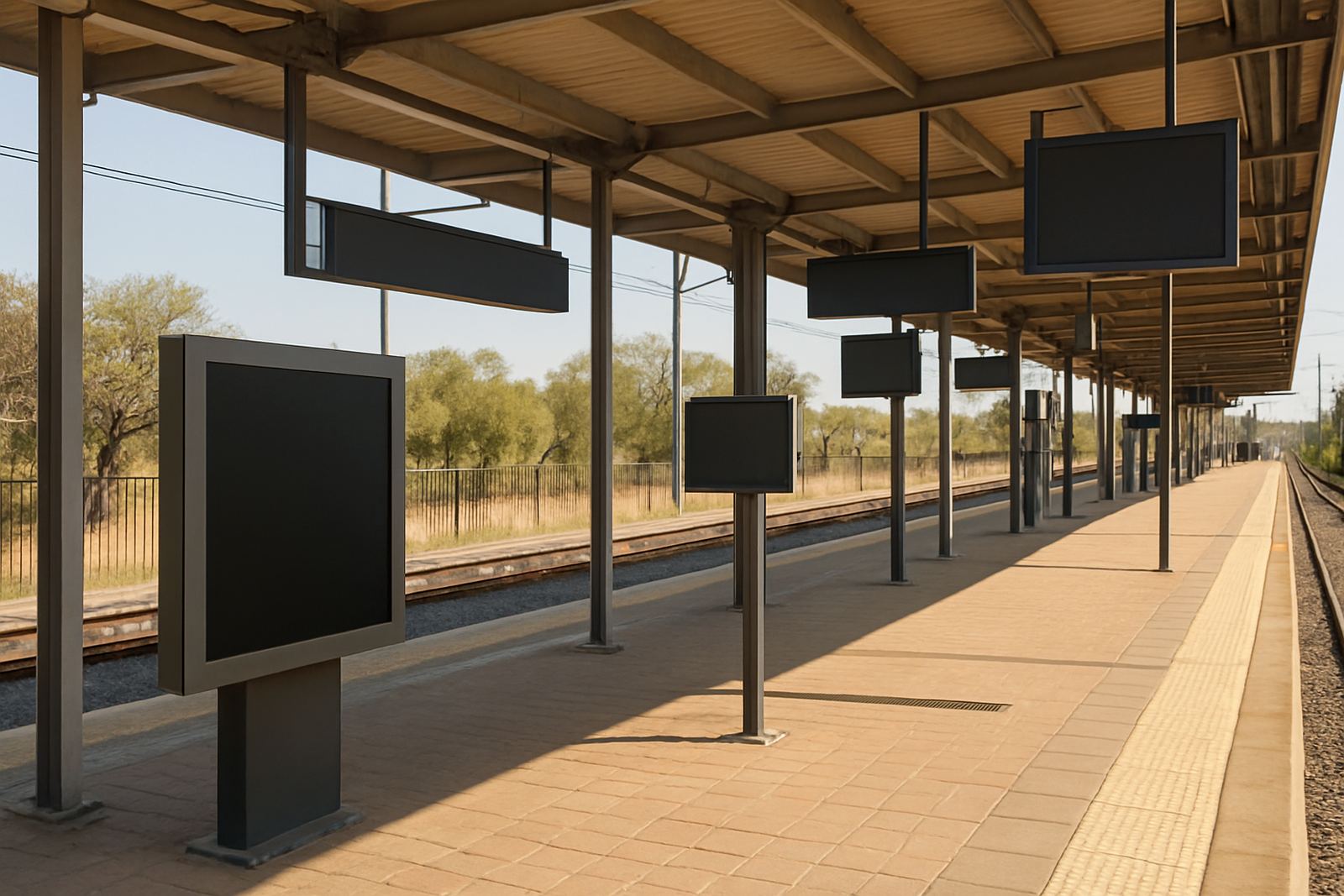
- Overhead directional signs for platforms, exits, ticketing and amenities
- Route boards, timetable panels and fare information holders
- Safety, no-entry and pedestrian control signs
- Fabricated 3D lettering, routered Perspex panels and aluminium composite panels
- Light boxes for night visibility and covered concourse areas
- LED video screens for live messages, disruptions and public notices
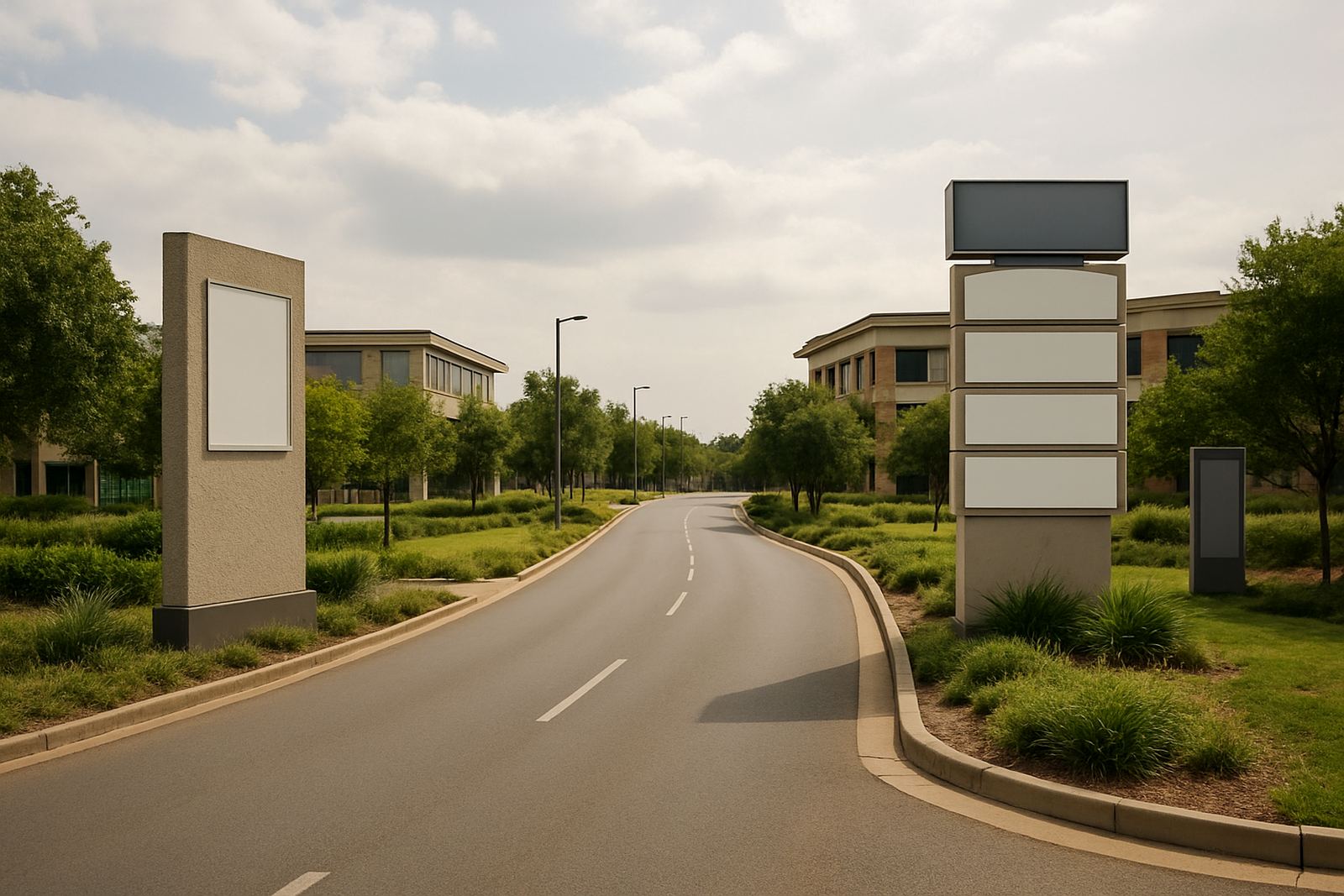
- Pylons and pole-mounted signs for roads, forecourts and approach routes
For public transport facilities, durability matters as much as clarity. We usually specify anti-corrosion fixings, UV-stable print, tamper-resistant mounting and finishes that can handle regular cleaning without peeling or fading.
Planning the passenger journey before the first sign is made
Good interchange signage starts with the movement map, not the artwork. We first look at where passengers arrive, where they pause, and where they need to change direction. That includes pedestrian crossings, taxi holding areas, pedestrian bridges, stairways and ticket queues. If the layout is wrong, no amount of sign quantity will fix it.
For larger sites we group the information into layers: first orientation, then decision making, then confirmation. A person should know where they are, where they need to go, and how far it is. On a large precinct, signs may need to be repeated at 20 to 40 metre intervals, depending on sight lines and crowd flow.
- Keep the main decision points close to entrances and route splits
- Use consistent naming for platforms, ranks and zones across all signs
- Allow for future route changes, temporary diversions and peak-hour crowding
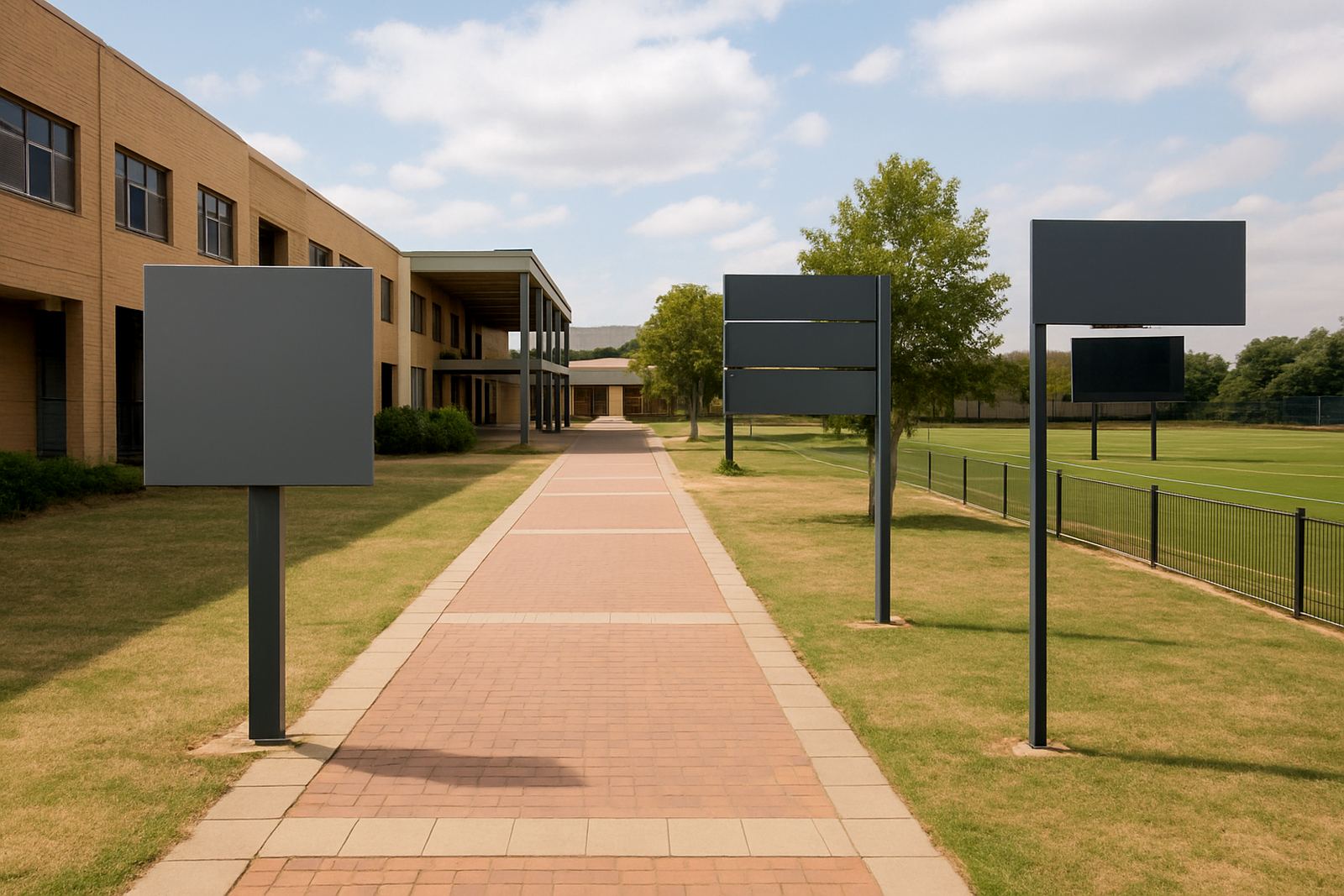
- Check sight lines from moving vehicles as well as from the footpath
Approvals, safety and structural coordination
Transport interchanges usually involve multiple stakeholders, so the approval process can take time. Municipal departments, transport operators, property owners and sometimes road authorities all need to be considered. We support the documentation and coordination needed for sign locations, structural fixing and safe installation sequencing.
Large signs, pylons and LED screens need proper structural sign-off and mounting details. Wind load, footing design, access for maintenance and safe cable routes all matter. If a screen or sign is fitted without proper access planning, maintenance crews end up working around live traffic or under awkward conditions, which is a bad idea and usually more expensive later.
We also think about power supply, backup, load-shedding and safe shutdown procedures where digital media is part of the package.
Common mistakes at busy interchanges
Most poor outcomes come from trying to fit too much information into too little space, or from using signs that look fine in a boardroom but fail on site. In a transport environment, the user is often tired, hurried, or unfamiliar with the place so the copy has to be direct.
- Using too many sign types and different fonts across the same facility
- Hiding key signs behind columns, fences or lighting trusses
- Choosing materials that warp in heat or corrode near the coast
- Skipping maintenance planning for LEDs, light boxes and printed panels
- Forgetting temporary signage for route changes, events or emergency detours
Another common issue is underestimating how quickly public information changes. If route names, stops or access points can change, the system needs modular panels or replaceable inserts. Otherwise every small change becomes a costly rebuild.
Budget ranges for interchange projects in Rand
Budgets depend on size, structure, quantity and whether the scope includes digital screens, approval support and installation management. A small rank with basic directional and notice signs may start from about R85 000 to R180 000. A mid-sized station or transport hub with mixed printed and fabricated signage can sit in the R250 000 to R750 000 range. Larger interchanges with pylons, multiple light boxes, 3D elements and LED screens can move from R900 000 upward, especially where structural works and control systems are included.
The cheapest option is not always the least expensive over time. On a busy site, cheap boards that fade, crack or are impossible to update usually get replaced sooner, and that means more disruption. We help clients balance capex with maintenance so the signage still reads well after the first year and beyond.
How Deep3 handles transport interchange work
Where transport movement depends on clear public information, projects are supported from Modderfontein, Johannesburg across Gauteng, Durban and other African centres. The work includes signage strategy, site surveys, wayfinding planning, material specification, structural coordination, fabrication management, installation management, LED screen integration and project handover.
The practical sequence is simple: we assess the site, define the user journey, specify the right materials, coordinate the build and manage the rigging. That includes working around municipal rules, live traffic, operational hours and tight programme dates. Whether the facility is a commuter station, taxi rank or mixed-use interchange, the aim is the same: get people moving without confusion.
If your project includes public information boards, platform signs, directional pylons or digital screens, we can help from concept through to final handover. Our office team in Modderfontein supports enquiries from across Sandton, Midrand, Randburg, Germiston, Pretoria, Centurion and Durban, with site work carried out wherever the project is located.