
Start with the route, not the drawing
Before a single panel is cut or a screen is packed, the route to site should be checked in detail. That means road access, border timing, bridge height, weight limits, turning circles and the last 5 km into the property. A clean design can still fail if a truck cannot reverse into the yard or if the final approach is only suitable for a light vehicle.
For African projects, route planning often affects more than transport. It can change panel sizes, crate dimensions, lifting points and the order in which items leave the workshop. In some areas, a shorter route is not the better one if it includes low bridges, sand roads or steep access ramps. A proper site check saves time later, and often avoids damage that is expensive to repair.
Match the transport plan to the material
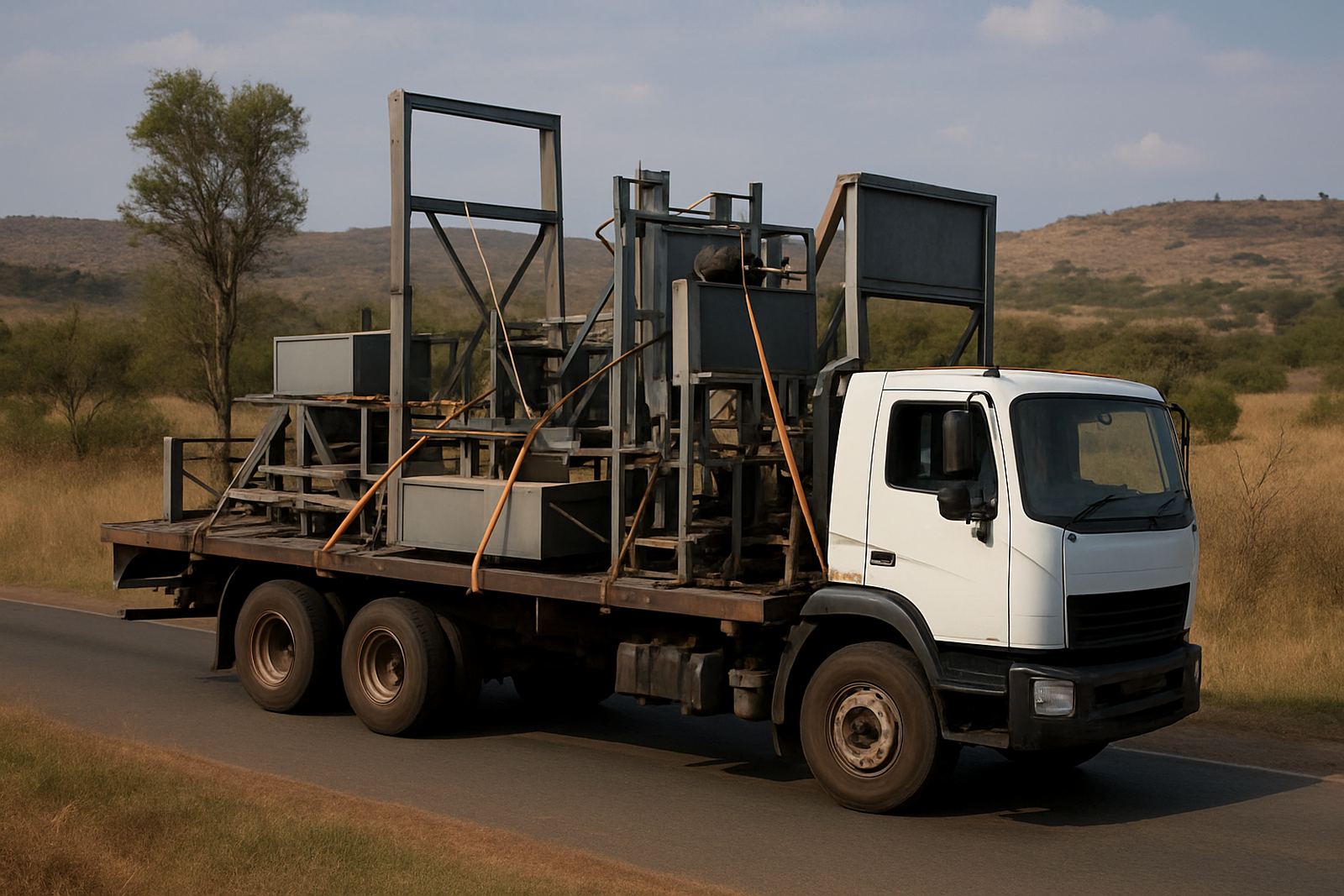
Different signage types travel differently. Printed vinyl rolls need dry packing and clean handling. Perspex and other rigid panels need edge protection and flat support. Aluminium extrusions, letters and frames should be secured so they do not rub during long-distance travel. LED video screens need shock control, labelled crates and a clear unpacking sequence on arrival.
In practice, the transport plan should list what is going by courier, what goes on a flatbed, what needs a covered vehicle and what must travel with the install crew. For cross-border work, it also helps to separate consumables from critical spares. A missing connector, driver or seal can stop a full installation if it is not in the right crate.
- Use crate sizes that suit local offloading equipment
- Keep small fixings in sealed, labelled containers
- Protect painted and brushed finishes from dust and scuffing
- Allow extra time for customs, weighbridges and local deliveries
Plan access equipment for the actual ground conditions
Access gear should be specified for the site, not for a standard checklist. A mall frontage in Sandton needs a different approach to a roadside pylon in Limpopo or a school project in the North West. The ground may be paved, compacted soil, soft verge or unfinished concrete. A lift that works perfectly in the yard can become useless if the base is uneven or the ground gives way under load.
For night work, lighting and noise restrictions matter as much as reach. Some municipal sites only allow certain work windows, while retail projects may require early morning or after-hours rigging. In humid coastal areas, equipment also needs protection against condensation and salt air, especially if the project involves steel components, electronic units or unfinished fixings. Good planning means the crew arrives with the right lift, the right boards for spread load, and the right backup plan if the first option won't work.
Keep spares and consumables close to the job
Remote projects become costly when every missing item has to be flown in or sourced from a nearby town with limited stock. That is why maintenance planning should begin before the install date. For signage and LED work, the usual trouble spots are fasteners, sealants, cabling, glands, brackets, access hardware, replacement modules and cleaning materials. If the site is far from a major centre, those items should travel with the main team.
We also recommend a small service pack for each project. It should include the parts most likely to be needed during handover and the first maintenance visit. On a multi-day project, this can be the difference between finishing on programme and waiting an extra day for a small but essential part. The neatest job can still stall over a 20 rand fitting, and that is worth avoiding.
- Hold spare power supplies, control components and connectors for LED systems
- Carry touch-up materials matched to the finish on site
- Include weather sealant and cleaning cloths for final checks
- Prepare a handover pack with as-built notes and maintenance intervals
Local rules, permits and site relationships matter
Many delays come from issues that are not technical at all. Roadside signs may need municipal approval, traffic accommodation or wayfinding sign-off. Developer sites may have access cards, safety induction and contractor rules. Municipal and public-sector work often has more steps, and those steps can change from one region to the next.
Good project coordination includes approval support long before the team is on site. It also means speaking to the right people at the property, the security gate, the loading bay and the municipal office. In some places, delivery times are restricted or access is only granted with notice. A calm, well-labelled delivery usually gets further than an urgent call at the gate.
A Gauteng to border project: what practical planning looks like
A useful example is a mixed signage package leaving Modderfontein for a development outside Gauteng, with wayfinding, illuminated features and a large external sign. The logistics plan starts with the survey, then breaks the job into transport batches. Heavy structural parts move first, then finish items, then the LED equipment in sealed crates. If the route passes through multiple provinces or a border post, the schedule includes slack time for inspections and local delays.
On site, the install sequence matters just as much. The crew may need to secure the base structure, verify power points, confirm mounting heights and test the screen in daylight before the final night alignment. If wind picks up in the afternoon or the access platform is delayed, the team should still be able to complete part of the work and return the next morning. That kind of planning keeps the job moving and prevents rushed decisions.
For African projects, the goal is not to overcomplicate the process. It is to make the job predictable. When transport, access, spares and approvals are all mapped properly, the installation feels straightforward even where the distances are long and the conditions are not. That is the difference between a site that finishes neatly and one that drags on for days.
How Deep3 manages site logistics across Africa
Our approach starts in Modderfontein and extends across Gauteng, Durban and other project areas where access, weather and local rules can vary sharply. The team plans signage strategy, site surveys, material specification, structural coordination, installation management and handover as one sequence, not separate tasks. That helps with coordination between fabrication, transport and site crews.
Sibusiso Mthembu leads the overall project direction, with Leanne van Wyk managing operations, Sakhile Motsepe on project engineering, Thandiwe Ndlovu on design and visualisation, Riaan Smit on fabrication and Omolemo Msiza coordinating rigging on site. That structure matters on remote work because every role affects timing. When the project is far from Johannesburg, there is no room for guesswork about what arrives when, who signs off each stage, or which spares are already on the truck.
The best logistics plan is the one that lets the client focus on the result, not the travel headache. That is why practical preparation, clear sequencing and the right equipment make such a difference on African sites.