
Why reflectivity changes how drivers read a sign
A road sign can look fine in daylight and still fail at night if the face does not return enough light to the driver. That matters on access roads, private estates, industrial parks, hospital precincts and municipal routes where people are turning, slowing down, or looking for a number or direction under pressure. When visibility drops, the sign has to do more work in less time.
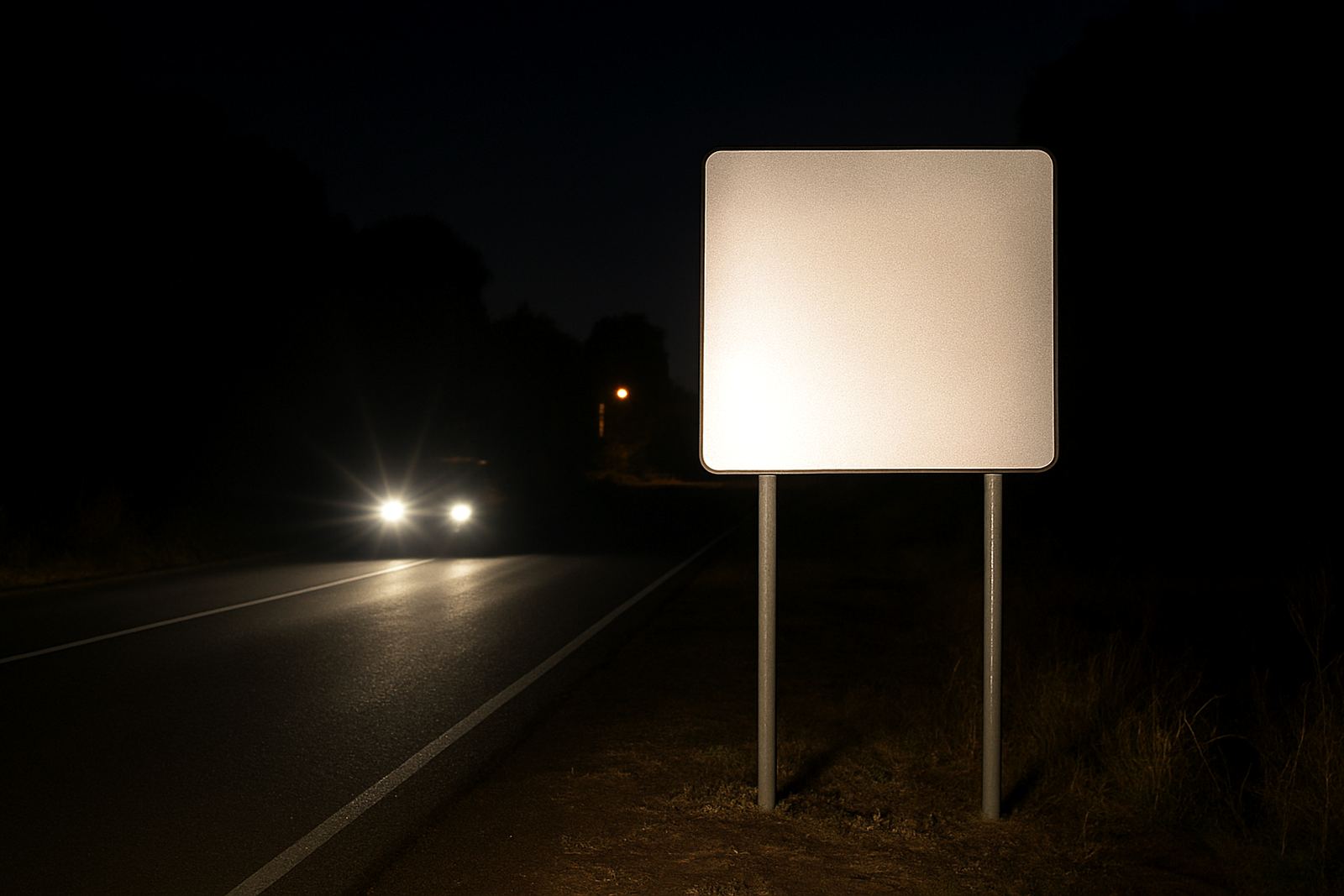
In practice, reflectivity is about how the sign face reacts when headlights strike it. A good retroreflective surface throws that light back towards the driver, making text, arrows and symbols easier to catch at speed. It is one of those details people only notice when it has been done badly. Then you get late turns, hard braking and complaints from tenants or residents.
For Johannesburg and surrounding areas, reflectivity is also about conditions. Dust, winter haze, low sun, load-shedding driven traffic changes and wet roads all affect how quickly a driver sees a sign. On coastal routes near Durban, humidity and salt in the air can shorten the working life of poorly specified materials. The same sign face that looks acceptable on day one may struggle after a season or two if the wrong film, coating or fixing method was chosen.
Choosing the right reflectivity grade for the road type
Not every sign needs the same level of reflectivity. A slow-moving estate street, a logistics yard, and a busy municipal collector road do not carry the same risk. The specification should match the vehicle speed, lighting conditions and how much time a driver has to react.
As a rule, the sign should be selected for the worst expected reading condition, not the easiest one. If a route has mixed lighting, bends, kerbs, pedestrians and changing traffic patterns, the reflective performance must be stronger. This is where proper signage strategy pays off. You are not only buying a board, you are buying legibility at night and in bad weather.
- Internal roads and precinct streets usually need clear legibility at lower speeds, with good contrast and dependable night visibility.
- Municipal routes and higher-speed access roads need stronger retroreflective performance, larger copy and careful mounting height.
- Temporary or changeable instructions may need a different material approach from permanent directional signs.
The wrong grade often gets chosen to save a few Rand, but the real cost comes later in replacement, driver confusion and repeated maintenance callouts. That is especially true where signs are exposed to sun, dust or tampering.
Materials that hold up in Gauteng and coastal conditions
Reflectivity is not only about the front face. The substrate, fixing method and edge sealing all influence how long the sign stays effective. Aluminium panels, properly prepared Perspex, and engineered sign panels each behave differently once they are out in the weather. On a hot Highveld site, temperature swing can work fasteners loose. On the coast, corrosion can creep into fittings and brackets if the wrong metals are used.
We look at the full assembly, not just the printed face. A reflective sign mounted on a weak frame or poor bracket will not stay aligned, and once it tilts away from the intended driver line, performance drops. The same applies to road signs on new developments where paving levels, verge growth and service trenching can change the approach angle over time. It sounds simple, but it gets missed alot.
For long-term use, the specification should account for UV exposure, cleaning access and likely vandalism. If the sign is in a busy public area, the face should be easy to wash without damaging the reflective layer. Where there is dust from construction or unpaved shoulders, a material that tolerates regular cleaning is worth the extra spend.
How installation affects night-time visibility
A reflective sign can still underperform if it is placed badly. Height, angle, setback from the road edge and the surrounding clutter all influence readability. A sign hidden behind a tree, pole or wall will not be saved by a better reflective film. Likewise, a sign tilted too far back or too far forward may throw light away from the driver instead of back to them.
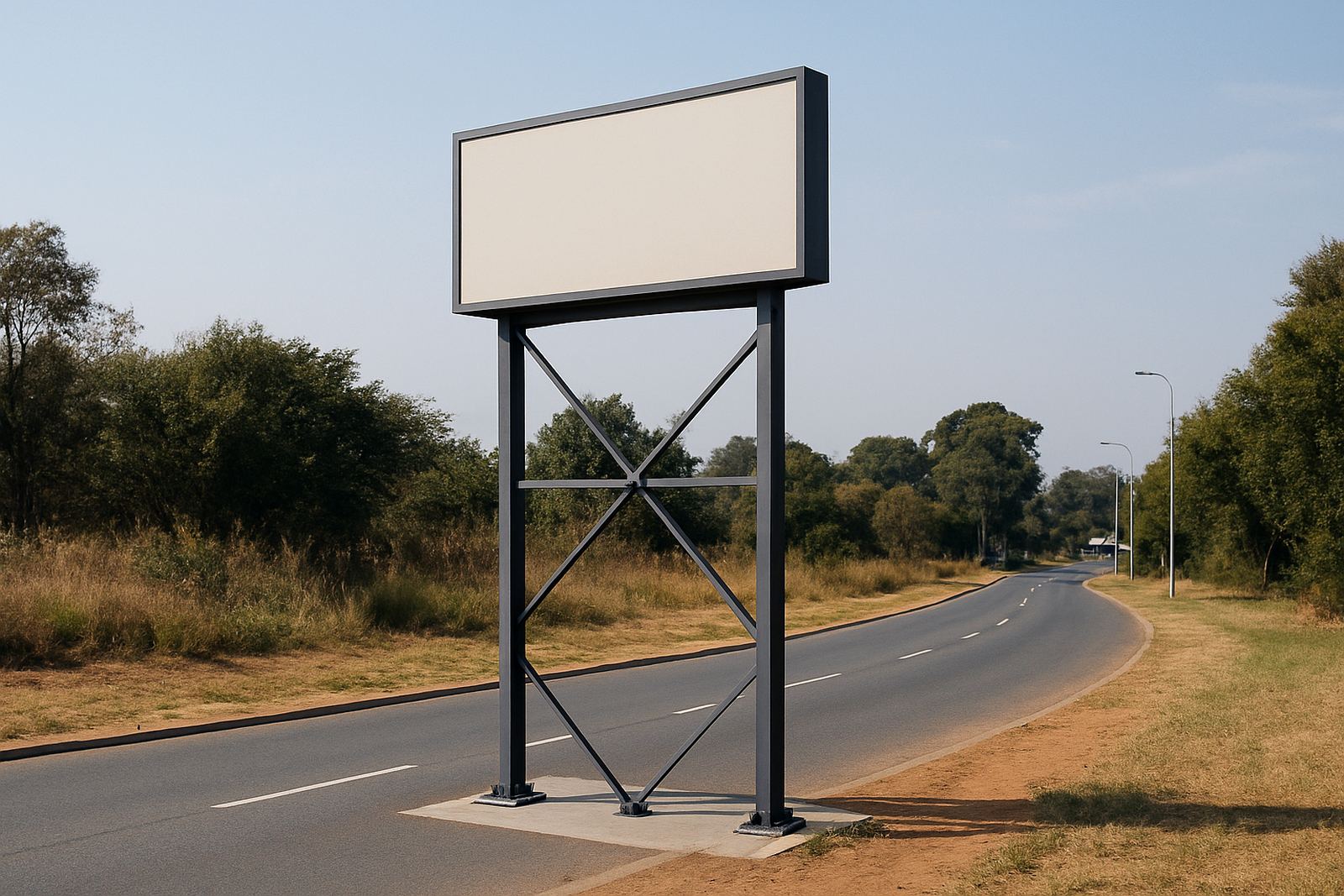
During site surveys, we check how the sign will read from the actual approach path, not from a drawing alone. That means looking at vehicle speed, turning radius, nearby lighting, and whether headlights sweep across the face at the right angle. On precinct roads with bends and speed humps, this matters even more because drivers are already processing more information.
- Keep the face clear of branches, parked vehicles and other signs that block the line of sight.
- Set the height to suit the road speed and the type of vehicle using the route.
- Allow for future growth, verge changes and municipal service work around the sign location.
- Check reflectivity after installation with headlights from a realistic approach angle.
A local example from a Gauteng precinct road
On a mixed-use precinct in Gauteng, the internal road network carried staff traffic by day and security, delivery and tenant movement after dark. The early signs were readable in daylight, but at night the directional boards were hard to catch when headlights hit them through a slight bend. Drivers were slowing late and overshooting the turn into the loading area.
The fix was not just a new sign face. The route needed a revised sign schedule, stronger reflective material on the key directionals, better mounting positions and cleaner separation between directional boards and regulatory boards. We also adjusted the sign heights to reduce interference from landscaping and added maintenance checks so the reflectivity did not get buried under dust. The result was simpler navigation, fewer missed turns and better movement through the precinct, especially after dark.
That kind of outcome shows why reflectivity should be planned early. If the road network is still under construction, the sign specification should be tied to the civil layout, lighting plan and traffic movement model. Waiting until the end often means accepting whatever is easiest to install, rather than what actually works.
What clients should ask before approving a sign schedule
Before approving road signage, it helps to ask practical questions about performance and maintenance. A good specification should explain how each sign will work at night, what surface it uses, and how long it is expected to remain readable in the local environment. If a supplier cannot answer that clearly, the schedule is not finished yet.
For developers, municipalities and estate managers, the discussion should also include handover and future upkeep. Reflective signs can lose performance through dirt, faded inks, damaged edges or poor cleaning practices. A maintenance plan should say how often signs are inspected, what gets replaced first, and who is responsible when a route changes.
- What reflective grade is specified for each road type?
- How will the sign perform in rain, dust and low-light conditions?
- What is the expected service life before replacement or refurbishment?
- Are brackets, posts and fixings matched to the environment?
Good road signs are not just about compliance. They help drivers make the right move at the right time, which is why reflectivity deserves proper engineering and attention to detail. When the route is clear at night, the whole precinct works better.