When vinyl beats a brush on site
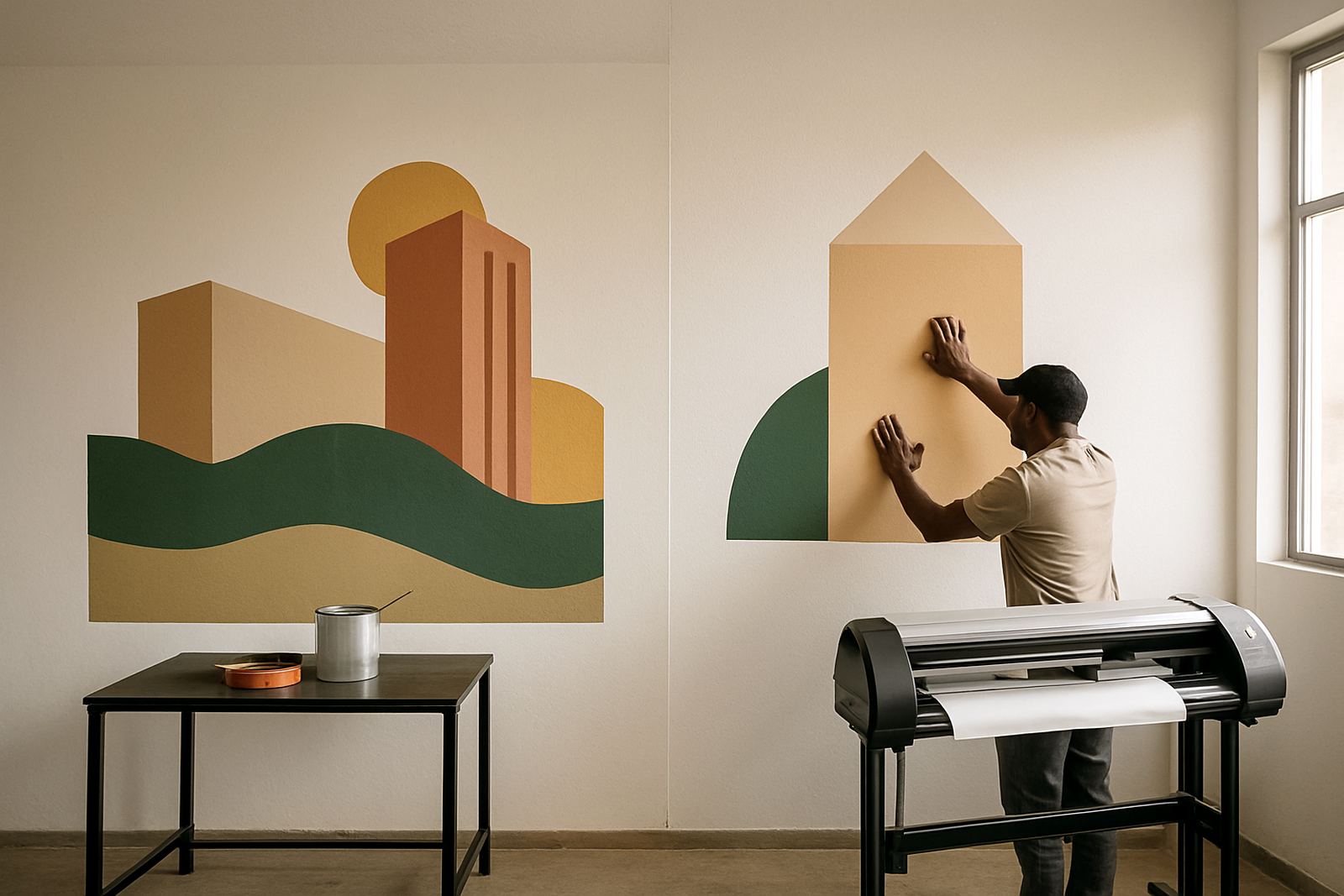
There are plenty of jobs where paint makes sense, especially for rough boundary walls, durable warning marks, or a one-off logo on a simple surface. But once a graphic needs sharp edges, repeatability, or a quick turnaround, vinyl usually pulls ahead. It arrives ready to apply, which removes drying time, masking time and the weather delays that can stall a paint crew for half a day.
On busy Gauteng sites, that speed matters. A warehouse in Midrand does not want a loading bay closed while paint cures. A retail tenant in Sandton may only have a night shift to complete the work. Printed or cut vinyl can be installed fast, with less mess and a more controlled finish. For multi-site rollouts, it also keeps every branch looking the same, which is harder to maintain by hand painting from one contractor to the next.
- Faster installation with less site disruption
- Sharper logos, text and linework
- Better consistency across multiple branches
- Easier replacement when details change
Consistency is where vinyl earns its keep
Paint depends heavily on the hand that applies it, the substrate beneath it and the conditions on the day. Even a good painter has to manage roller marks, edge bleed, weather, dust and surface porosity. Vinyl is specified from a drawing and produced to size, so the same artwork can be repeated on ten panels or fifty windows with the same proportions and colour treatment.
That consistency helps developers, municipalities and national brands. If a site hoarding, directional sign and reception graphic all need to match, vinyl keeps the typography and spacing under control. It also reduces arguments on handover because the approved artwork is what gets produced, not what happens to fit after freehand painting. In practice that makes project sign-off a lot simpler.
- Artwork can be checked before production
- Colours are more predictable across repeats
- Lettering sizes stay exact across every panel
- Useful for rollouts across Gauteng and beyond
Where printed vinyl and cut vinyl each fit
Printed vinyl works well for full-colour images, gradients, maps, promotional panels and temporary campaign graphics. Cut vinyl is better for lettering, logos and shapes that need a crisp edge on glass, aluminium or painted boards. Both options can be laminated for extra life outdoors, which helps with sun exposure and regular cleaning.
In Johannesburg, the choice often comes down to the message. If the artwork includes photos, texture or complex colour, printed vinyl is the practical route. If the message is simple and needs a cleaner finish, cut vinyl is usually neater and more economical. On shop fronts in Randburg or Germiston, for example, a sales promotion may use printed window vinyl while the permanent trading name stays in cut vinyl above the door.
- Printed vinyl for full-colour images and campaigns
- Cut vinyl for letters, arrows and simple shapes
- Lamination adds UV and abrasion protection
- Ideal for windows, panels, vehicles and hoardings
What paint struggles with on South African sites
Weather is one of the biggest reasons vinyl gets chosen. Heat, wind, dust and sudden rain can interrupt a paint job or affect the finish. Along the coast, salt air and humidity can also shorten the life of some painted graphics if the preparation is not right. Inboard and inland sites face their own problems too, especially where dust from construction or traffic settles on fresh paint before it has cured.
Load-shedding is another practical issue. Lighting in a dark parking basement or at a night install is often limited, and paint work needs strong visibility for edges, levels and coverage. Vinyl can be installed more predictably once the surface is prepared and the light is suitable. That makes it easier to plan after-hours work without stretching the programme out over several visits.
There is also the matter of future change. Tenants move, branding updates and municipal notices change. Removing old paint means sanding, priming and often repainting the base surface. Vinyl can usually be stripped and replaced far more quickly, which is useful when the message may only last a season or two.
Surface prep and the truth about longevity
Vinyl is not magic. If the surface is dusty, chalky, oily or badly textured, the finish will suffer. Good preparation is what separates a neat job from an early failure. The panel, wall or glass must be clean, dry and suitable for the adhesive system being used. On rough brick or very uneven plaster, paint may still be the better option because vinyl needs a flatter base to hold properly.
For long life, the site conditions need to match the material spec. South-facing facades, direct sun and exposed parapets demand the right film, and sometimes a protective laminate as well. A wall in Pretoria may face different heat and expansion conditions from a shaded passage in Durban. Good planning takes that into account before the first piece is cut.
- Clean the surface thoroughly before application
- Check for dust, loose paint and moisture
- Match the material to the exposure level
- Use paint where the wall is too rough or unstable
A local example from a Gauteng rollout
Consider a property developer with sales boards in Midrand, a site office in Modderfontein and directional signage at a new entrance in Centurion. If those graphics are painted one by one, the colours may shift, the lettering may vary and the programme can stretch out over several days. If the same artwork is produced in vinyl, the developer gets the same proportions and finish on every site, with fewer return trips for touch-ups.
That is especially useful when approvals are already tight. A municipality may want specific wording, a road-facing sign may need exact placement, and the client may want the graphics swapped out after launch. Vinyl gives more control. It is easier to revise a wayfinding arrow, remove an expired promotion or replace a hoarding panel when construction stages change. For teams that have to keep traffic moving and tenants trading, that practical flexibility is worth a lot.
How to choose between vinyl and paint
The best choice depends on the surface, the message and the lifespan you need. Paint is still suitable for some rough, permanent or low-detail applications. Vinyl is usually the better call when you need speed, repeatability, colour control or easier updates. If the sign must be installed quickly and then changed again later, vinyl is often the cheaper answer over the full life of the project, even if the first invoice looks similar.
For brands, developers and municipalities, the sensible approach is to decide early. That allows proper site surveys, material specification and approval support before fabrication starts. It also helps with structural coordination for larger panels, pylons and roadside work. The result is a sign system that suits the site instead of fighting it.
- Choose paint for rough, permanent and low-detail work
- Choose vinyl for speed, repeatability and easy updates
- Plan early if the project includes approvals or multiple sites
- Use the same spec across branches for a cleaner handover