
A growing Randburg campus needed order, not more signs
The client was an independent education campus in Randburg with multiple buildings added over time, plus sports areas, gates and parking zones that had started to confuse learners, parents and visiting staff. The brief was simple to say but harder to execute: make the site easier to read at first glance, improve building identification, and create a proper wayfinding system that could be expanded as the campus grows.
We started with a site survey and a sign audit. That showed where people were stopping, where traffic was crossing on foot and by car, and which entrances were being used after hours. There were also a few practical issues: strong afternoon sun on some elevations, dust from nearby roads, and a mix of wall finishes that meant fixings had to be planned carefully. Because this was an operating school, all work had to be sequenced around lesson times, sports practice and pickup periods.
- Campus type: education site in Randburg, Johannesburg
- Primary need: wayfinding, sports signage and building identification
- Site condition: mixed building ages, phased additions, active daily traffic
- Key constraint: install without disrupting learners, staff or parent movement
What we planned before fabrication started
We developed a signage strategy that separated the campus into clear movement groups: visitors, learners, staff, sports users and service access. From there we mapped what each person needed to see first, second and third. Directional signs were placed to reduce decision points, while building names and block markers were sized for quick reading from vehicles and from foot traffic. The aim was fewer last minute questions at the gate and less crowding around reception.
Our design and visualisation team prepared sign schedules, colour references and placement drawings for approval. Because school campuses change over time, we kept the system modular. That meant replacement panels could be changed later without redoing whole structures. We also coordinated the structural details so the fixing method matched the surface conditions and wind exposure. In Randburg, exposed pylons and tall freestanding signs must be properly braced, especially where open courtyards channel gusts across the site.
- Signage strategy and route planning
- Site surveys and measured placement drawings
- Wayfinding hierarchy for gates, admin, classrooms and sports zones
- Material specification for indoor and outdoor use
Materials selected for daily wear and Johannesburg weather
The campus needed a mix of durable finishes that would still look clean after school traffic, weathering and regular maintenance. We supplied fabricated aluminium panels for building identification, routered Perspex elements for raised lettering, and printed vinyl for directional panels where colour coding was important. At key entrances we used fabricated 3D lettering for stronger presence, and on the sports side we supplied weatherproof directional signs sized for quick visibility from a distance.
For the larger identity features, we specified aluminium with powder coated finishes and corrosion resistant fixings, which matters in Gauteng when signage is exposed to heat, dust and the odd hard summer storm. Where a sign sat close to a boundary wall or driveway, we reduced projection depth to keep circulation clear. The campus also wanted signs that were easy to clean and did not chip easily during routine maintenance, so every finish was chosen with that in mind.
- Aluminium panels with powder coated finish
- Routered Perspex letters and symbols
- Printed vinyl for colour coded directional panels
- Corrosion resistant fixings for exposed external locations
Building identity, sports signs and gate visibility
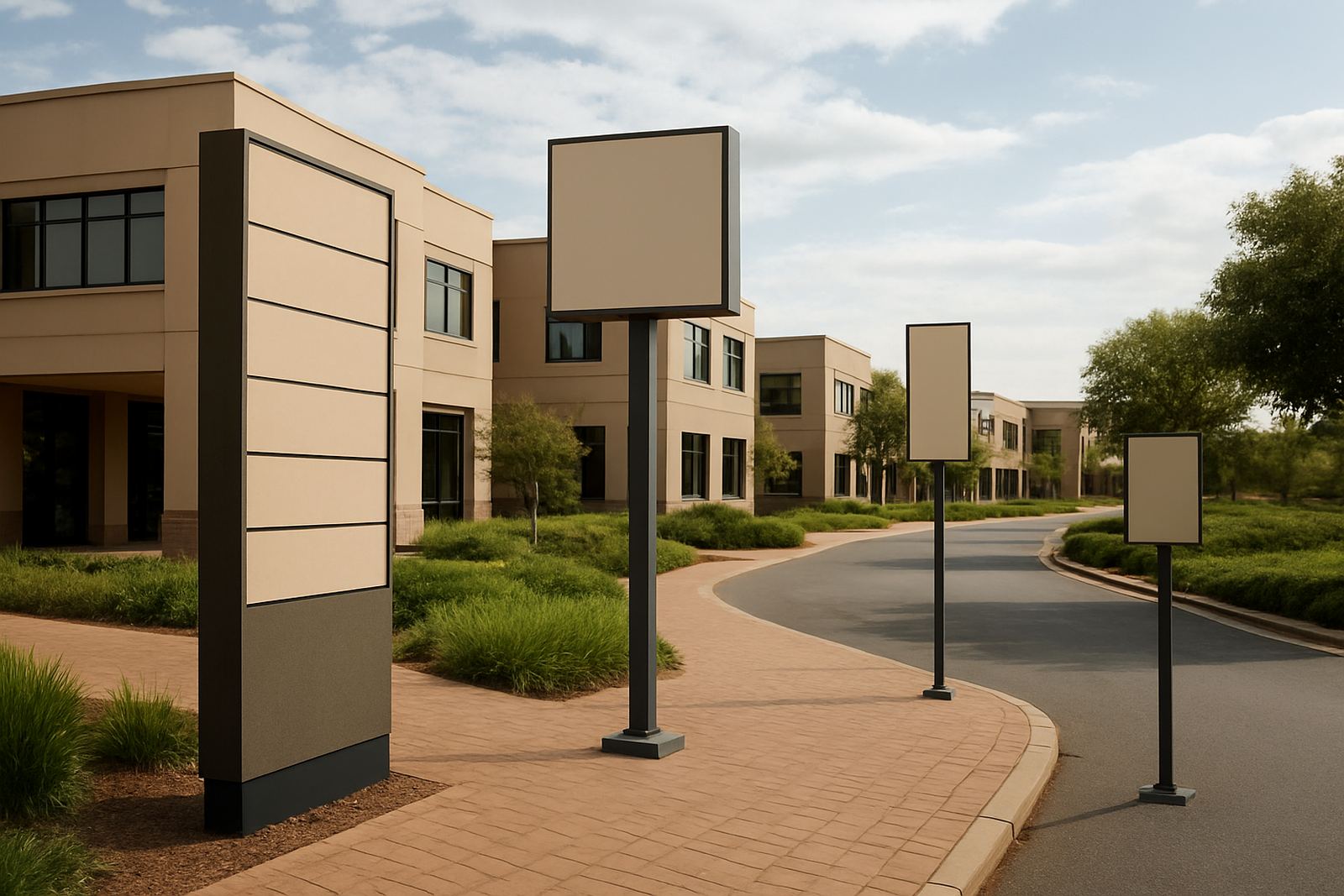
One of the most useful parts of the project was giving each building a stronger identity. The campus had several blocks that looked similar from a distance, so we introduced clear naming on façades and at approach points. That helped visitors locate reception, administration and teaching areas without needing to ask for directions every time. Sports areas were treated as a separate zone, with signage that could be read quickly from parking and pedestrian routes.
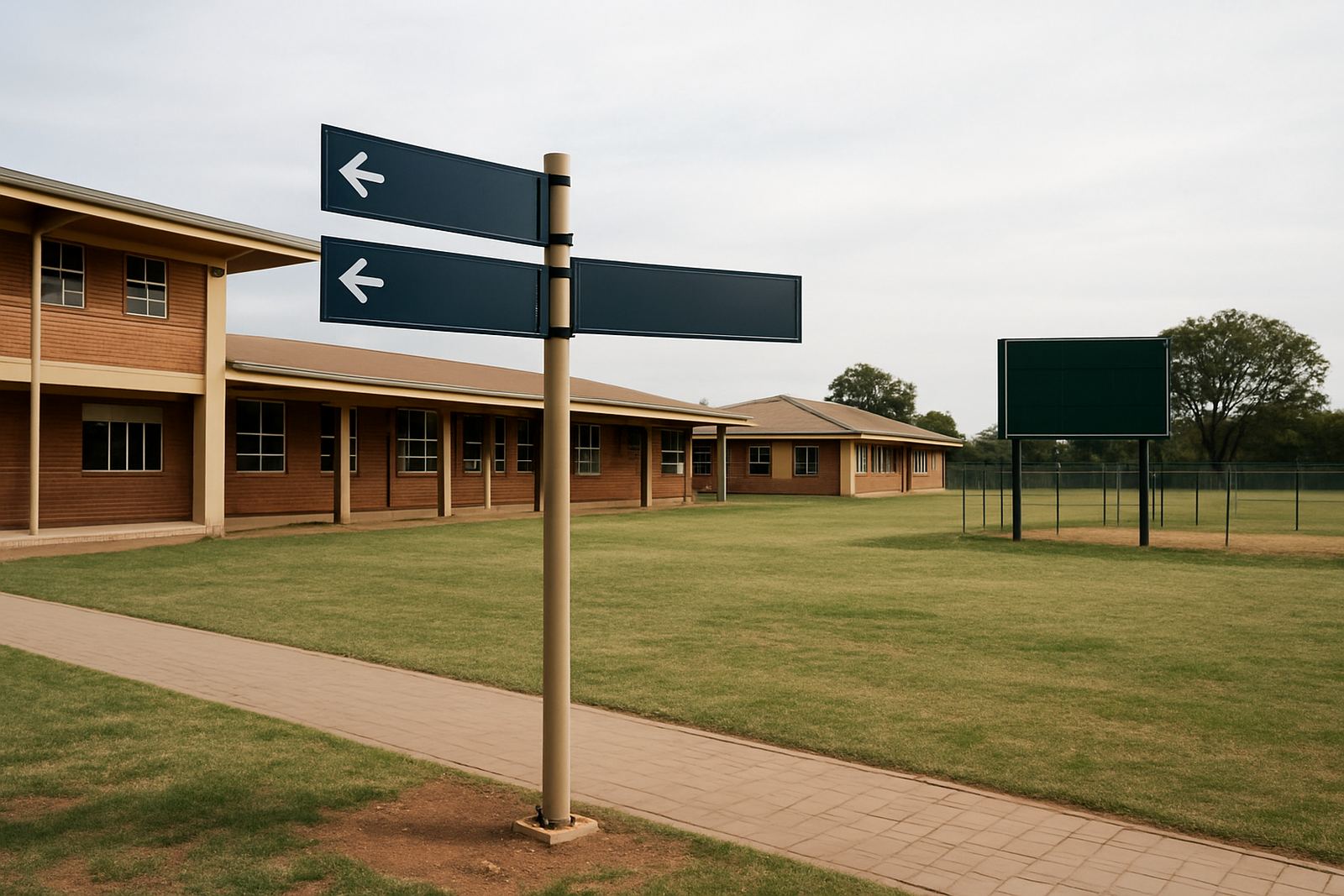
We also worked on entrance readability. The gate area needed signs that could be seen from a moving vehicle and still make sense to someone walking in on foot. That meant balancing size, contrast and letter spacing rather than simply making everything larger. We installed a combination of wall mounted signs, freestanding directionals and identification panels, and we kept the graphics simple enough for fast reading by younger learners and visiting parents alike.
- Façade building names for multiple campus blocks
- Sports field and court identification signs
- Gate and access control directionals
- Visitor parking and reception guidance
Installation was phased around the school day
The installation programme ran over 10 weeks from survey to handover. Fabrication was staggered so early approvals could move into production while final site details were being confirmed. Our site rigging coordinator planned the lifting and access work around school hours, and in several areas we used short install windows to avoid any clash with drop off and collection times. That kind of sequencing matters on live education sites, because even a small delay can affect the day.
We coordinated with the client on access, fixing locations and safe working areas. Where signs required higher level mounting, we used the correct equipment for the substrate and height, and we checked alignment on site before final fixing. The result was a tidy finish with minimal disruption and no unnecessary rework. The site team also left the campus with a practical maintenance pack, so the school can manage future updates with less guesswork.
- Programme duration: 10 weeks
- Site work scheduled outside peak school movement periods
- Higher level fixes completed with proper access equipment
- Handover included a maintenance and replacement guide
What changed once the signs were in place
The biggest result was clarity. Learners and visitors moved through the campus with fewer wrong turns, and staff no longer had to repeat directions as often. The building names now stand out from the road and from internal driveways, which improved arrival flow at busy times. Sports areas are easier to find on event days, and the overall site now reads as one campus rather than a collection of separate blocks.
For the client, the real value was having one team manage strategy, design, fabrication and installation. That meant less chasing between suppliers and a cleaner result on site. If we were doing this again, we would repeat the same approach: start with a route audit, simplify the sign family, and keep the fixing details tied to the actual building conditions. On education sites especially, that practical process saves time later and keeps the signage useful for years, not months.
- Improved visitor movement and campus legibility
- Better building identification across the site
- Clearer sports zone access for events and training
- Simple maintenance and future expansion options
Key facts
| Client type | Independent school campus |
|---|---|
| Town | Randburg, Johannesburg |
| Programme | 10 weeks from survey to handover |
| Main scope | Wayfinding, sports signage, building identification |
| Materials | Aluminium, routered Perspex, printed vinyl, 3D lettering |
| Services delivered | Signage strategy, approvals support, fabrication management, installation management, project handover |