
What a banner wall does on site
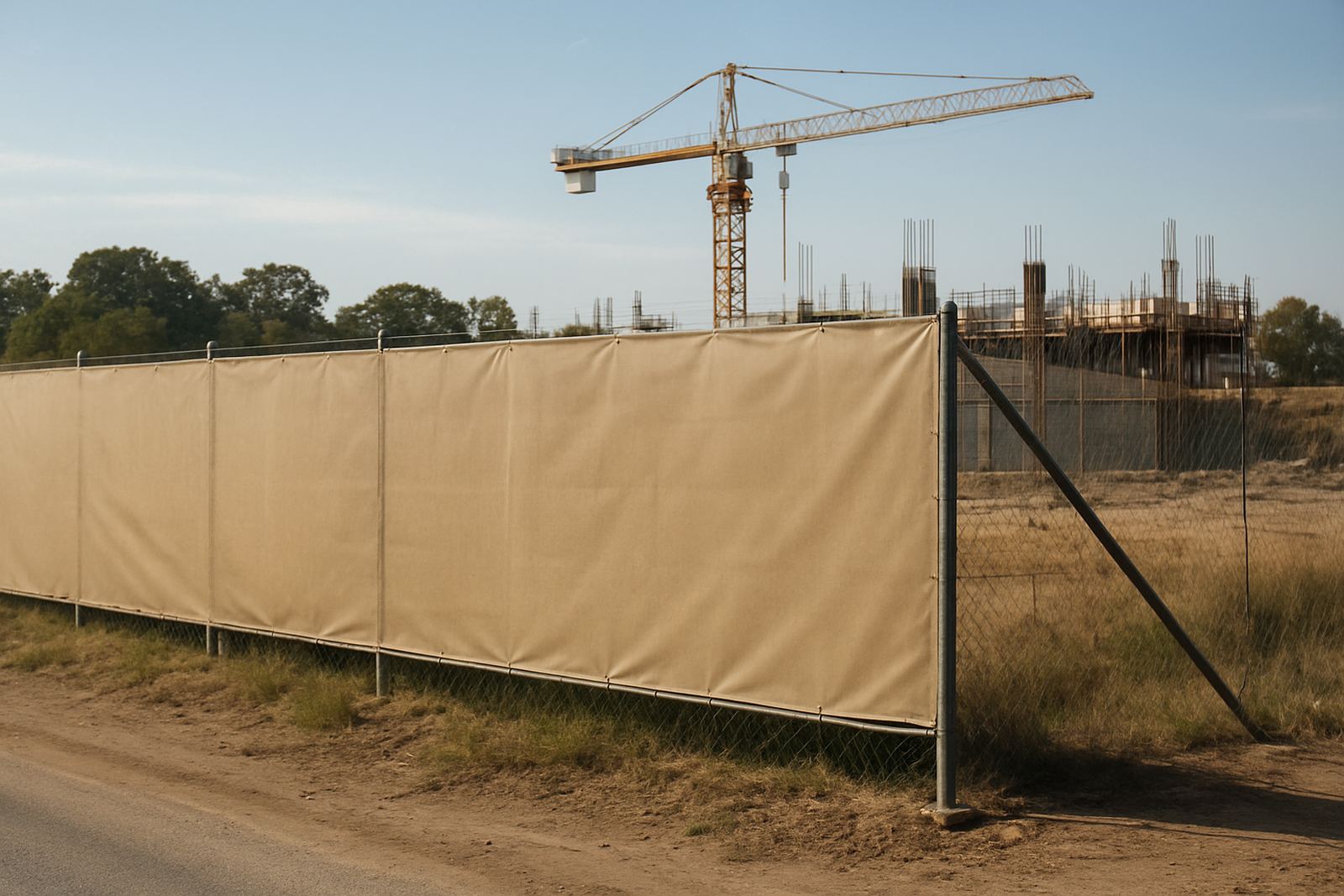
A banner wall is a large-format printed skin fixed to a frame, fence, hoarding or purpose-built structure so your message reads clearly from a distance. On development sites in Johannesburg, Pretoria, Midrand and Germiston, it is often used to turn plain temporary fencing into a proper project frontage, while also giving developers a clean place for branding, safety messages and wayfinding.
We supply banner wall systems for construction hoardings, property launches, retail openings, road reserves and event perimeters. The right system depends on whether you need full coverage, air flow through the print, or a premium tensioned finish with neat edges and controlled fixing points.
For open sites and windy areas, mesh is often the better choice because it reduces sail effect. For a cleaner presentation on a rigid frame or wall, solid PVC or tensioned fabric can give a flatter finish. The material choice matters, especially in high wind areas and where coastal humidity or dust will affect the print over time.
Sizes, formats and finishing options
Banner walls are not one-size-fits-all. We set them out to suit the wall length, viewing height and fixing method, then allow for overlaps, hems and eyelet spacing. A typical development frontage might run from 6 metres to 30 metres or more, while event walls are often built in modular sections for easier transport and reuse.
- Standard panel heights from 1.8 metres to 3.0 metres
- Long runs joined in modular sections for phased sites
- Mesh or block-out PVC options depending on wind and opacity requirements
- Reinforced hems, rope edges, eyelets or pocketed top and bottom rails
- Single-sided or double-sided print where message visibility is needed both ways
For premium installs, we can specify a tensioned finish with rails or a framed system that keeps the face tighter and reduces flutter. If the banner wall must sit behind public pedestrian movement, we normally look at stronger edge reinforcement and more frequent fixing points. That helps keep the face stable and tidy through the life of the project.
Where banner walls work best
Banner walls suit places where you need high visibility and fast turnarounds. They are used across Gauteng for property development boundaries, construction hoardings, roadworks, show days, sports events, festival fences and temporary brand activations. They also work well where municipal approvals require a neat site edge, not an open and messy frontage.
On exposed sites, especially in areas with strong afternoon wind or where the site sits close to open roads, mesh helps the wall breathe. In sheltered courtyards, shopping precincts and indoor-to-outdoor event areas, a solid graphic wall can give sharper colour density and stronger photographic detail. In Durban and other coastal areas, we also consider salt air and moisture when choosing the base material and fixing hardware.
- Development sites and hoarding wraps
- Construction perimeters and road reserve screening
- Launches, expos and temporary event branding
- Municipal projects needing site information and public notices
- Sports fields, festivals and sponsor walls
Installation, fixings and power requirements
Most banner walls do not need power or gas to function. They are purely printed and mechanically fixed. What matters is the structure behind them. We assess whether the wall will be fixed to timber, steel, mesh fence, scaffold, concrete or a freestanding frame, then specify the correct reinforcement and fixing spacing.
For larger installs, especially on windy corners or along long hoardings, our team checks the load path, edge tension and access for safe installation. If the banner wall forms part of a broader site package, we can coordinate with civils, builders and engineers so the wall does not interfere with gates, hoists, services or pedestrian routes. Where lighting is added, we allow for single-phase power, cabling routes and weather-safe connections. During load-shedding, a lit banner or event wall may need backup power if visibility after dark is important.
Site access, lifting height and fixing method all affect timing. A simple fence wrap may go up in a day, while a multi-panel hoarding with rails and trims can need staged installation. If the site is active, we plan around deliveries, concrete pours and public access, and we keep the fixings tidy so the wall can be inspected and serviced later without tearing the print.
Care, cleaning and service life
A well-specified banner wall should last through the project period without constant repair. Life span depends on UV exposure, wind, handling and the quality of the base structure. In strong sun, lighter colours and photographic artwork should be printed on material that is rated for outdoor use, with adequate lamination or protective coating where needed.
Cleaning is usually simple. Light dust can be brushed off or washed with clean water and a soft cloth. Avoid high-pressure washing close to the face, as that can lift edges or damage the print surface. If the wall is on a long-running site, we can inspect eyelets, seams and tension points, then replace damaged sections rather than pulling down the full run.
- Check for loose fixings after strong wind or heavy rain
- Keep the base of the wall clear of rubble and building spoil
- Do not let scaffolding, ladders or pallets rub against the print
- Plan periodic inspections on long-term sites, not just at handover
What to check before you order
Before we prepare your banner wall, we need the site dimensions, the fixing surface, the viewing distance and the message content. A wall facing fast-moving traffic near Sandton or Randburg needs different letter sizing from a wall viewed by pedestrians at a retail launch. The right answer is not just about print size, but about clarity, structure and durability.
Please check the following before ordering: the total run length, the finished height, whether the wall must be fire-retardant, if the site is temporary or long term, and whether the structure can take wind pressure. If approvals are needed, we can assist with the sign application pack and the technical information needed for the landlord, developer or municipality. When the artwork is ready, we still verify bleed, colour density and fixing positions so the final install matches the site.
- Exact site measurements, including corners, gates and obstructions
- Preferred material: mesh, block-out PVC or tensioned fabric
- Fixing method and substrate type
- Wind exposure, height above ground and public access risk
- Artwork supply format and deadline
Key facts
| Material options | Mesh, block-out PVC, tensioned fabric |
|---|---|
| Typical sizes | 1.8 m to 3.0 m high, modular lengths from 6 m upward |
| Fixing methods | Eyelets, hems, rails, cable ties, clamps or framed tensioning |
| Use cases | Hoardings, construction sites, launches, events and road reserves |
| Service area | Modderfontein, Johannesburg, Gauteng and across Africa |
| Support included | Site survey, specification, approvals, fabrication and installation |