What a Totem Sign Does on Site
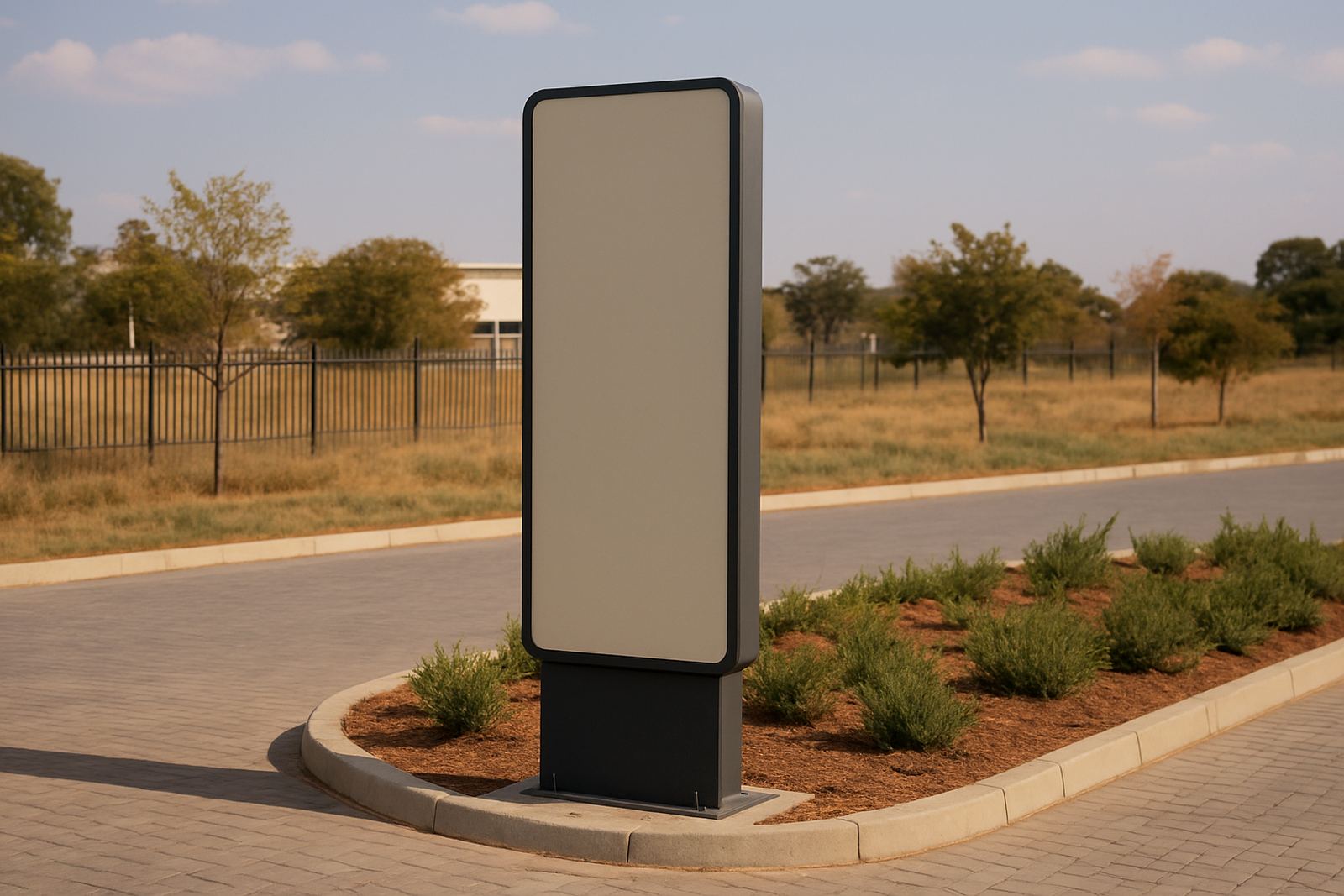
A totem sign is a freestanding vertical sign structure used to mark an entrance, direct traffic or identify a precinct from the road or parking areas. It is usually taller than a monolith sign and slimmer in profile, which makes it useful where there is limited verge width or a clean architectural look is required.
We specify totem signs for office parks, residential estates, logistics yards, retail nodes and municipal precincts. In Gauteng, they are often used along boundary walls, access roads and gatehouses, while in coastal areas the structure and fixings need extra attention because salt air and humidity can shorten the life of weak finishes.
A well planned totem sign is not just a panel on a base. It needs a clear face size, a stable foundation, correct wind loading and a finish that still looks tidy after dust, sun and load-shedding related power interruptions. Small details matter, especially when the sign must be readable at speed.
Common Sizes, Shapes and Face Options
Totem signs are built to suit the site and the viewing distance. A narrow entrance marker may be 1.2 m wide by 3 m high, while a larger mixed-use development can require a 2 m to 3 m wide structure at 4 m to 6 m high. For taller roadside applications, the height can increase further, subject to approval and engineering.
Face options can include flat aluminium composite, fabricated aluminium boxes, routered Perspex lettering, applied vinyl, brass detail and internal illumination. Where a cleaner corporate look is needed, we often use a powder coated frame with recessed faces and crisp edge returns. For wayfinding, the message area can be divided into zones for tenants, site maps, arrows and emergency information.
- Single-sided or double-sided construction
- Static faces or changeable tenant panels
- Non-illuminated, halo-lit or internally lit options
- Integrated wayfinding panels and directory sections
- Optional logo box, street number or precinct nameplate
We also allow for maintenance access from the rear or side so panels can be serviced without dismantling the full structure.
Where Totem Signs Work Best
These signs suit places where people need quick orientation before they enter the site. They are common at business parks, hospitals, schools, estate entrances, shopping precincts, industrial parks and government facilities. They also work well at branch entrances in Sandton, Midrand, Randburg, Germiston, Pretoria, Centurion and Durban, where a site needs to stand out but still look orderly.
For developers, a totem sign can carry the precinct identity while the rest of the wayfinding system guides tenants, visitors and deliveries. For municipalities, it can be used at public access points, park entrances, depot sites or community facilities where visibility and compliance are important. On busy roads, the sign needs to be readable from moving vehicles and not just from foot traffic.
In mixed-use developments, a slim profile helps the sign sit comfortably beside planting, paving and security gates without blocking sightlines. That is especially useful where the site has tight entrances or where the local by-laws limit how far a sign can project into the verge.
Installation, Foundations and Power Requirements
Installation begins with a site survey, soil check and verification of underground services. A totem sign can look simple from the outside, but the foundation must be sized for the sign height, wind exposure and soil conditions. In practice, this often means a reinforced concrete base with anchor bolts and a steel frame fixed to an engineered plinth.
For illuminated totems, we plan the electrical feed, isolator position and cable route before fabrication. If the sign includes LED modules or internal lighting, it will need a dependable power supply and weatherproof access points for maintenance. On sites with load-shedding, we can coordinate with backup power requirements where the client wants the sign to stay lit through outages. No gas is normally required for standard totem signs.
- Foundation depth and bolt layout matched to wind loading
- Electrical isolation and service access built into the design
- Weatherproofing for outdoor use in dust, rain and coastal air
- Engineering support where the sign is tall or close to traffic
For road-facing sites, we also check setback, sightlines and any municipal approval conditions before the base is poured. That saves time later and avoids rework.
Materials and Finishes That Hold Up
Totem signs in South Africa need materials that can handle sun, dust, rain and regular cleaning. We typically specify galvanised steel structure work, aluminium cladding, aluminium composite panels, Perspex detail, stainless fixings and powder coated finishes. Brass accents can be used where a more formal look is needed, though they should be sealed and maintained properly if the site is exposed.
For high-visibility branding, we can incorporate printed vinyl graphics beneath protective laminates or use routed letters with stand-off fixing for a sharper finish. On coastal sites, fixings and edges should be selected carefully to reduce corrosion. Inland, UV exposure is often the bigger issue, so colour fastness and film quality need attention from the start.
We also consider maintenance access when choosing the finish. Smooth surfaces are easier to wash down. Recessed details need less frequent repainting, but they must be detailed so dirt does not collect where it shouldnt.
Care, Servicing and Long-Term Use
A totem sign should be inspected at least twice a year, and more often on busy sites or coastal properties. Routine servicing usually includes checking the frame, bolts, cladding, seals, lighting, and any damaged graphics. If a sign is illuminated, lamps or LED modules may need replacement over time and any water ingress must be dealt with quickly.
Cleaning should be done with mild soap and soft cloths or low-pressure washing. Harsh solvents can damage printed faces, and abrasive pads can dull metallic finishes. If the sign sits near vehicle movement, tyres and dust may mark the lower sections, so a simple wash schedule helps keep the site looking tidy.
When the sign carries directional information, it is worth reviewing the content after tenant changes or road realignments. A legible sign that is out of date creates confusion and can slow down access for visitors, deliveries and emergency vehicles.
What to Check Before You Order
Before ordering a totem sign, confirm the final wording, logo usage, viewing distance and exact site position. A small change in height or panel width can affect the cost, the foundation size and whether the sign needs approval. It also helps to know whether the sign is for branding only or whether it must also carry directions, unit numbers or emergency notices.
Ask these questions early so the project can be specified correctly:
- What is the exact sign face size and overall height?
- Will it be single-sided, double-sided or multi-panel?
- Does it need internal lighting or reflective elements?
- What are the local approval and setback requirements?
- Is the site inland, coastal or exposed to strong wind?
- Who will service the sign after handover?
We prepare totem signage with fabrication, installation and handover in mind, so the final result is suitable for the site and easy to maintain. Good specification at the start reduces surprises later and keeps the project moving without unnecessary delays.
Key facts
| Typical height | 3 m to 6 m, with larger options subject to engineering and approvals |
|---|---|
| Typical width | 1.2 m to 3 m, depending on message area and site frontage |
| Construction | Galvanised steel frame with aluminium cladding and weatherproof fixings |
| Illumination | Optional internal LED lighting or external flood lighting |
| Finish options | Powder coat, printed vinyl, routed lettering, brass detail or mixed materials |
| Installation | Foundation, anchor bolts, electrical coordination and final rigging on site |