

How we scope a project before pricing
Every project starts with a proper scope so there are no surprises later. For signage in Johannesburg, Pretoria, Durban or further afield, we first confirm the site, the fixing method, power needs, materials and the level of access available for installers and lifts. That lets us match the proposal to the real conditions on site, not just the drawing.
For larger rollouts, we also separate the work into design development, fabrication, transport, installation and close-out. This helps developers and municipal teams keep track of what is happening at each step, and it gives a clear order for approvals and payment stages.
- Site survey and measurements
- Material and structure review
- Installation method and access plan
- Programme with lead times by item
Typical lead times for signage and LED screens
Lead times depend on size, quantity, finishes and whether approvals are needed before fabrication can begin. Simple vinyl graphics may turn around quickly, while fabricated 3D lettering, pylons, road signs and LED video screens need more planning and more workshop time. Coastal humidity, wind load and corrosion risk can also affect the specification, especially for Durban or other exposed areas.
As a guide, smaller indoor items can move faster than outdoor structures that need engineering checks, structural coordination or municipal approval. If your programme is tied to a launch date, opening, occupancy certificate or roadworks schedule, tell us early so we can map the critical path and avoid delays.
- Simple printed vinyl and internal graphics: shorter lead time
- Fabricated lettering, light boxes and plaques: medium lead time
- Pylons, road signs and large external signs: longer lead time
- LED screens and integrated systems: allow extra time for testing
Approvals, permits and municipal checks
Many signage projects need more than fabrication. Road-facing signs, freestanding structures, billboards and some illuminated signs may require approval from a municipality, landlord, estate manager or roads authority. We can support the process by preparing drawings, material notes and the information needed for submission.
Where structural coordination is required, we work with the relevant professional team so the sign meets the site conditions and the local rules. This is especially important for tall pylons, rooftop work and anything exposed to strong wind or vibration. If the site is in Gauteng or on a transport corridor, we often build the approval steps into the programme from the start.
- Check who controls the site and the frontage
- Confirm whether sign permits or consent are needed
- Prepare drawings and specification notes
- Allow time for revisions before fabrication
Site access, lifting and installation day planning
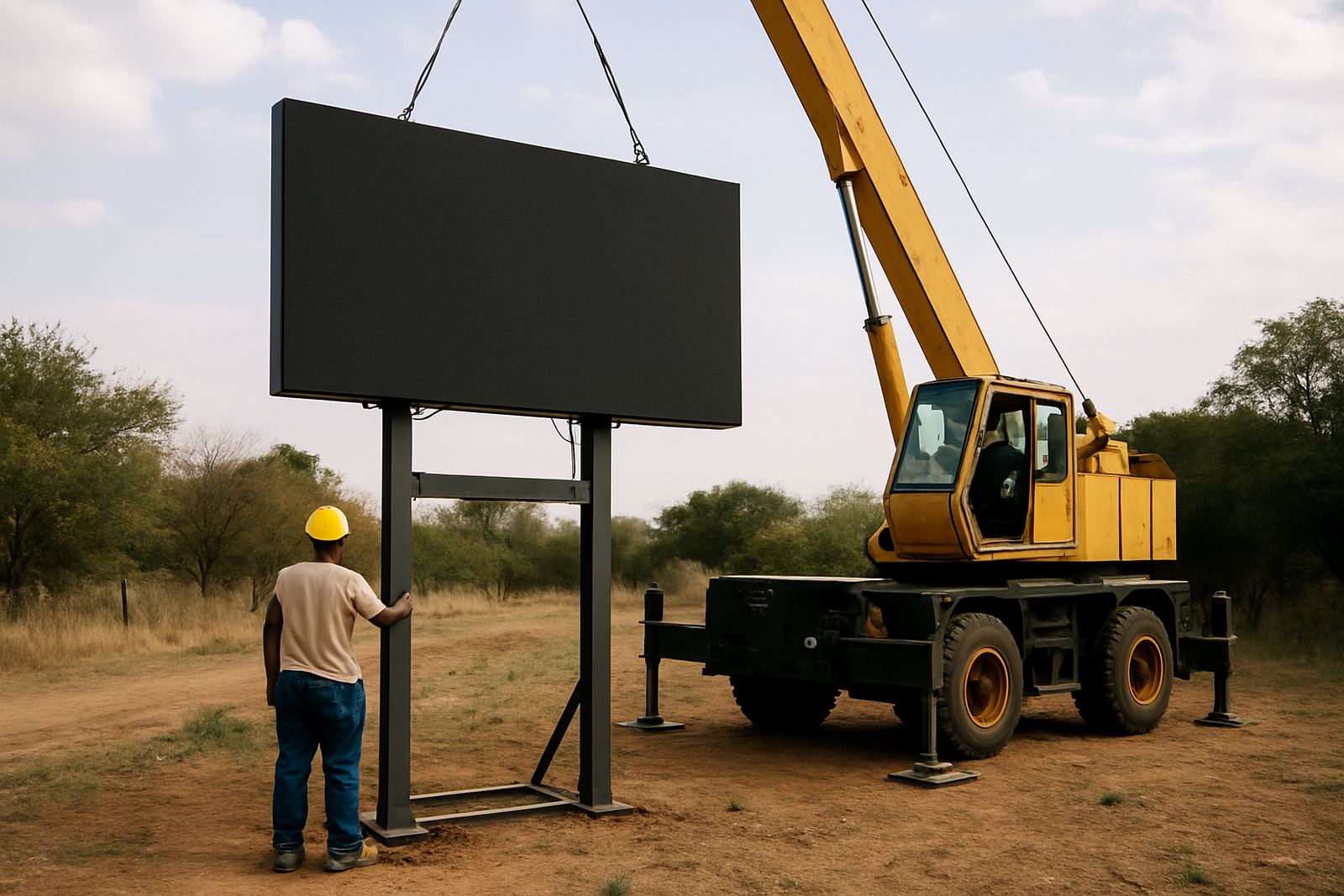
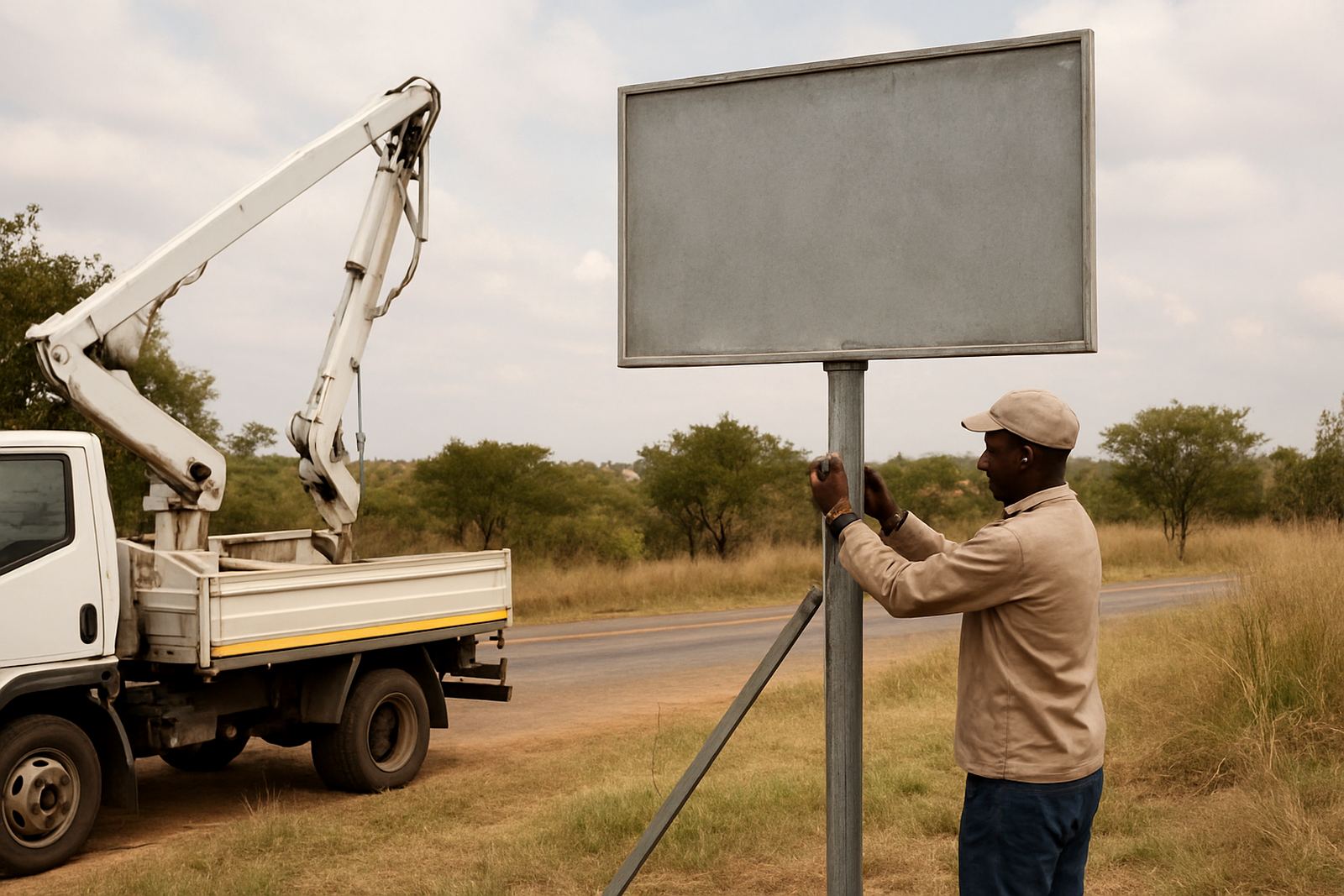
Access is one of the biggest factors in a smooth install. We need to know if the site allows working after hours, whether there are height restrictions, where the delivery truck can park, and if a cherry picker, scaffold or crane is needed. In busy areas like Sandton, Midrand or central Johannesburg, delivery windows and security controls can change the installation sequence.
We also plan for power isolation, live traffic, pedestrian flow and weather. A sign that mounts well in the workshop can still be tricky on site if the wall is uneven, the slab is not cured yet, or the wind picks up. Good access planning saves time, reduces call-backs and keeps the site safe.
- Confirm access times and security procedures
- Check clear heights, parking and loading points
- Allow for lifting equipment where needed
- Agree who signs off the work on site
Maintenance for signs, vinyl and LED systems
Maintenance keeps signage legible and presentable, especially in dusty urban areas and along busy roads. Vinyl needs cleaning at the right interval, metal finishes need inspection for corrosion, and illuminated signs should be checked for water ingress, failed drivers or loose fixings. LED screens also need periodic checks for alignment, ventilation and power quality.
We can build a maintenance plan into the handover so your team knows what to inspect and how often. For municipalities and developers with multiple sites, this is useful because it gives one process for reporting faults, scheduling repairs and tracking warranty items.
- Routine cleaning and visual checks
- Electrical and illumination testing
- Fastener and bracket inspection
- Service notes for future call-outs
Payment stages and project handover
Most projects are split into stages so that design, fabrication and site work each have clear milestones. This helps with cash flow on both sides and keeps the job moving. The stage structure may include an initial payment, a fabrication milestone, and a balance before or after installation depending on the scope and risk profile.
Once the work is complete, we issue a handover pack with the agreed scope, any care notes, and relevant close-out information. If there were approvals, amendments or site instructions during the job, those are captured too so everyone has a clean record for future reference.
- Stage 1: scope confirmation and design approval
- Stage 2: fabrication progress or material release
- Stage 3: installation and practical completion
- Stage 4: handover and final close-out