What fabrication management covers
Fabrication management is the control room behind a signage project. It is where drawings become buildable parts, where material choices are checked against site conditions, and where every bracket, weld, print and coating is tracked before anything leaves the workshop. For projects in Johannesburg, Pretoria, Durban or coastal towns further afield, that control matters because heat, UV exposure, salt air and municipal compliance all affect the final result.
We manage the production sequence for printed vinyl, routered Perspex, aluminium panels, brass details, fabricated 3D lettering, light boxes, pylons, road signs and LED screen structures. That includes checking thicknesses, fixing methods, edge finishing, waterproofing, access for maintenance and the tolerances needed for a clean install. A sign that looks fine in a sketch can still fail if the internal structure is too light, the finish is wrong or the fixing points do not suit the site conditions.
- Material and finish control for indoor and outdoor signage
- Workshop coordination for cutting, welding, printing and assembly
- Tolerance checks for alignment, flatness and fixing points
- Weather and corrosion considerations for Gauteng and coastal sites
How we run production from drawing to dispatch
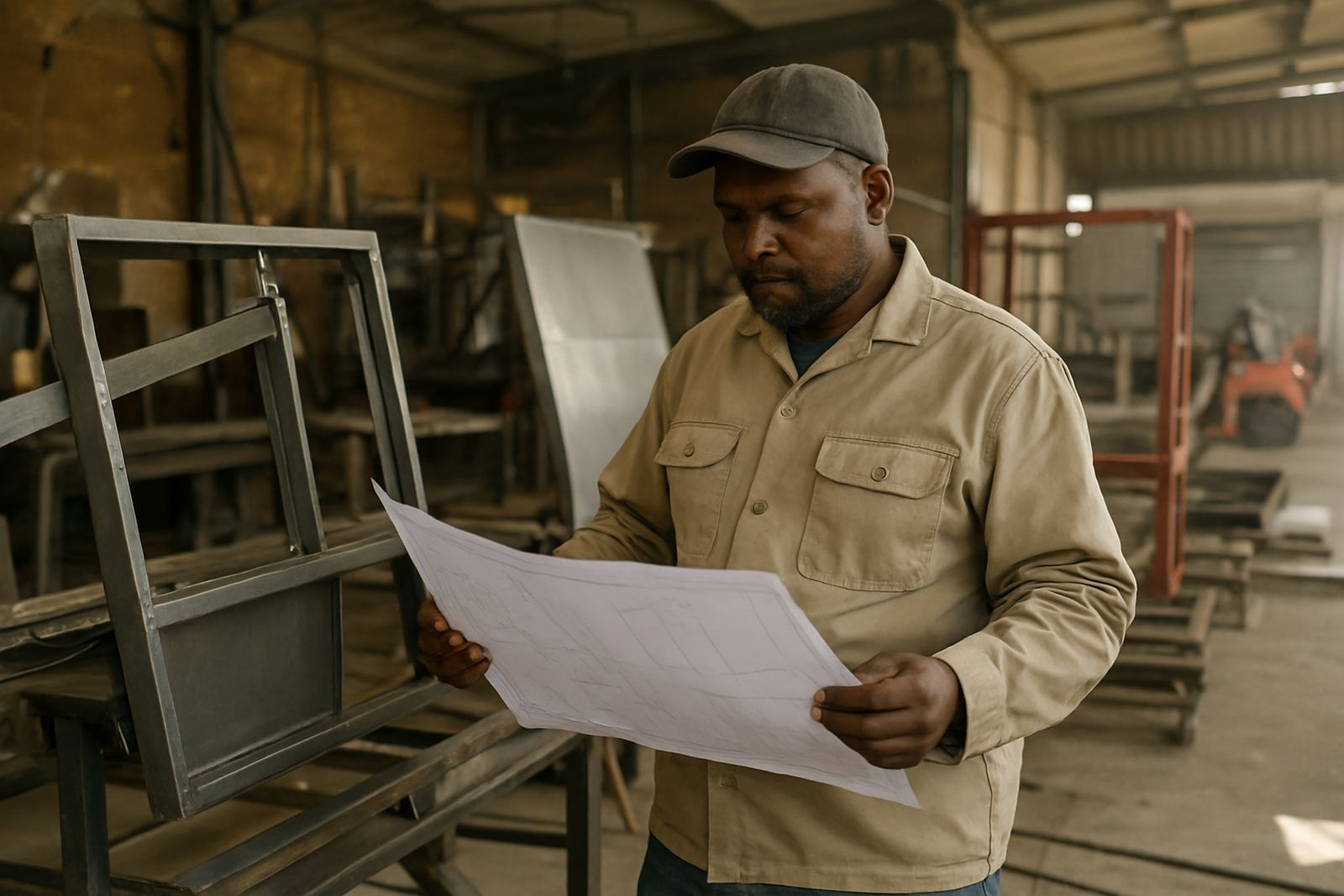
Every project starts with the approved design and the site requirements. We confirm dimensions, mounting heights, access routes, power needs for illuminated units and any constraints that affect build method. If a pylon is going into a windy roadside location or a video screen is going onto a building facade, the fabrication method changes accordingly. Our team then converts the design into production information that the workshop can use without guesswork.
Sibusiso Mthembu and Leanne van Wyk oversee project flow, while Sakhile Motsepe checks technical coordination, Riaan Smit manages workshop output and Omolemo Msiza tracks site readiness for delivery and rigging. This keeps the project moving in the right order, with fewer surprises near handover. It also helps when work is being split across multiple sites in Sandton, Midrand, Germiston, Pretoria or further into Africa.
- Review of approved drawings and material schedule
- Workshop job card issue with dimensions, finishes and fixings
- Mid-production checks for accuracy and appearance
- Pack-out, labelling and delivery coordination to site
Materials, tolerances and finish control
Good fabrication is measured in millimetres. We check thickness, edge quality, weld consistency, joint lines and paint or powder-coated finish before dispatch. Aluminium sections need the right gauge for the span and wind load, Perspex should be routed cleanly without chipping, brass and other decorative metals need handling that preserves the face, not just the front view. Even a small error can cause visible misalignment once the sign is lit or mounted on a wall.
For outdoor work, we allow for expansion, drainage and corrosion resistance. In humid or coastal conditions, fixings and coatings must be selected with care. For LED screens, we also check access panels, ventilation, cable routes and service clearance so the screen can be maintained without pulling the whole structure apart. It is the sort of detail that saves time later when a panel needs replacing or a municipal inspector asks for documentation.
- Typical tolerance control: plus or minus 2 mm on smaller items, tighter where required
- UV-stable and corrosion-resistant finishes for exposed sites
- Weatherproof detailing for joints, access doors and electrical housings
- Clean edge finishing on cut lettering, panels and surrounds
Turnaround times that match real site deadlines
Turnaround depends on size, complexity, approval cycles and whether specialist structures or imported components are involved. Small fabricated units can move quickly, while pylons, large LED screens and multi-part wayfinding systems need more coordination. We plan production around the site programme so delivery does not clash with groundwork, civils, power connection or municipal inspection dates. That matters when a project has to land before a launch, handover or opening day.
As a practical guide, smaller signage components may take a few working days once approvals are in place, while larger fabricated structures can take several weeks. If fabrication is tied to structural steel, electrical integration or overseas supply, we build in the extra time needed for testing and loading. For urgent projects, we can phase the work so critical items are released first and non-critical items follow without holding up the site.
- Short-run items: a few working days after approval
- Medium projects: 1 to 3 weeks depending on material and finish
- Large structures and LED systems: longer lead times with staged release
- Rush orders handled only when quality and safety can still be maintained
Pricing approach for fabrication management
Our pricing is based on the scale of the job, the number of components, the materials required and the level of coordination needed between fabrication, electrical work and installation. A straightforward set of route markers costs very differently from a fabricated pylon with internal steelwork, illumination and site rigging. We quote transparently, with scope clearly noted so you can see what is included and what is excluded before production begins.
Where possible, we propose material options that suit the project budget without compromising safety or finish. For example, an aluminium face with routed vinyl detailing may be more practical than a heavier solid metal build for certain wall signs, while still giving a neat result. We also flag items that affect cost later, such as access equipment, transport into remote areas, protective coatings for coastal towns, or extra test fitting before dispatch.
- Pricing based on scope, quantity and technical complexity
- Separate allowance for special finishes, access and rigging support
- Value engineering offered where material substitutions are possible
- Clear exclusions for items outside the approved fabrication scope
Inspection, maintenance and handover support
Fabrication management does not end when the item leaves the workshop. We plan for inspection points, protective packaging and maintenance access so the finished sign can be serviced later without damage to the structure. For illuminated signs and LED screens, routine checks are important because dust, moisture and vibration can affect performance over time. On road-facing or high-traffic sites, fixings should also be checked after the first few months of operation.
We generally recommend a maintenance interval of every 6 to 12 months for most outdoor signage, with shorter intervals for coastal locations, high-exposure roof sites or units with electrical components. LED screens and illuminated systems may need earlier checks after installation, then scheduled servicing based on usage hours and environmental exposure. On handover, we provide the practical information needed to keep the asset in good order, including access notes and recommended inspection points.
- Recommended outdoor inspection every 6 to 12 months
- Earlier review for coastal, high-wind or high-dust sites
- Maintenance access planned into the fabrication method
- Handover information aligned to the installed asset
Key facts
| Service area | Modderfontein, Johannesburg with projects across Gauteng and Africa |
|---|---|
| Core outputs | Printed vinyl, Perspex, aluminium, brass, 3D lettering, light boxes, pylons, road signs, billboards, LED screen structures |
| Build control | Material checks, tolerance control, finish inspection and dispatch management |
| Typical tolerance | Usually within plus or minus 2 mm on smaller fabricated items |
| Turnaround | From a few working days to several weeks depending on size and approvals |
| Maintenance interval | Every 6 to 12 months, sooner for coastal or high-exposure sites |