
Early Planning That Prevents Costly Rework
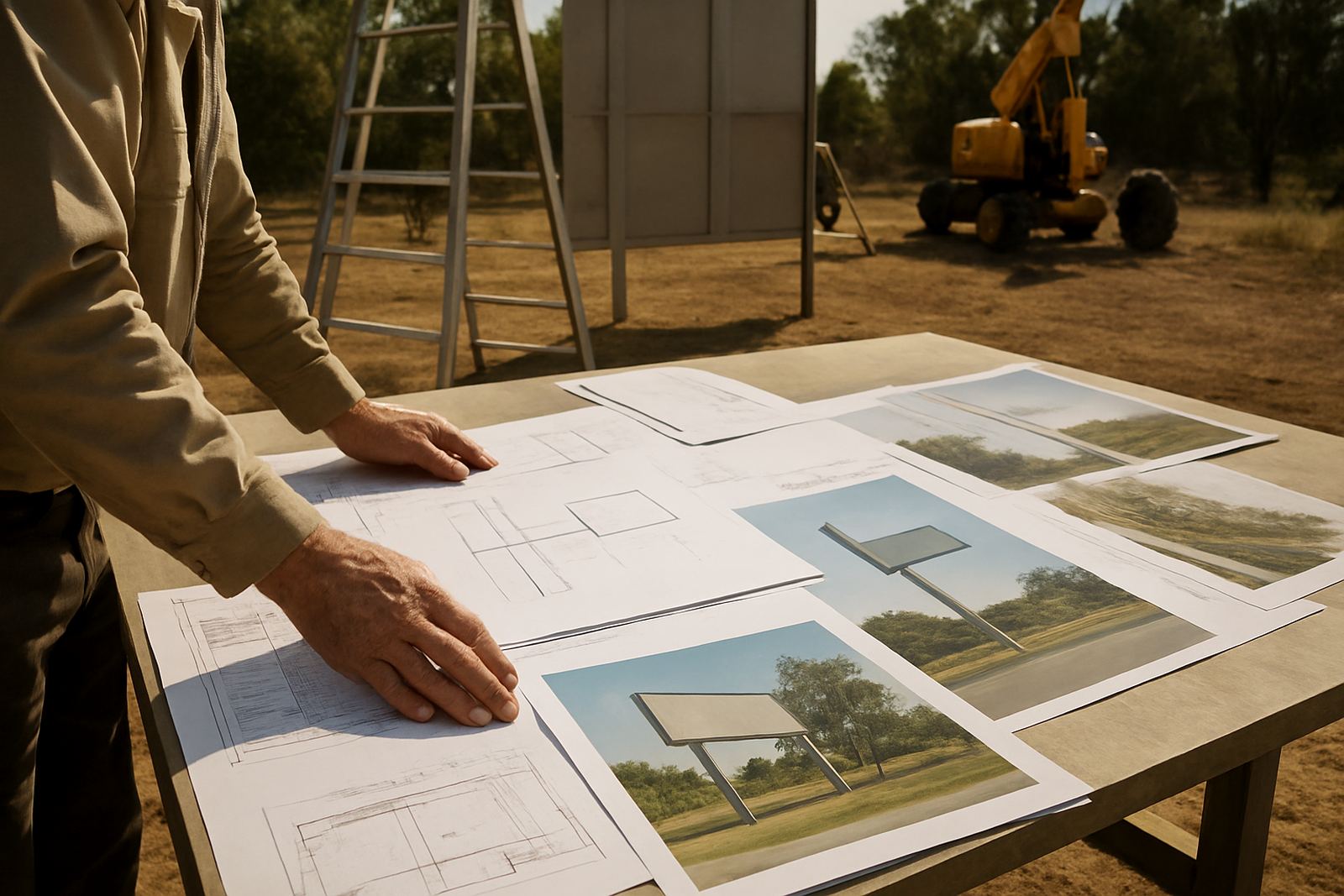
Good signage starts before fabrication. We look at how people arrive, where they stop, what they read first and how they move through the site. That means the sign package is planned around the property, not bolted on after the fact. For new developments, retail parks, office parks and municipal sites, this stage helps avoid clashes with structure, services and approval requirements.
We also check the practical side: daylight visibility, night visibility, pedestrian approach, vehicle speed, mounting height and exposure to wind, dust and coastal moisture. In Gauteng, many sites also need planning for load-shedding, so illuminated signs and LED screens must be considered with backup power and safe switching in mind.
- Visibility study for key approach points
- Site flow review for vehicles and pedestrians
- Budget split by priority, phase and sign type
- Signage schedule mapped to the rollout sequence
What Is Included In The Strategy Phase
Our signage strategy service covers the full planning layer before drawings move into approval or production. We define the sign mix, the order in which signs should be installed, and what each element needs to do on site. That may include a roadside pylon, wayfinding blades, internal directional signs, branding signs, safety signs, tenant panels and digital media integration.
Where needed, we also advise on material choice. For example, aluminium performs well for outdoor panels, Perspex suits clean illuminated faces and fabricated lettering, brass is often used for premium identity pieces, and printed vinyl works well on smooth internal or temporary applications. Spec sheets are set up with thicknesses, fixing methods and finish notes so the next step is clear.
- Sign type matrix by location and function
- Material and finish recommendations
- Illumination notes for light boxes and LED screens
- Preliminary fixing and access requirements
How We Work From Brief To Handover
We keep the process direct and measurable. First we take the brief and site information, then we do a site survey or benchtop review depending on access. After that, we develop the strategy pack, confirm priorities with the client and mark any items that need structural input or municipal approval. If a project is being rolled out across several branches, we also group the signs into phases so procurement and installation can be managed properly.
Turnaround depends on the site count and the complexity of approvals. A single site strategy is scoped once the brief and site access are in place. Multi-site or mixed-use programmes need a broader process, especially where approval support and structural coordination are required.
- Brief and site information review
- Site survey and photo record
- Strategy document and sign schedule
- Client review, revisions and issue for implementation
Budget Planning And Pricing Approach
We price strategy work according to site size, number of sign types, travel requirements and the level of technical detail needed. A small site with simple internal directions will cost less than a large property with road signs, billboards, illuminated fascias and screen integration. For larger rollouts, we can break the work into phases so the budget is spread across planning, approvals and installation.
As a guide, strategy fees are usually fixed once the scope is defined. That gives clients a clear cost before production starts, which is useful for developers and municipalities working within capital or procurement limits. If structural checks, traffic considerations or specialist screen planning are required, those are costed separately and agreed up front.
We aim to keep the strategy practical. There is no point specifying a premium finish for a sign that sits in full sun and constant dust if it cannot be maintained easily. The right answer is the one that lasts, is readable and fits the budget over time.
Specs We Factor Into The Strategy
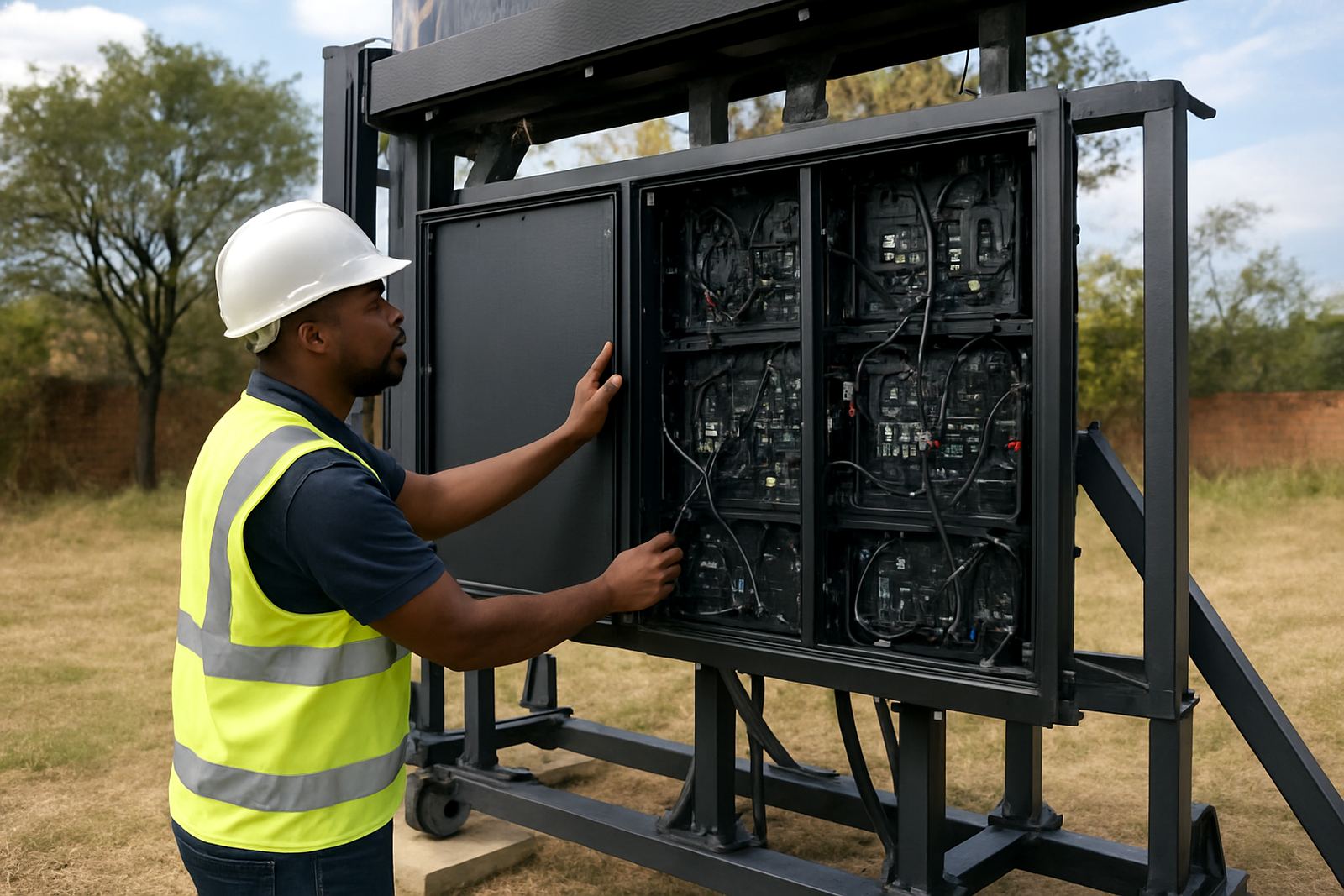
The strategy phase includes the technical details that make the final signage workable. We set out size ranges, sightlines, electrical needs, access for maintenance and the environmental conditions on site. On coastal projects, for example, we allow for corrosion resistance and sealed fixings. In high-wind areas, we look carefully at support structure and panel loading. For digital screens, we plan ventilation, viewing distance and servicing access.
- Panel thickness: typically 3 mm to 10 mm depending on material and size
- Lettering depth: commonly 20 mm to 150 mm for fabricated 3D applications
- Illumination: face-lit, halo-lit or internally lit depending on use
- Screen planning: pixel pitch, viewing distance and service clearance
- Mounting: wall, pole, plinth or structural frame depending on site conditions
Maintenance Planning For Longer Service Life
Signage strategy is not only about first installation. It should also cover how the signs will be cleaned, checked and repaired over time. We build maintenance notes into the plan so the client knows what needs inspection at 3-month, 6-month and 12-month intervals. This is especially important for illuminated signs, moving parts, outdoor vinyl, and LED video screens that operate in sun, rain and power fluctuation conditions.
For most sites we recommend a basic visual inspection every quarter, with a fuller check twice a year. That includes checking fixings, lighting output, seal integrity, panel condition and any damage from weather or vehicle impact. If the site is in a dusty area or close to the coast, the interval may need to be shorter. Small maintenance steps now help avoid larger repair bills later.
Who This Service Suits In Gauteng And Across Africa
This service suits brands opening new sites, developers needing tenant and directional signage, and municipalities that must coordinate wayfinding, road signs and public information. It also works well for operators who need consistent signage across branches in Sandton, Midrand, Randburg, Germiston, Pretoria, Centurion and Durban, then into other provinces or countries.
Deep3 Signage Consultants is based in Modderfontein, Johannesburg and our team handles strategy, surveys, design development, fabrication management, installation management and handover. If your site needs printed vinyl, routered Perspex, aluminium and brass features, fabricated 3D lettering, pylons, road signs, billboards or LED screen integration, we can plan it from the start so the pieces fit together properly.
Key facts
| Service area | Modderfontein, Johannesburg and projects across Gauteng and Africa |
|---|---|
| Typical strategy turnaround | 5 to 10 working days for single sites, 2 to 4 weeks for larger rollouts |
| Scope includes | Site surveys, wayfinding planning, material specification, approval support and maintenance planning |
| Common sign types planned | Pylons, road signs, billboards, light boxes, 3D lettering and LED screens |
| Pricing method | Fixed fee based on scope, site count, technical detail and approval requirements |
| Maintenance review intervals | 3 months, 6 months and 12 months depending on exposure and use |