What municipal signage has to do on a busy day
Municipal infrastructure signage does more than mark a road or point to a building. It has to help drivers, pedestrians and service teams move safely, find the right route and understand local rules without stopping the flow of traffic. In practice that means clear road signs, street name blades, public notices, directional boards, precinct maps and access control signs that can stand up to sun, dust, vandalism and heavy rain.
For local authority upgrades, the first question is not what looks best, but what problem the sign must solve. Is the area confusing because there are too many turns, a new clinic access route, or a depot entrance that trucks keep missing? We look at the movement pattern, sight lines, speed of traffic and the way pedestrians cross the site before any layout is finalised. That saves time and reduces the risk of signs being installed in the wrong place.
Typical equipment for roads, depots and civic sites
The right equipment set depends on whether the project is a new road, a public building, a transport node or a mixed-use civic precinct. We specify signage that can be manufactured in the right material for the job, then mounted with the correct brackets, footings and fixings for local conditions. In Gauteng, for example, heat, theft risk and dust matter. At the coast, salt air changes the material choice and the maintenance cycle.
- Reflective road signs on aluminium or galvanised steel substrates
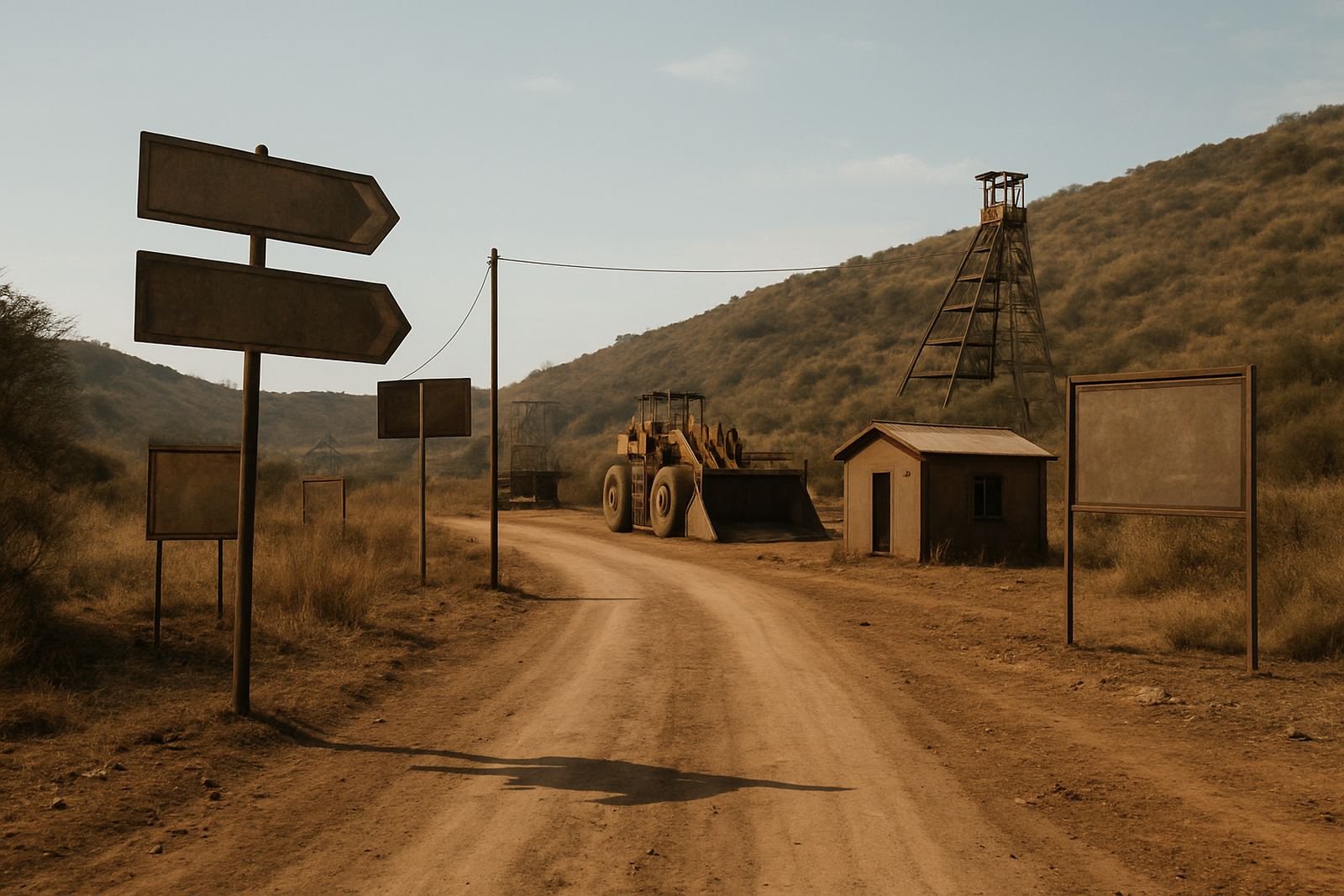
- Street name signs and directional blades for intersections and precincts
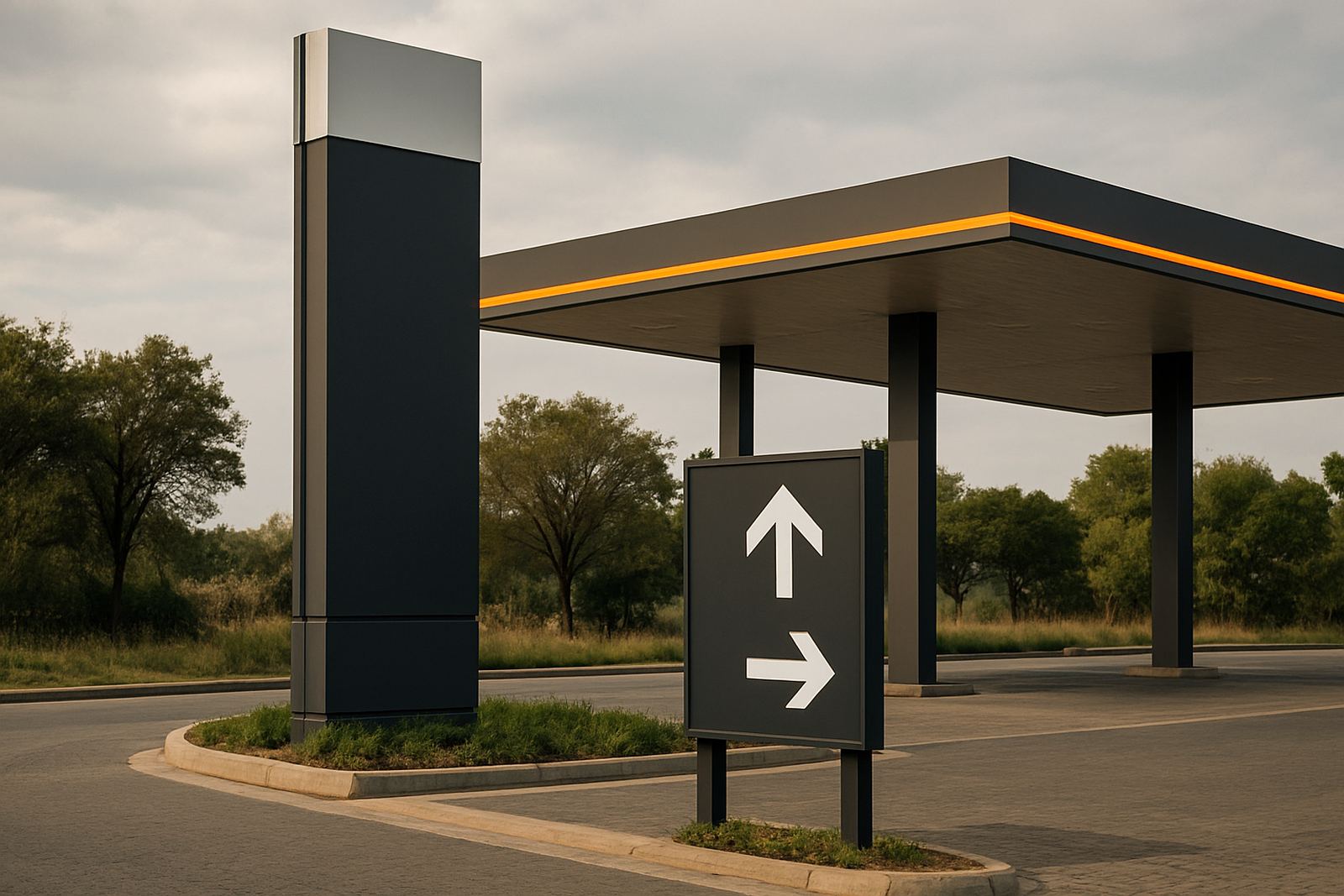
- Wayfinding pylons for civic offices, libraries, clinics and municipal yards
- Printed vinyl for temporary diversion boards and construction phase notices
- Routered Perspex, aluminium and brass for building identification and civic branding
- Fabricated 3D lettering for entrances and public-facing facades
- Light boxes for after-dark visibility where power supply is stable
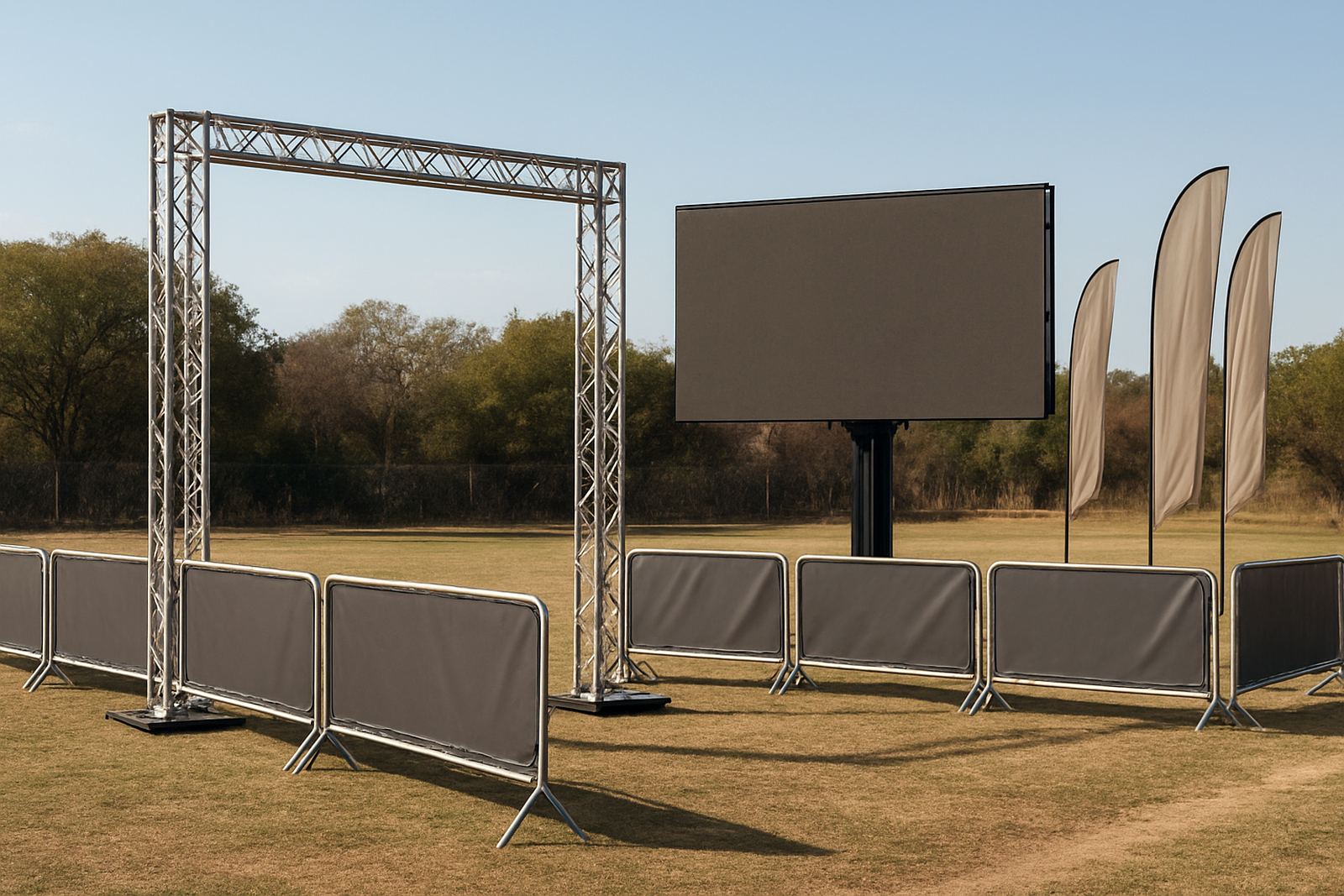
We also handle LED screen integration where a municipality needs live notices, public announcements or event messaging at a central site. Those systems need proper structural coordination and maintenance planning, otherwise a good screen becomes an expensive problem very quickly.
Planning the layout so people do not miss the message
A municipal sign plan should be read in motion. A driver doing 60 km/h in Germiston or Centurion does not have time for small lettering or poor contrast. A pedestrian outside a clinic in Randburg needs simple direction in one glance. For that reason, we look at mounting height, line of approach, sign size, wording length and the contrast between letters and background before we lock the drawing pack.
Good layout also means fewer signs, not more. Too many boards at one junction cause clutter and drivers start ignoring all of them. We usually group information by priority: safety first, direction second, then general information. If a site has many departments or entrances, the wayfinding system should use the same language, the same arrow logic and the same visual hierarchy across the whole property.
Where municipal rules apply, approval support becomes part of the job. That can include traffic and roads requirements, power supply approvals for illuminated signs, and structural checks for tall pylons or screen support frames. A clean approval pack prevents delays during installation, especially when the project is tied to budget year deadlines.
Common mistakes that cost time and money
Many civic projects run into trouble because the signage is treated as a last-minute purchase instead of part of the infrastructure scope. The result is signs that arrive late, do not fit the site, or cannot be installed because the footing, pole size or electrical supply was never confirmed. We often see this on public facility upgrades where civil works are already complete and there is no room left to correct the layout.
- Using lettering that is too small for road speed or viewing distance
- Choosing the wrong material for coastal humidity or harsh sun
- Ignoring maintenance access for cleaning, lamp replacement or screen servicing
- Installing signs before utility routes and pedestrian flow are confirmed
- Leaving approval until the end of the project, which causes rework
- Saving on fixings and brackets, then paying for repairs after wind damage
Another common issue is inconsistent naming. If one board says Civic Centre and another says Municipal Offices, people begin to guess. Consistency across all signs helps residents, contractors and emergency services find the right place faster.
Budget ranges for municipal infrastructure signage
Budgets vary widely because the scope can range from a few wayfinding boards to a full precinct sign system with road signs, pylons and digital displays. For smaller civic upgrades, a basic package might start around R45,000 to R120,000, depending on the number of signs, materials and installation conditions. A medium project for a municipal office, clinic cluster or transport node often falls between R150,000 and R450,000.
For larger road networks, public realm upgrades or a mixed signage package with fabricated structures and LED integration, the budget can move from R500,000 to well over R2 million. That is usually driven by structural steel, electrical works, traffic accommodation, night installation, and the need for ongoing maintenance planning. We always recommend costing the full life of the system, not only the first build. A sign that lasts longer and needs less attention often costs less over three to five years.
Where a project is phased, it helps to split it into essentials first: compliance road signs, access wayfinding and public information, then civic branding and digital elements later. That keeps the site operational while funding is released in stages.
How we handle the work from survey to handover
Our team works from Modderfontein and supports municipal and developer projects across Gauteng, Durban and wider Africa. We start with a site survey and signage strategy, then move into design development, material specification and structural coordination. After that we manage fabrication, installation and handover so the sign system is delivered as a working part of the infrastructure, not a loose set of items.
The team is led by Sibusiso Mthembu, with operations, engineering, visualisation, fabrication and rigging handled by people who deal with real site conditions every day. That includes uneven ground, traffic control, lift access, late changes from consultants and the practical limits of working around power outages or municipal operating hours. If the project needs maintenance planning, we build that in from the start so cleaning, replacement and future additions are easier.
For municipalities, the best result is a sign system that is simple to understand, easy to maintain and ready for the next budget cycle. That means fewer complaints, clearer access and better public confidence in the upgrade.