
Place signs at the decision, not the destination
The most common mistake with directional signage is putting it too close to the final point or too far back from the choice that matters. A visitor approaching a mixed-use site in Sandton, a logistics yard in Germiston or a municipal facility in Pretoria needs to know what to do before they reach the gate, split road or parking entrance.
Good placement starts with the route the user will actually take. That includes the first approach road, the last turn, the entry gate and the internal junctions where people commonly hesitate. If a sign only appears once the vehicle has already passed the turn, it is not directing traffic, it is explaining a mistake.
- Put the first directional sign before the decision point.
- Repeat guidance where a driver must confirm the choice.
- Use the final sign only to confirm arrival, not to start the journey.
Work from the speed of the road and the site
The right position changes with traffic speed, road width and how busy the entrance is. A sign on a 60 km/h arterial in Midrand needs a longer reading distance than one inside a controlled industrial park in Modderfontein. Pedestrian wayfinding inside a campus has a different rhythm again, because people read while walking, not from a moving vehicle.
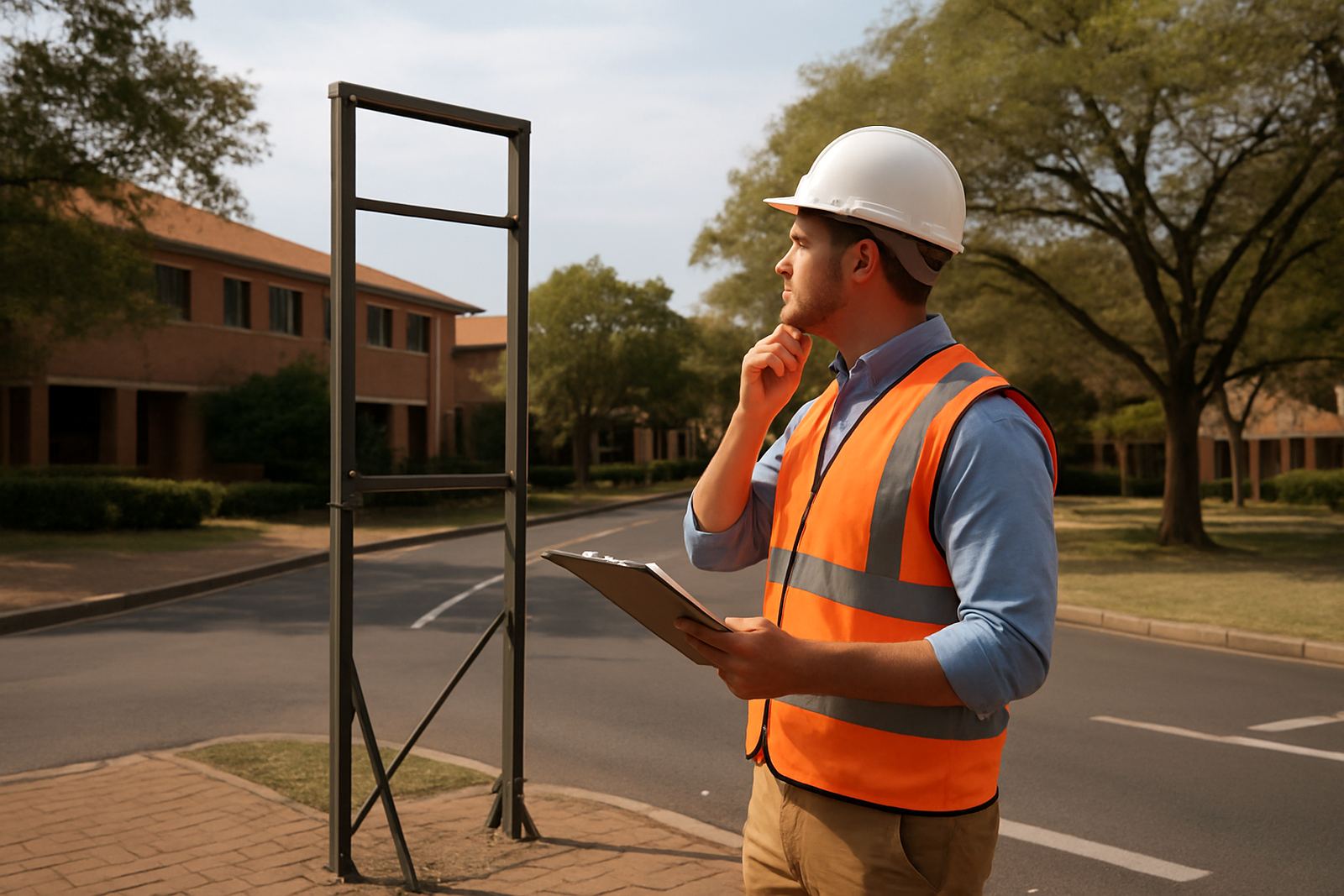
We normally look at sight lines from the driver seat, the pedestrian approach and the stopping point. Trees, boundary walls, guardhouses, parked trucks and even low winter light can hide a sign at the exact moment it should be seen. At coastal branches or projects in Durban, humidity and salt air also affect materials and fixings, so placement should account for maintenance access too.
- Match panel size to approach speed and viewing distance.
- Avoid placing signs where trucks, poles or planting block the view.
- Allow enough space for drivers to slow down and make the turn safely.
Use a chain of signs, not one oversized board
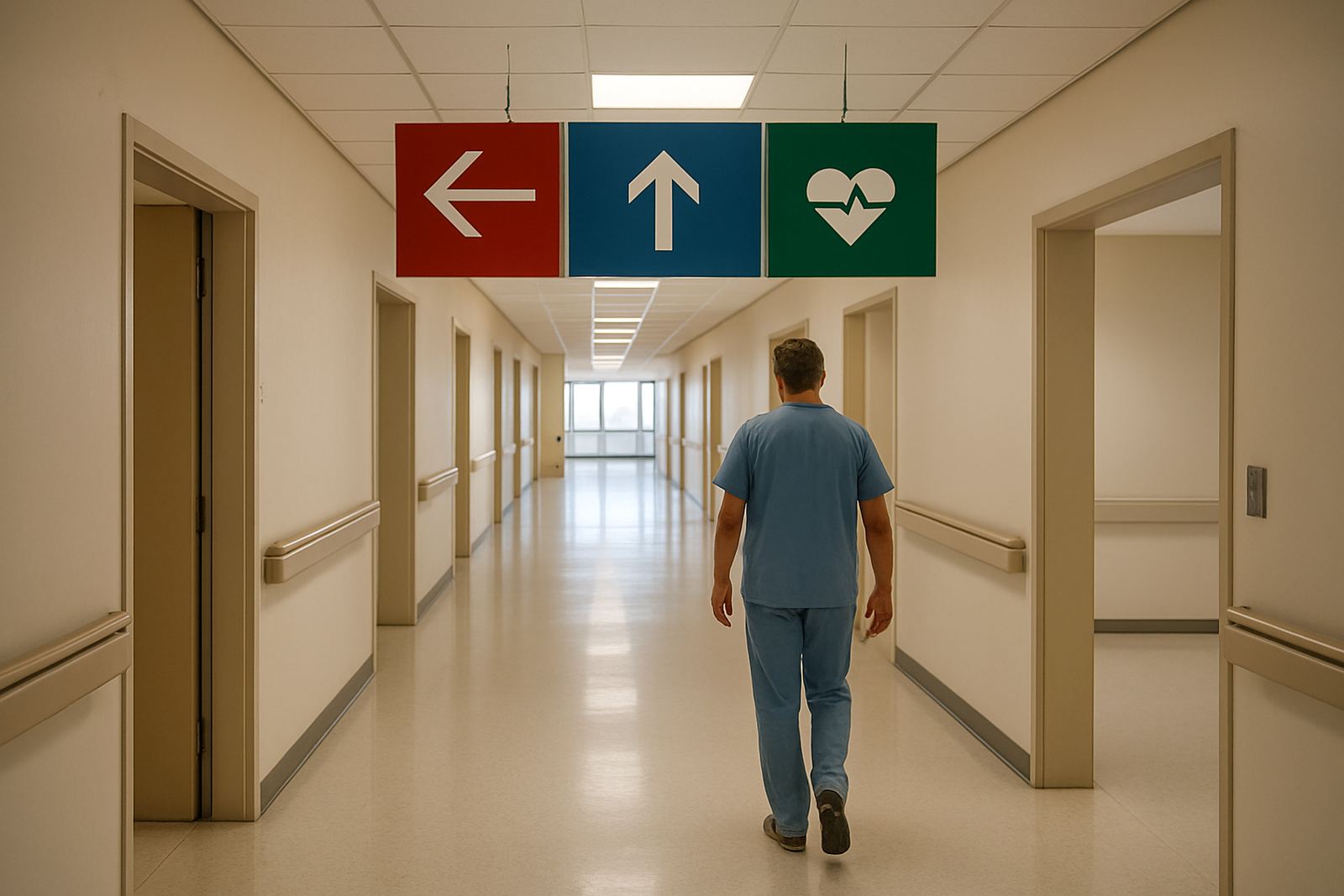
Directional systems work better when they are staged. One sign introduces the direction, a second confirms it, and a third reassures the visitor at the final turn. This is especially useful on larger developments, hospitals, office parks and municipal precincts where visitors may face several choices before they arrive.
Too many sites try to solve every problem with one large board near the gate. That rarely helps because the visitor still has to search for the next movement after the first instruction. A proper sequence reduces hesitation, cutting dead-end turns and reverse manoeuvres that cause congestion and damage to kerbs or signage. It also makes the site feel more organised, which matters for developers and tenant-facing brands.
- Stage signs at each major junction in the route.
- Keep wording short so drivers can read it quickly.
- Repeat destination names consistently across the route.
Make sure the sign is visible from the right angle
Many placement problems are not about distance, they are about angle. A sign can be technically close enough but still fail if it faces the wrong direction, sits behind a fence line or catches glare from the morning sun. In Gauteng, where roads often run across wide open sites, a sign needs to face the real approach path, not just the boundary line.
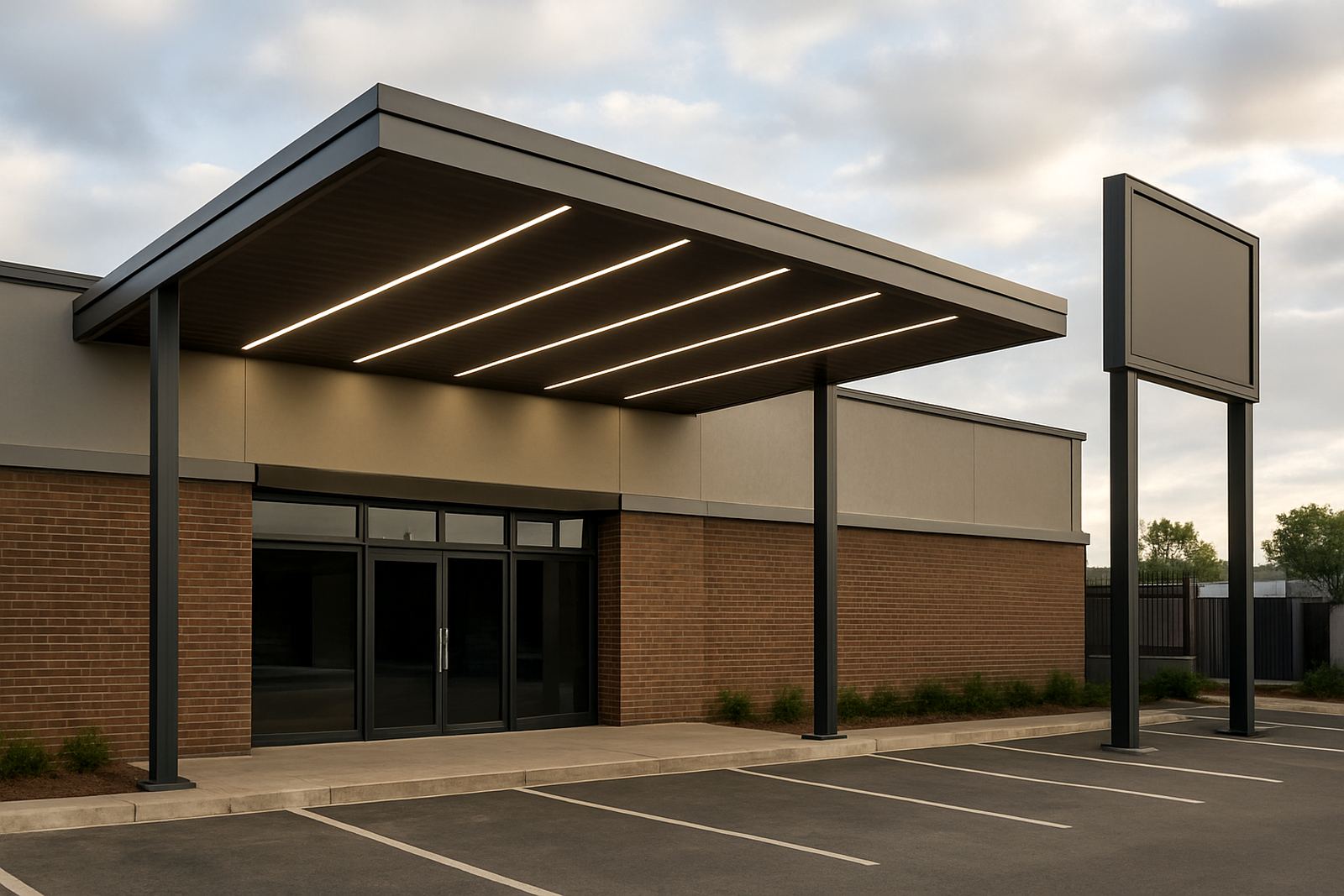
We also check whether the sign can be read by a driver in motion and by a pedestrian standing still. Letter height, contrast and mounting height all affect that decision. A pylon may suit the roadside, while a smaller wall-mounted panel works better inside the site where speeds are lower. The point is to match the sign to the viewing cone, not simply the available wall.
- Face the message towards the actual line of travel.
- Avoid shiny finishes where sunlight or headlights cause glare.
- Set mounting height so cars, bakkies and delivery trucks all clear it safely.
Respect approvals, servitudes and local site rules
Sign placement is not only a design question. In many parts of Johannesburg, Pretoria and the surrounding metros, road reserves, servitudes, municipal by-laws and landlord rules shape where a sign may go. A pylon too close to a road edge or a board placed inside an easement can trigger delays, rework or removal.
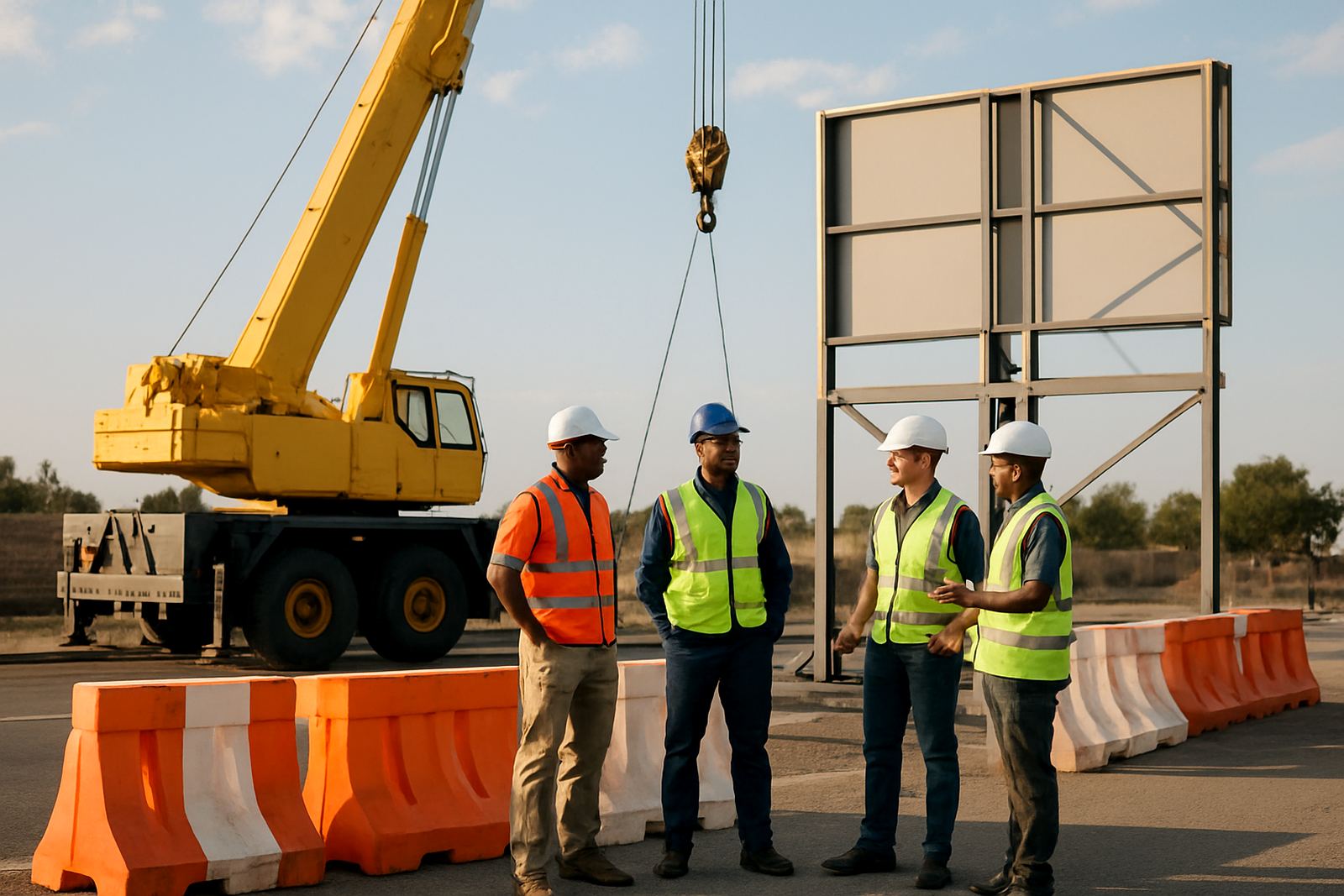
For public-facing projects, we work through the approval sequence early, because a sign that is legally correct and properly positioned saves time later. That includes checking structural loads, underground services, visibility triangles and whether the installation needs special treatment near intersections or pedestrian crossings. It is better to adjust a footing on paper than to move a completed sign after fabrication.
- Confirm boundary lines before setting the final position.
- Check servitudes, road reserve limits and landlord conditions.
- Coordinate structure, electrical supply and maintenance access before installation.
A Modderfontein example: getting visitors to the right gate
On a recent Gauteng project near Modderfontein, the challenge was not the lack of signage but the wrong placement. Visitors were entering the wrong driveway because the first directional panel sat too close to the gate and the second sign was hidden by a delivery truck bay. People could see the destination name only after they had already slowed for the wrong entrance.
We adjusted the system so the first sign appeared further back on the approach road, with a second confirmation panel before the split in traffic. The final arrival sign was moved off the boundary wall and onto a clearer line of sight. The result was fewer wrong turns, smoother guardhouse movement and less pressure on security staff who were being asked for directions all day. Small changes like that make a real difference when a site handles cars, buses and service vehicles at the same time.
For brands, developers and municipalities, the lesson is simple: sign placement is a traffic decision as much as a visual one. If the message arrives before the choice, the system works. If it arrives too late, everyone pays for the detour.