
Why outdoor Perspex needs a site-specific specification
Perspex letters and faces are often chosen because they give a clean finish, good colour clarity and a neat edge detail. Outdoors, though, the real question is not whether the material looks good on day one. It is whether it will stay flat, readable and securely fixed after months of heat, UV, wind and the odd summer storm.
In Johannesburg, a sign may face strong afternoon sun, dust and sudden rain. In Durban or along the coast, humidity and salt air add another layer of stress. A Perspex face that is fine on a shaded mall elevation may behave very differently on a north-facing freeway pylon or a rooftop sign in Midrand.
Good specification starts with the location, the viewing distance and the mounting detail. A sign that is read from 20 metres does not need the same build-up as one that is seen from 200 metres, and the support frame must match that reality.
Thickness, colour and the edge finish all matter
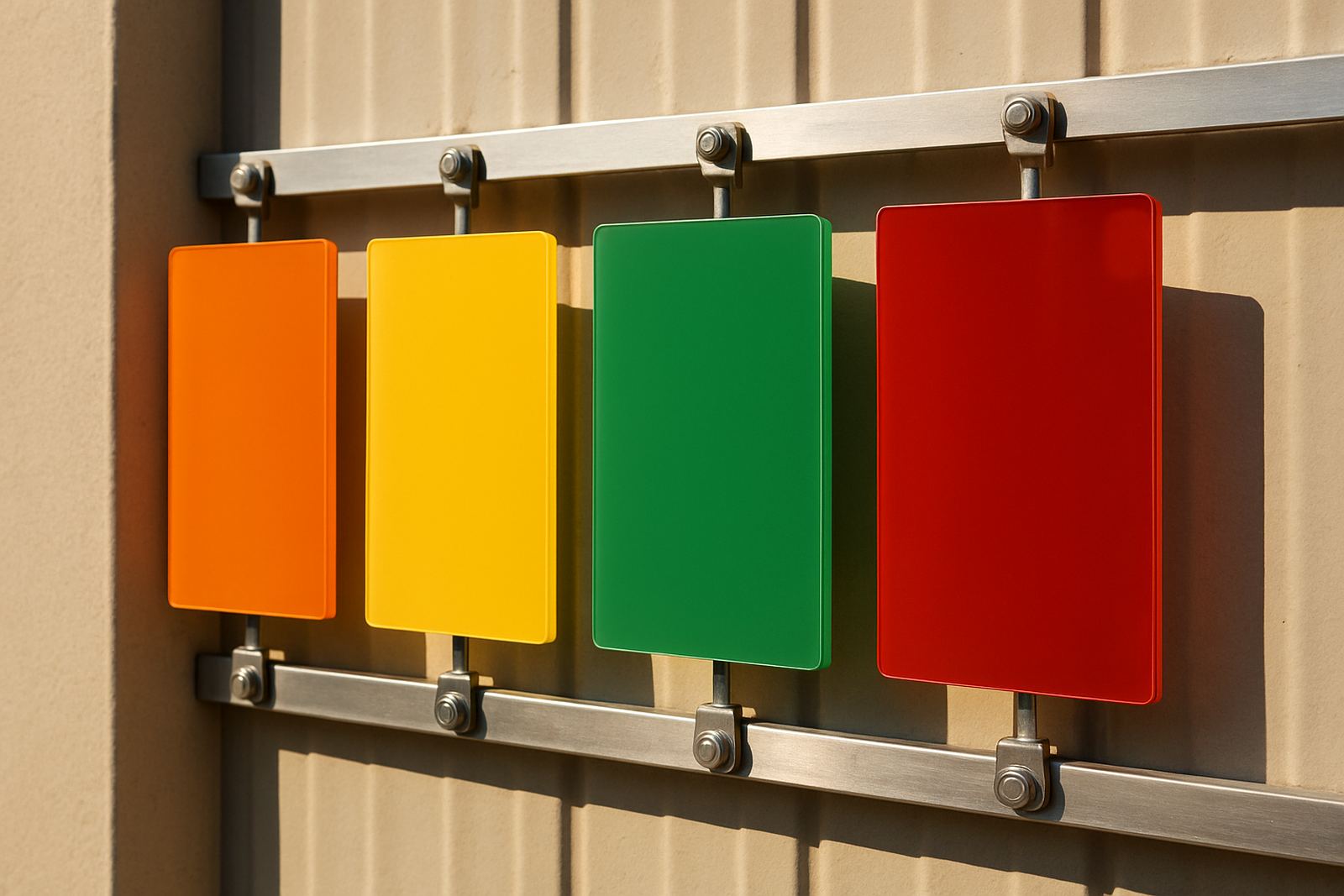
Perspex sheets are not all the same in outdoor use. Thickness affects rigidity, fixing method and resistance to vibration. Colour affects heat gain, fading risk and how the sign reads at different times of day. Even the edge finish can influence how the lettering holds up once the sign starts to move a little in wind.
- Use thicker material for larger letters, freestanding elements and high-wind sites.
- Choose colours that still read clearly under harsh midday light, not only at dusk.
- Check whether the design has thin strokes, fine cut-outs or narrow bridges that may become weak points.
- Allow for expansion and contraction so the panels do not craze, buckle or pop at the fixings.
For routed letters, the backer and the stand-off depth matter as much as the face itself. A neat 3D letter can fail early if the fixing pattern is too light or the substrate is not stable.
Sun, heat and UV exposure in Gauteng conditions
Gauteng heat can be underestimated because the air is often dry, but the surface temperatures on a sign can climb far above the ambient reading. Dark colours absorb more heat and can increase movement in the panel. If the sign sits on a roof, parapet or glazed facade, reflected heat from nearby surfaces can also play a part.
UV exposure is the main long-term issue. Over time it can lead to fading, loss of clarity and brittle edges if the material, coating or print system is not suited to outdoor use. That is why outdoor letters and faces should be specified with the actual site in mind, not only the brand colour sample.
Where a face is backlit, heat build-up inside the box also matters. The lighting layout, ventilation and access for maintenance should be considered together, otherwise the face may yellow or warp before its time.
Wind loading, fixings and structural support
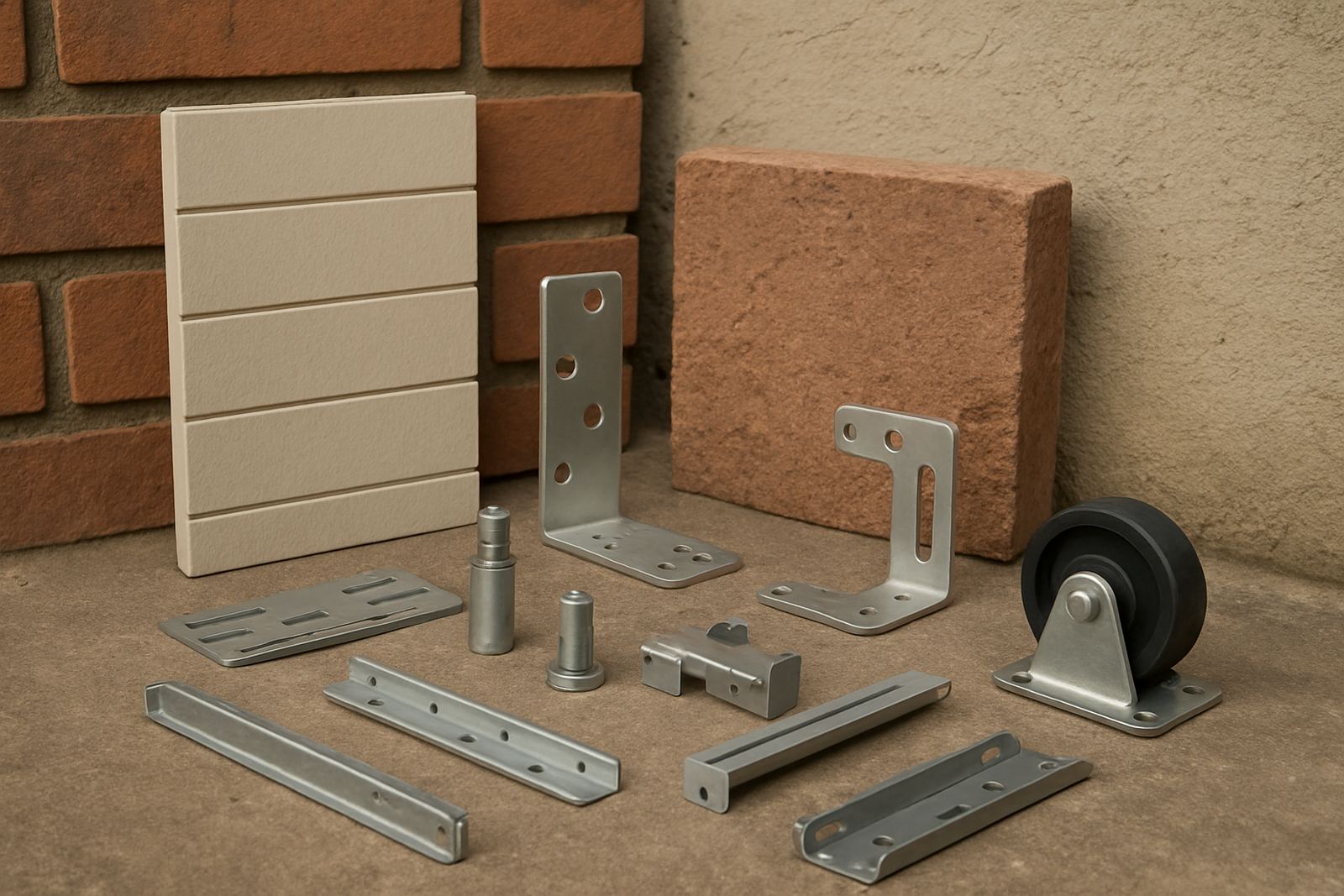
Many Perspex failures are not material failures at all. They are fixing failures. Wind pressure, vibration from passing traffic and small movements in the structure can place constant stress on screws, standoffs and adhesive joints. If the support frame is not rigid, the sign will keep working against itself.
That is why structural coordination should happen before fabrication starts. A large feature wall in Sandton is not treated the same as a roadside pylon in Centurion or a municipal sign in Pretoria. Fixings, spacers and brackets should be set out to suit the actual exposure, not just the drawing.
- Confirm the substrate is sound, level and suitable for the fixing method.
- Use corrosion resistant hardware in exposed or coastal locations.
- Allow for access so maintenance teams can reach fixings without damaging the face.
- Check that the frame can handle wind load and vibration over time.
On very exposed sites, a slightly heavier support structure can save money later by reducing callouts and panel replacement.
Printing, illumination and readability after dark
If the Perspex face carries print, the ink system, white backing and colour build need to suit outdoor exposure. Some colours look fine in the workshop but wash out once they sit in direct sun. Others become too dark at night when the internal lighting comes on.
For backlit letters and light boxes, the quality of light spread is just as important as the face material. Hot spots, patchiness and uneven brightness can make even a carefully made sign look tired. A proper test panel is worth the effort when the sign must remain legible from a distance, especially on a busy road or near a shopping centre entrance.
In areas with load-shedding, it is also sensible to plan for maintenance access and control gear positioning. If the sign depends on a lighting system, the servicing route should be practical and safe for the team carrying out repairs later on.
Coastal humidity, dust and cleaning routines
Outdoor Perspex needs a cleaning plan, not just a one-time install. Dust in Gauteng can build up quickly on horizontal edges and around letter returns. Near Durban and other coastal areas, salt residue can mark the surface and affect the finish if it is left too long. Gentle maintenance keeps the sign legible and protects the face.
Abrasive cloths, harsh solvents and pressure washing too close to the sign can damage the surface or weaken seals. The cleaning method should match the finish, the print and the access conditions. If the sign sits above a public walkway or close to traffic, maintenance planning should also consider safe access and municipal rules.
For higher installations, a planned maintenance schedule is better than reactive callouts after a fault. That is especially true for developments, schools and municipal sites where presentation and public safety matter every day.
A practical example from a Johannesburg frontage
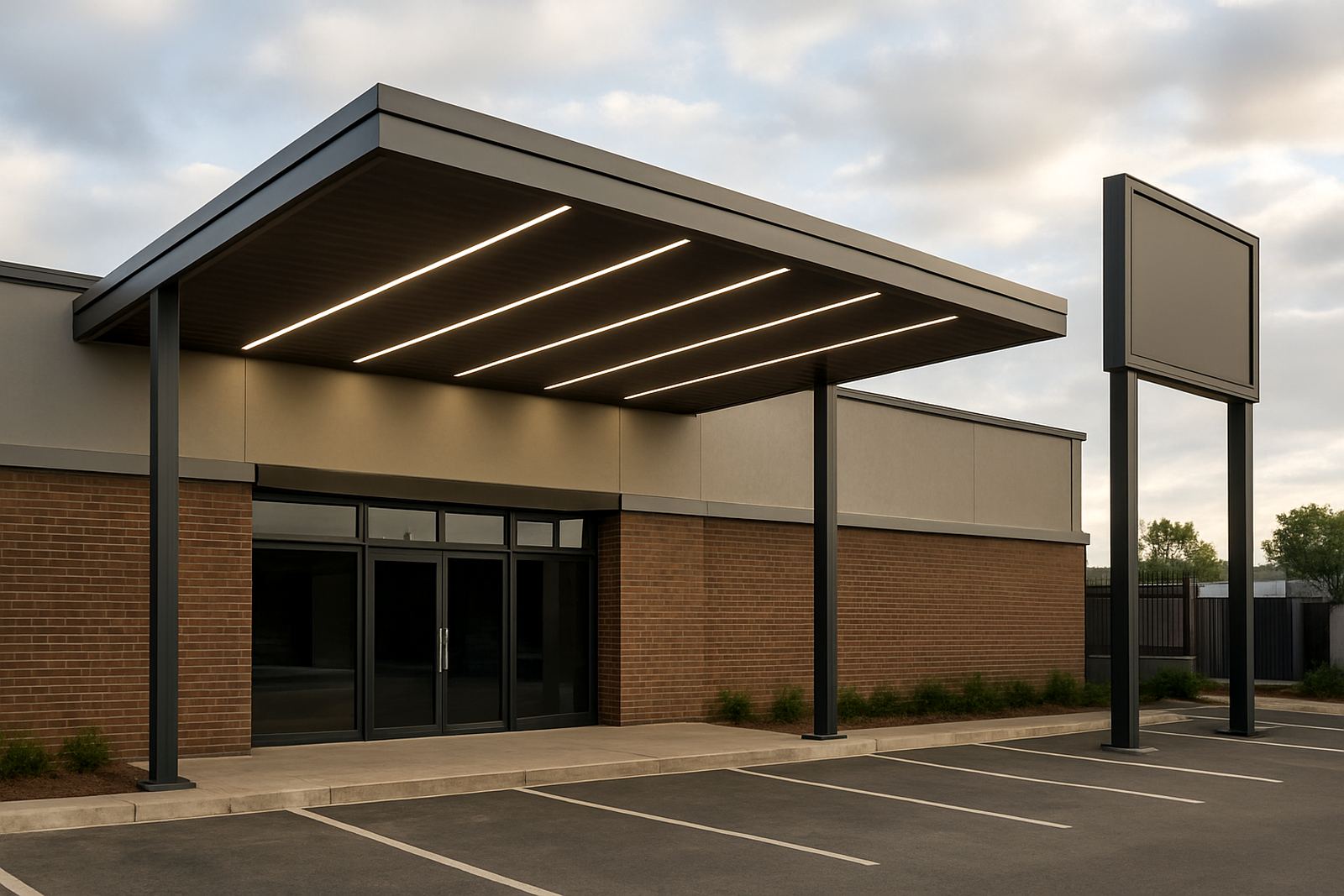
Consider a retail and office frontage in Modderfontein, where the brand wants illuminated Perspex letters facing north-west. The site gets strong afternoon sun, wind funnelled between buildings and regular dust from nearby roads. A thin face with light fixing points may look acceptable at handover, but it can start to show movement, heat stress and edge wear within a season.
A better approach would be to confirm the viewing distance, check the wall build-up, specify an outdoor suitable sheet thickness, allow for expansion joints and design the lighting to spread evenly behind each letter. If access is awkward, the fixing pattern should also support maintenance without unnecessary dismantling. That kind of detail is what keeps the sign looking correct after the first summer, not just on install day.
Whether the brief is for a developer, a municipality or a national brand, the principle stays the same: outdoor Perspex should be specified for the site it will live in, not for a neat drawing on a screen.