Why privacy film is more than a grey strip on glass
In offices across Johannesburg, glass is often the first thing people notice and the first thing they complain about. Meeting rooms face corridors, reception areas open onto busy walkways, and street-facing windows pull in heat, dust and unwanted views. Window film gives you a practical way to control what people can see, while keeping the space bright enough to work in.
The right film choice depends on the job. A law firm in Sandton may need confidential meeting rooms with a clean, understated finish. A retail tenant in Midrand may want privacy and branding at the same time. A municipal office in Pretoria may need a balanced solution that helps with glare, supports wayfinding and still meets building rules. The answer is not always one product across every pane.
- Reduce visibility into offices, meeting rooms and service areas
- Limit glare on screens and reception counters
- Support branding on street-facing glass
- Improve the look of plain glass partitions
- Help manage sun exposure in west-facing rooms
Frosted film for steady privacy and a cleaner look
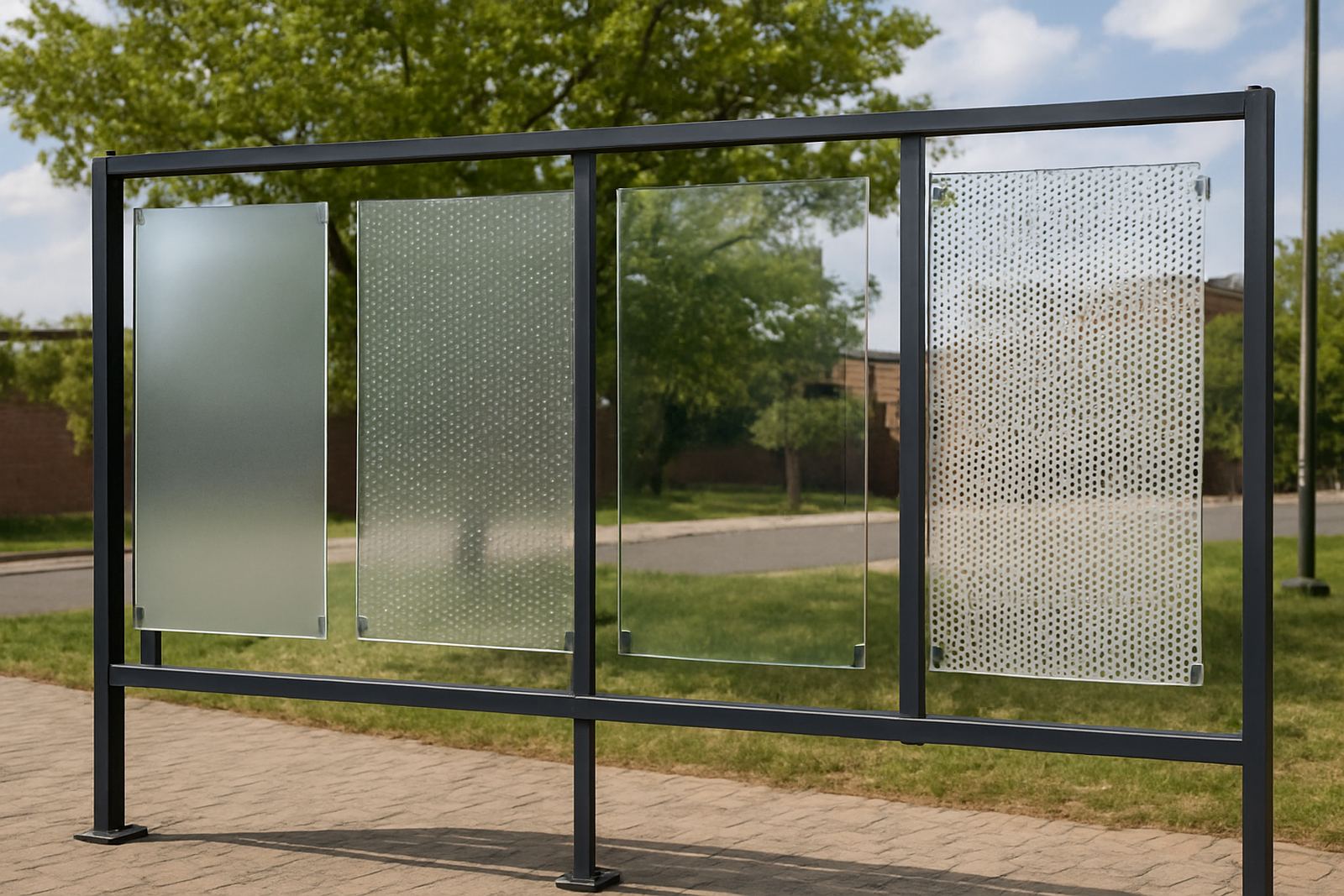
Frosted film is the most direct option when privacy is the main issue. It gives glass a soft, diffused finish that blocks clear views while still allowing natural light through. In practice, this suits internal partitions, boardrooms, clinics and admin areas where you want people to move through the space without seeing every detail inside.
For many Johannesburg sites, frosted film is also the easiest to maintain. It hides fingerprints better than clear glass, works well in air-conditioned offices and does not depend on lighting levels to be effective. If a building is exposed to strong afternoon sun, the film can take the edge off the brightness without making the room feel closed in.
When measured and cut properly, frosted film can be applied in panels, bands or full-height sections. That means you can leave vision panels around doors, create a private strip at seated eye level, or use a full frosted wall for boardrooms where confidentiality matters. The detail matters, especially when there are fire routes, glass markings and access control points to consider.
- Best for meeting rooms, clinics and internal glass partitions
- Works well where privacy matters more than outward advertising
- Can be cut into patterns, bands or full-coverage panels
- Useful for reducing glare without blocking daylight
Printed film when the glass must speak for the brand
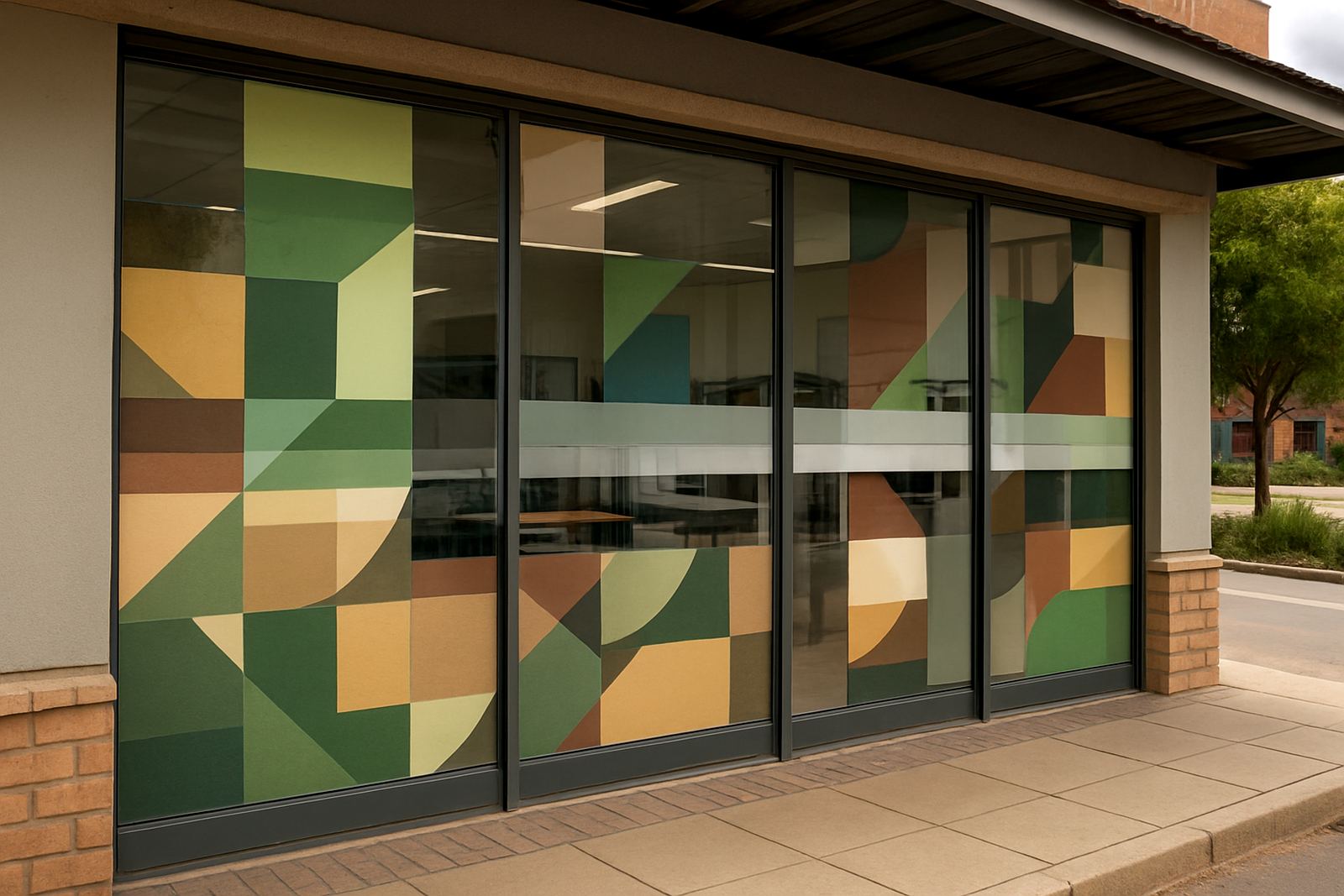
Printed film is the strongest choice when the glass needs to do two jobs at once. It gives privacy and also carries logos, patterns, opening hours, directional cues or full-colour graphics. In a retail or corporate setting, that can turn a plain frontage into a useful part of the building, especially where foot traffic is heavy and the first impression counts.
There is a practical side to printed film too. On a road-facing office in Germiston or a showroom near a busy junction in Randburg, a well-planned graphic can reduce the feeling of exposed glass while making the premises easy to identify. The design should be simple enough to read from outside and restrained enough not to block too much light inside.
Printed film is also useful when a tenant needs temporary branding for a launch, a fit-out or a campaign. If the building rules change later, the film can usually be removed without damaging the glass, which makes it a sensible option for leased spaces. For projects across Gauteng, this flexibility often saves time and avoids costly rework.
- Good for branding, privacy and wayfinding on the same surface
- Useful for street-facing glass and tenant spaces
- Can support temporary campaigns or longer-term identity use
- Should be planned with viewing distance and interior light levels in mind
Perforated film for outward graphics with some one-way visibility
Perforated film is often chosen when the outside face must carry a strong visual while people inside still want to see out. It is made with tiny holes that let light and a degree of outward vision through, while the printed face presents a full graphic from the street. This is common on shopfronts, vehicle bays and certain office windows where branding matters just as much as privacy.
The trade-off is important. Perforated film gives a one-way effect only under the right lighting balance. At night, when the inside is brighter than the outside, the effect reduces and the interior can become more visible. That means it may need to be paired with blinds, interior lighting control or another privacy layer if the room is used after dark.
For a Durban site where humidity and salt air can shorten the life of some finishes, the adhesive and edge sealing need careful attention. In Gauteng, the bigger issue is often dust, sun exposure and constant heat on west-facing elevations. Either way, correct specification and proper installation make a real difference to how long the film lasts and how well it stays put.
- Good for shopfronts, street-facing glazing and promotional windows
- Allows outward visibility during the day under the right conditions
- Less private at night unless backed up by other measures
- Needs careful specification for sun, dust and moisture exposure
How to choose the right film for your building
The best film choice starts with the actual use of the space, not just the glass size. A reception area needs a different answer from a server room, a boardroom or a ground-floor tenancy. If the building is in a dense part of Sandton or Pretoria, privacy from neighbouring offices may matter more than street branding. If it is on a main route in Centurion or Modderfontein, the external message may carry more weight.
At Deep3 Signage Consultants, we normally look at the site, the glass type, the interior lighting and the client’s day-to-day use of the space before specifying anything. That includes checking whether the film must work with solar gain, existing window tint, access control glass or approved building rules. In some sites, the wrong film can create a compliance issue, especially where emergency visibility or wayfinding is involved.
For a practical brief, the questions below are usually enough to start the conversation:
- Do you need privacy all day, or only during business hours?
- Should the glass stay see-through from one side?
- Do you want branding, directional information or just a clean finish?
- Is the site exposed to strong sun, dust or coastal moisture?
- Will the film need to be removed later for a tenant handover?
A local example from Modderfontein to Sandton
A useful example is a professional services office moving into a glass-heavy building between Modderfontein and Sandton. The client wanted privacy for meeting rooms facing a busy corridor, but also wanted the frontage to feel professional from the street and the parking area. Full frosting on every pane would have made the office too closed in. Plain glass would have left sensitive rooms exposed.
The solution was a mix of finishes. Frosted film was used on the internal meeting rooms, with printed branding on the entrance glazing and a simple directional strip to guide visitors from reception to the correct floor. Where the sun hit hardest in the afternoon, the film also helped with glare on screens. The result was practical, not flashy, and it suited the pace of the building.
That is usually the point with window film privacy. The job is not to cover glass for the sake of it. It is to control visibility, support the use of the space and make the building easier to work in. If the film is planned properly, it does that quietly every day.
What proper installation protects you from later
Good film is only part of the job. Measurement, surface preparation and installation method decide how clean the final result looks and how long it lasts. On large panes, a small alignment error becomes obvious. On exterior glass, trapped dust or poorly finished edges can start lifting in strong sun. On interior partitions, a bad splice can spoil an otherwise neat fit-out.
That is why site surveys, material specification and installation management matter. They help avoid problems such as mismatched panels, poor adhesion, blocked sightlines and conflicts with door markings or emergency exit visibility. If the project also includes signage, the film should be coordinated with the rest of the wayfinding so the building reads as one system instead of a patchwork.
For offices, developers and municipalities, the right answer is usually the one that matches the glass, the building rules and the way people actually use the space. In most cases, that means choosing the film for the job first, then shaping the graphics around it.