
Why glass graphics matter on busy Johannesburg frontages
In Modderfontein, Sandton, Midrand and the rest of Gauteng, a shopfront has to work hard. People drive past quickly, foot traffic may only have a few seconds to notice you, and interior glare can make a reception area uncomfortable by mid morning. Glass graphics help by making the frontage do more than just separate inside from outside.
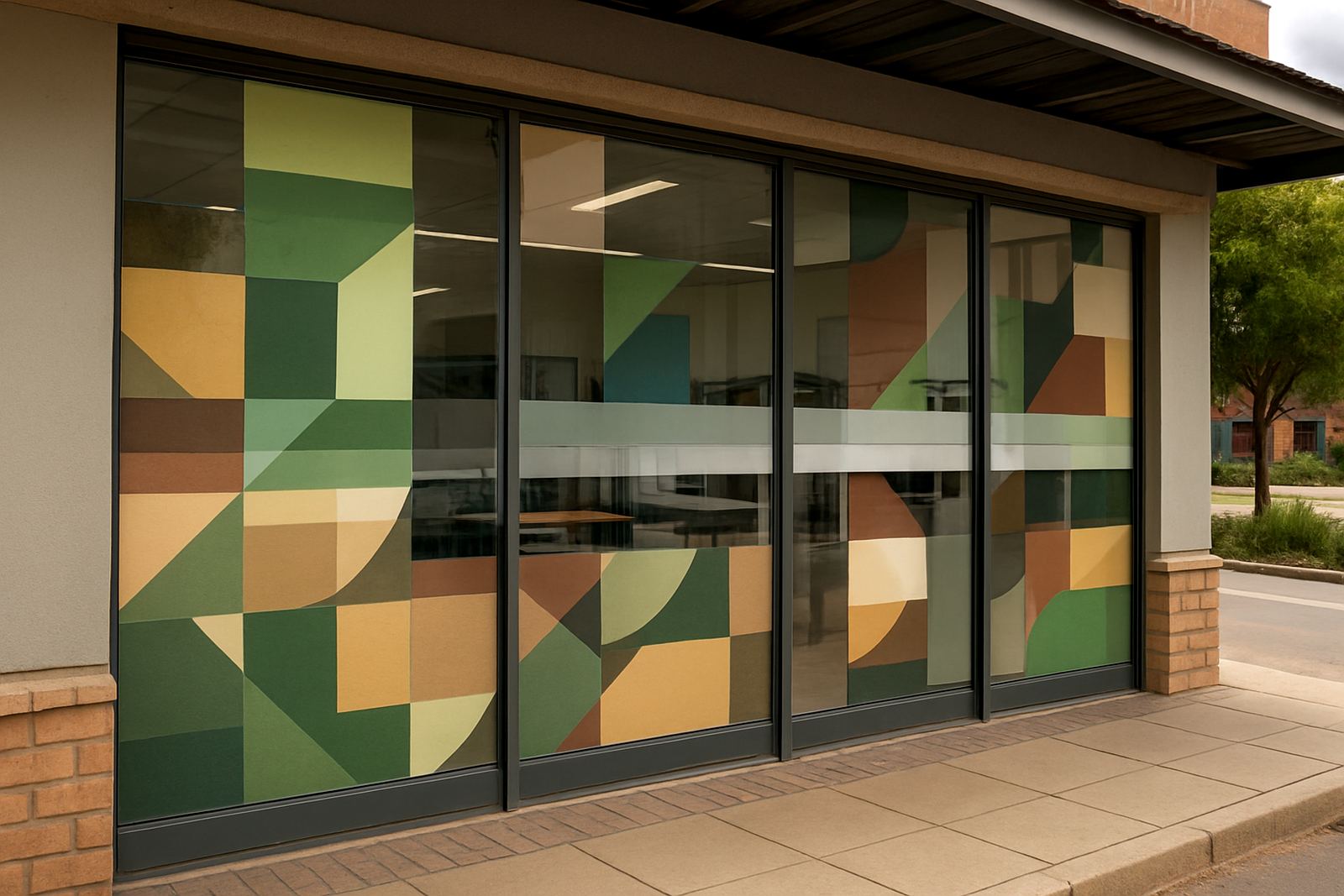
The main advantage is choice. You do not have to cover the whole pane to get value from it. A band at eye level, a logo panel, or a patterned frost can hold privacy where it matters most, while still keeping the shop bright. That matters for showrooms, offices, medical spaces, estate agencies and ground floor retail where daylight is useful but full visibility is not.
For businesses close to a road or parking area, graphics also help with perception. A neat, measured application suggests order and care before anyone steps through the door. On a busy corner in Randburg or along a high exposure site in Pretoria, that can influence whether a passing client slows down or keeps moving.
Picking the right finish for the right job
Not every window needs the same treatment. The finish should match the reason for applying it, the amount of sunlight on the glass, and how much you want people to see through from either side. A common mistake is to use a full solid print where a lighter treatment would have done the job better.
For privacy at reception counters or meeting rooms, frosted film works well because it softens views without making the space feel closed off. For branding at street level, printed vinyl can carry logos, opening hours and key messaging. If the aim is to create a more polished architectural look, cut vinyl or a mixed pattern can give a cleaner result than a full flood of colour.
- Use frosted film where staff need privacy but still want daylight.
- Use printed vinyl for promotions, logos and contact details.
- Use cut lettering for a cleaner, more permanent look on smaller windows.
- Use perforated graphics where you need visibility out from inside.
Coastal humidity in Durban or summer heat in Gauteng can also affect how a film performs over time. The adhesive, edge finishing and surface preparation all matter. If a pane has dust, silicone residue or old glue, the new graphic will not sit properly and may lift early at the edges.
Designing glass graphics that still feel like architecture
Good shopfront graphics should work with the building, not fight it. If a facade already has clean aluminium framing, large panes and strong sightlines, the graphic should respect those lines. That usually means keeping text legible, spacing elements properly and avoiding clutter on every pane.
There is also a practical side to layout. Letter height, viewing distance and street speed all affect how much the public can read. A small title that looks fine in a design file can disappear once it is placed on a pane facing traffic. The reverse is also true. A bold message can look heavy inside a neat retail frontage if it is too close to the frame or repeated too often.
At Deep3 Signage Consultants, the process usually starts with the site. We look at the angle of approach, sun direction, interior sightlines and any by laws or landlord rules that affect what can be fitted. From there we decide whether the best answer is a simple frost band, a larger brand panel, or a mixed treatment across several panes.
- Measure the frontage from the main viewing point, not just from inside the premises.
- Check for reflections from traffic, steel canopies and direct sun.
- Allow for door swing, security gates and cleaning access.
- Keep key information at a height people can read from the pavement.
Privacy without making the space feel shut down
Many clients want privacy, but they do not want the room to feel dark or boxed in. That is a fair concern, especially in customer facing spaces where openness matters. The solution is often to target the lower half of the glass or to use a patterned band that blocks direct views while keeping the upper area light.
This approach works well for clinics, offices, estate agencies and service counters. Staff can work without feeling watched from the parking area, and the public still sees a clean interior instead of a blank wall. It also helps control how much is visible after hours, which is useful for stock displays and confidential paperwork.
Where the frontage faces harsh western light, a graphics scheme can also reduce glare and heat on the interior side. It will not replace proper shading, but it can help. On a hot afternoon in Centurion or Germiston, that small reduction in glare can make a noticeable difference to comfort near the window.
For larger premises, the answer may need to be part of a broader signage plan rather than a single film job. Glass graphics can be paired with wayfinding, reception branding and external identification so the whole site reads as one space rather than a series of separate fixes.
What makes a graphic last in local conditions
Window graphics are exposed to sun, dust, cleaning chemicals and regular contact. In shopping centres and street level sites, they also have to withstand everyday wear from trolleys, bags and opening doors. Longevity depends on good material choice, proper application and sensible maintenance planning.
For exterior glazing, edge sealing is important because wind and dust can start lifting weak corners. On large panes, accurate alignment matters just as much. A crooked stripe or a misread logo is visible from far away, and once it is installed the fault is difficult to ignore. The same applies to sizing around handles, locks and frame joints.
We also plan for practical use. A glass graphic should not make cleaning impossible, and it should not interfere with safety markings or emergency visibility. In some sites, the landlord or municipality may require certain visibility levels or reflectivity limits, especially near access roads and public areas. It is better to check those requirements before the film is printed than to remake a panel later.
- Prepare the glass thoroughly before application.
- Choose films suited to the site exposure and cleaning routine.
- Keep edges clear where hardware or movement may cause wear.
- Plan for replacement in stages if the frontage is large.
A practical example from a Modderfontein frontage
On a recent office and showroom frontage in Modderfontein, the brief was simple: keep the space bright, improve privacy at the reception area and make the business easier to spot from the road. The glass faced strong morning sun and a steady stream of passing vehicles, so a full blockout would have made the interior too dark.
We used a combination of frosted sections at seated eye level, clear zones above for daylight and a branded title panel at the main entrance. The result was a frontage that looked more organised from outside and more comfortable from inside. Staff could work without feeling exposed, visitors could find the entrance faster, and the building still read as an active commercial space.
That kind of result is usually better than trying to make every pane do the same job. The right glass graphic should answer a specific need: privacy, promotion, sun control, or all three in balance. When the brief is clear, the frontage works harder without losing its purpose.
If you are planning shopfront glass graphics anywhere in Gauteng or beyond, the best starting point is a proper site check, a sensible material spec and a layout that suits the building. That is where a small change on glass can make a real difference to how the whole site feels.
From first measurement to final handover
Shopfront glass graphics are easiest to manage when they are treated as part of the broader signage scope. At Deep3 Signage Consultants, that can include site surveys, design development, material specification, approval support, fabrication management and installation management. For larger developments, we also coordinate with other trades so the glass treatment lines up with shopfitting, branding and opening dates.
Our team works from Modderfontein and supports projects across Johannesburg, Pretoria, Midrand, Sandton, Randburg, Germiston, Centurion and Durban, with work specified, built and rigged wherever the site demands it. Whether the job is a single reception window or a full frontage package, the aim stays the same: a practical finish that looks right, lasts properly and suits the site conditions.