Project brief for Soweto route upgrades
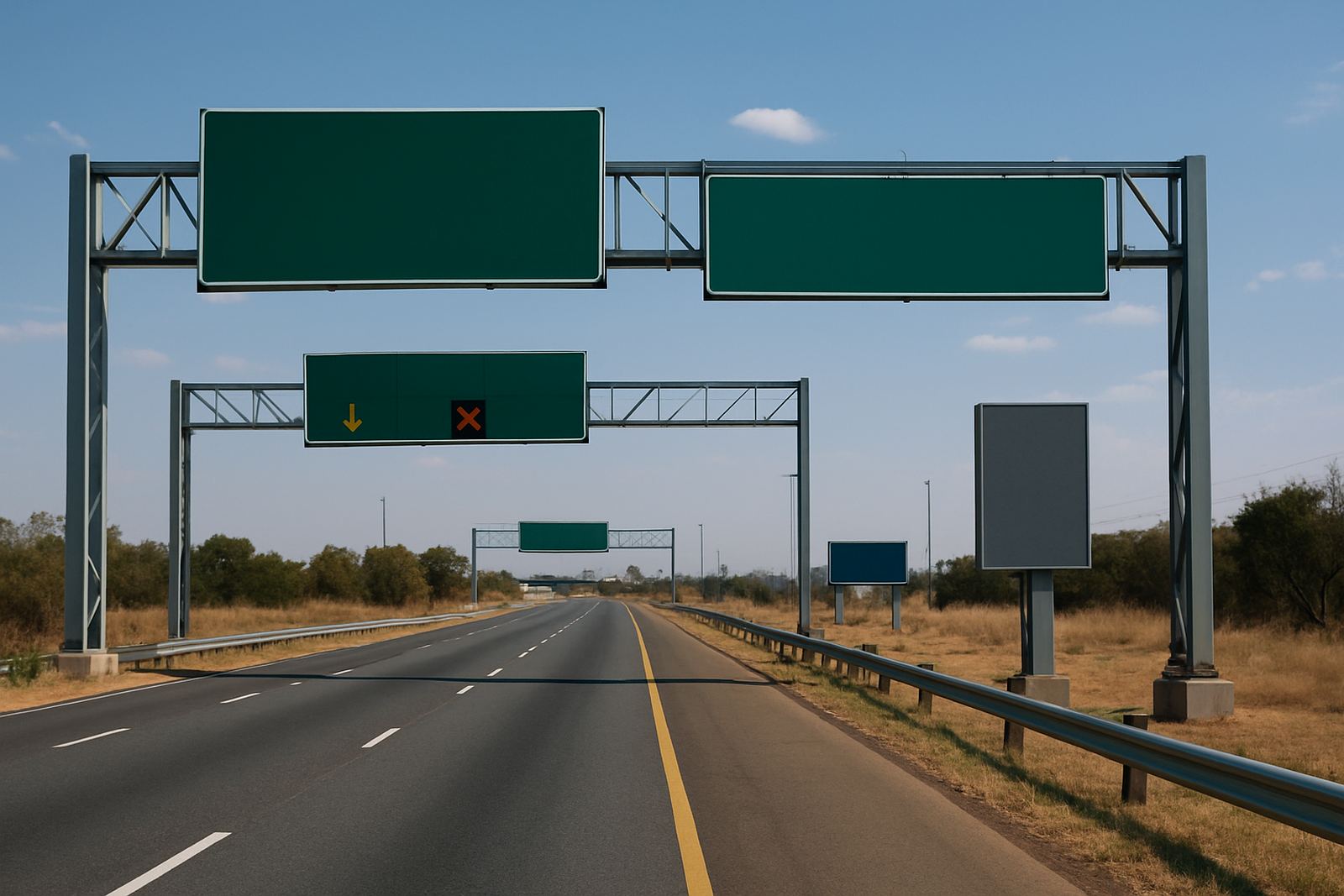
The client brief was straightforward in one sense and detailed in another. Replace damaged and faded road signs, add public direction boards at key decision points, and make sure the new information was easy to read from a moving vehicle in busy township conditions. The area had changing traffic flows, frequent stopping, pedestrians crossing where they shouldnt, and existing poles and sign faces that had seen years of weather and vandalism.
We were asked to work as a signage consultant and delivery team from first site review through to handover. That meant checking which signs could be re-used, which poles needed replacement, and where new boards had to be positioned so they would not be blocked by taxis, street trading or roadside trees. The brief also called for materials that could handle Gauteng sun, dust and summer storms without peeling or warping after a few months.
Site surveys, measurements and approval support
Our first step was a joint site survey across the main route improvement points and feeder roads. We mapped sign locations, measured setbacks, checked sight lines at junctions and confirmed the heights needed for legibility above traffic, pavement activity and parked vehicles. The survey also picked up a few practical issues: uneven verges, old mounting points that had shifted, and one intersection where a board would have interfered with an overhead utility line if placed to the original sketch.
We then prepared the sign schedule and approval pack. That included size references, message hierarchy, mounting detail and materials suitable for municipal roads. The client needed clear direction boards with standard route names, arrows and warning messages, plus replacement regulatory signs at selected points. We also coordinated with the relevant municipal teams so the layout and wording matched local requirements. It was not a glamorous step, but it saved time later and kept the installation clean.
- Measured and plotted sign positions at each junction and approach point
- Checked line of sight, pole condition and service clearances
- Prepared the sign list, artwork references and approval drawings
What we supplied and fabricated
The supply scope covered standard road sign panels, public direction boards and supporting posts. For the face material we used reflective aluminium-faced panels for the traffic signs and printed vinyl application on selected direction boards where the route messages required more text. Panels were cut to size, drilled for fixings and finished with weather-resistant edging. On the larger boards we used powder-coated steel frames so the signs would stand up to wind load and roadside knocks.
Where the route changes called for stronger visibility, we added high-intensity reflective sheeting for critical legend and arrow elements. Posts were hot-dip galvanised and set to the agreed embedment depths. In a few spots we also supplied new brackets and tamper-resistant fixings because the existing hardware was too corroded to trust. The result was a kit of parts that could be installed quickly on site, with very little handling after delivery.
- Reflective road sign panels cut to municipal sizes
- Printed direction boards with laminated protection
- Galvanised posts, brackets and tamper-resistant fixings
- Powder-coated support frames for larger boards
Installation work in live traffic conditions
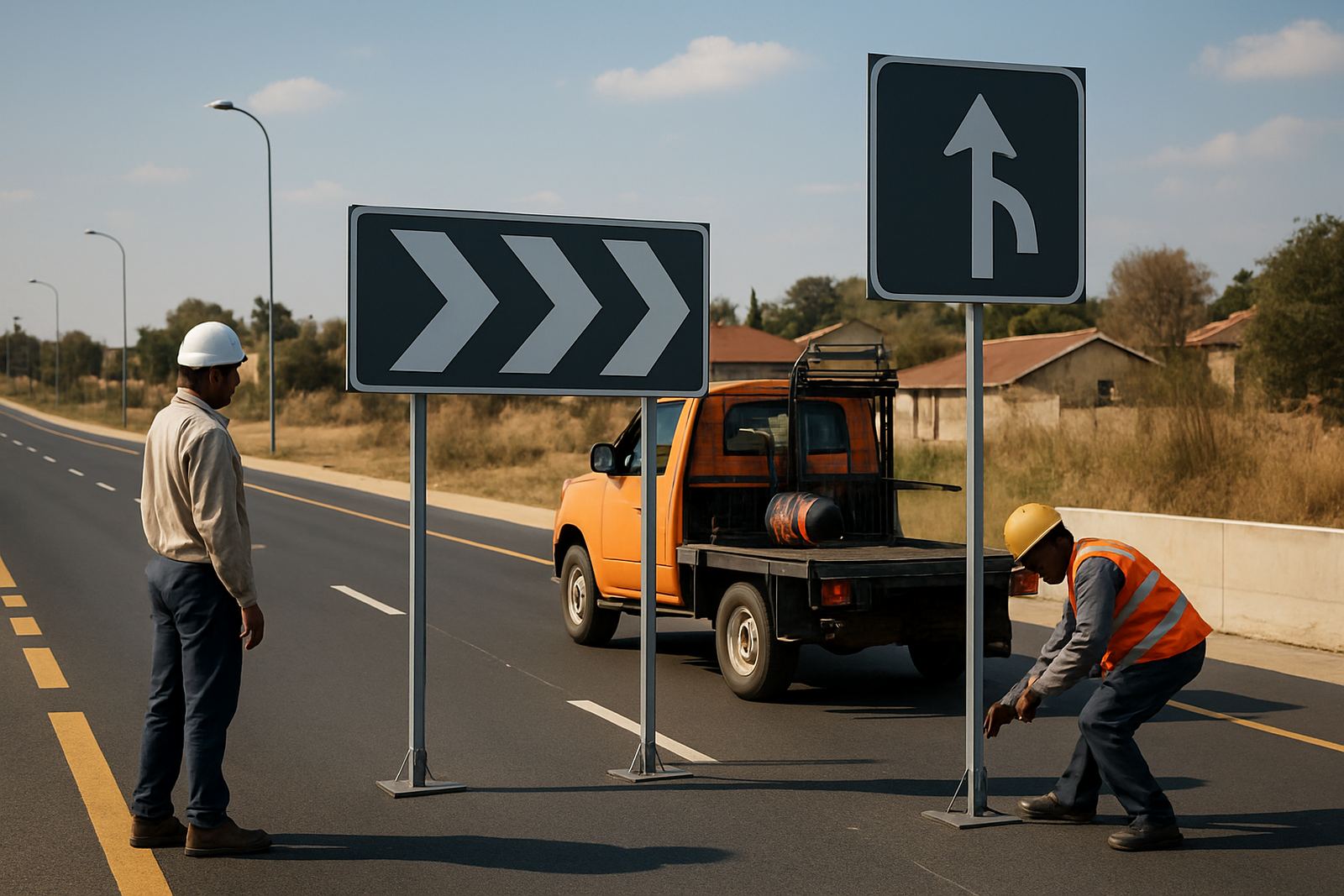
Installation took place in phases over three weeks, with the most disruptive works scheduled around lighter traffic periods. The team worked with traffic accommodation in place, using clear cones, stop-go control where needed and short closures only when a pole had to be removed and reset. We kept the old signs visible until the new ones were ready to be opened, which helped reduce confusion for drivers and minibus routes moving through the area.
Because some routes were already carrying a lot of local movement, we had to be tidy with timing and sequencing. Panels were lifted, aligned and checked for height and angle before final tightening. We also re-checked each installation after the first rain band, since loose soil and surface water can affect a post if the footing is not set right. That follow-up is often overlooked, but on municipal roads its worth doing.
- Phased installs over 3 weeks
- Traffic control and short-duration closures where necessary
- Post-install alignment, torque checks and final inspection
Materials chosen for dust, sun and vandal pressure
Soweto routes need signage that can take daily wear. We specified materials with that in mind. Reflective sign faces help at night and during early morning low light, which is useful when load-shedding affects surrounding areas and street lighting is inconsistent. Aluminium does not rust the way mild steel will, so it is the right choice for long-term sign faces. Galvanised steel posts and powder coating add another layer of protection where moisture and dust sit on the surface for long periods.
We also advised on maintenance planning. That included periodic wash-downs, checking for bent brackets, replacing stolen fixings and clearing vegetation that could block a board. A sign can be perfectly made and still fail if it is hidden behind growth or left with a tilted face after a minor impact. The client appreciated that we were practical about the aftercare rather than pretending the install would look after itself.
For the larger public direction boards, we kept the message layout simple: destination, arrow, distance where needed, and no clutter. That made the boards easier to read from a taxi or bus at speed and reduced the chance of last-second lane changes. Simpler is usually better on municipal roads, even if someone asks for a bit more wording at the start.
Results and what we would repeat on the next job
The replacement programme improved clarity at the main route decision points and gave the local road network a more consistent look. Drivers had clearer direction before junctions, public boards were easier to read, and the municipality had a set of signs built to a more durable standard than the older mix of panels that had been patched over time. The final handover included location notes, material details and a practical maintenance list for the team responsible on the ground.
If we did this kind of project again in Soweto or any other fast-moving urban area, we would follow the same pattern: survey first, agree the wording early, keep the sign schedule tight and phase the installation around traffic. We would also keep a small buffer in the programme for utility conflicts and footing adjustments because those two things often change once the team is on site. That extra planning can save a lot of arguing later, and it keeps the public direction boards in the right place the first time.
Key facts
| Client type | Municipal roads project for local route improvements |
|---|---|
| Town | Soweto, Johannesburg |
| Scope | Road sign replacement, public direction boards and installation support |
| Timeline | 3 weeks from survey to handover |
| Key materials | Reflective aluminium panels, powder-coated steel frames, galvanised posts |
| Services used | Site surveys, material specification, approval support, fabrication management, installation management, project handover |