
What a billboard is and where it works best
A billboard is a large-format sign fixed to a purpose-built support structure so it can be seen from traffic at speed or from a distance. It is used for brand campaigns, property launches, retail corridors, municipal notices and directional messages where short reading time matters. In Johannesburg and Pretoria that usually means freeway approaches, arterial roads, industrial nodes and sites with steady vehicle flow.
For the right location, we look at sightlines, verge widths, turning movements and how long a driver will have the panel in view. A billboard near an intersection needs different proportions to one on a straight highway run, and the angle to the road can change how well the message reads. We also check wind exposure, nearby trees and pylons, plus any municipal or road-authority rules before a final size is fixed.
Panel sizes, faces and structure options
Billboards are commonly supplied as single-face or double-face structures, with the face size set by the site and the advertising brief. Typical face sizes range from about 6 m x 3 m for smaller roadside units up to 18 m x 6 m or larger for major highway exposure. Larger free-standing units can be built taller, but the actual size depends on clearance, foundation capacity and the distance drivers need to read the copy.
- Single-face panels for one-direction traffic and boundary sites
- Double-face structures for two-way roads or traffic islands
- Static printed skins for long campaign runs
- Illuminated faces for night visibility where power is available
- Hybrid frames that can carry future vinyl changes with less downtime
Support structures are usually fabricated from galvanised steel with anchor cages and base plates cast into concrete foundations. In coastal areas or places with higher humidity we specify corrosion protection carefully, because early rust around the base or fixings can shorten service life.
How installation and rigging are handled
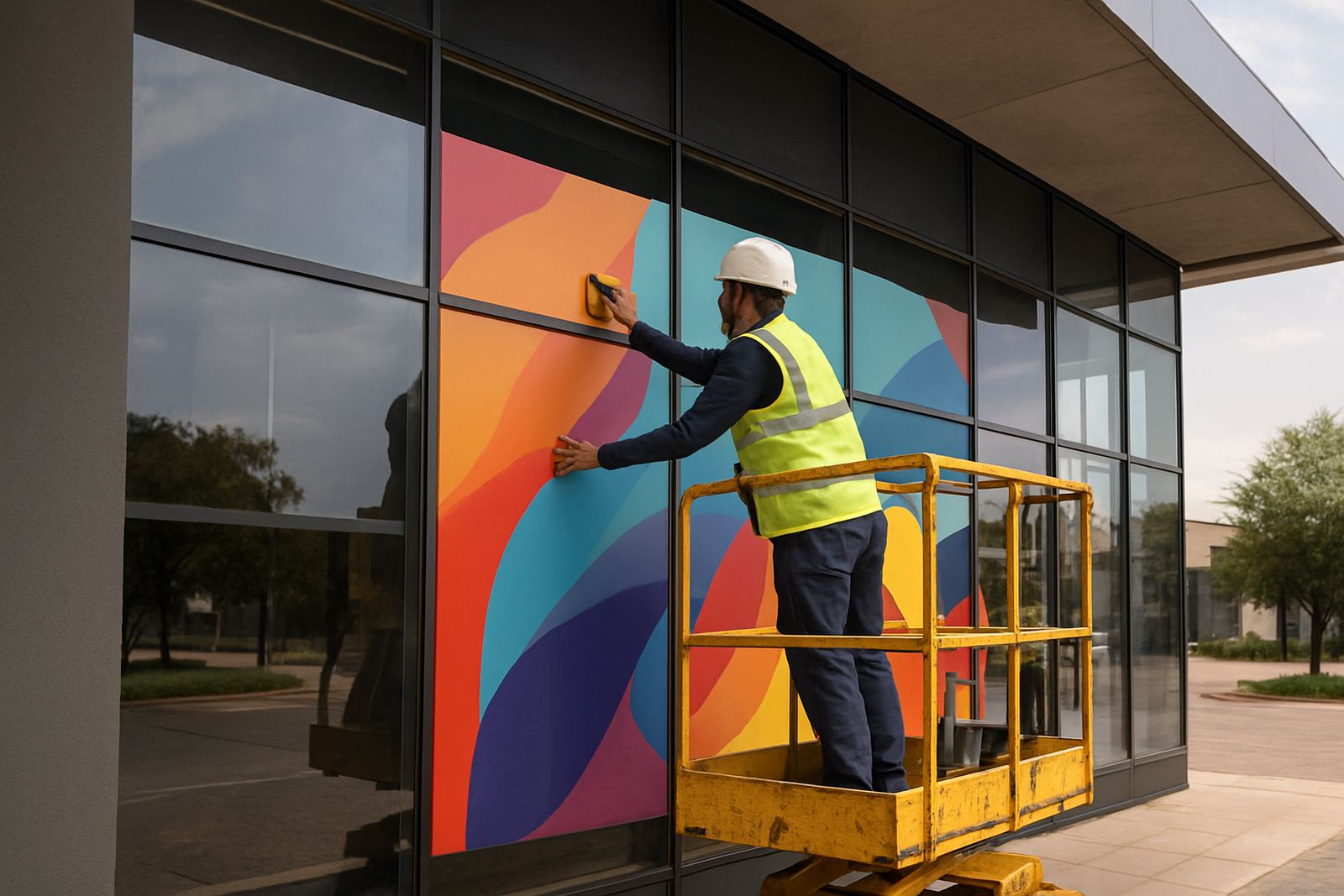
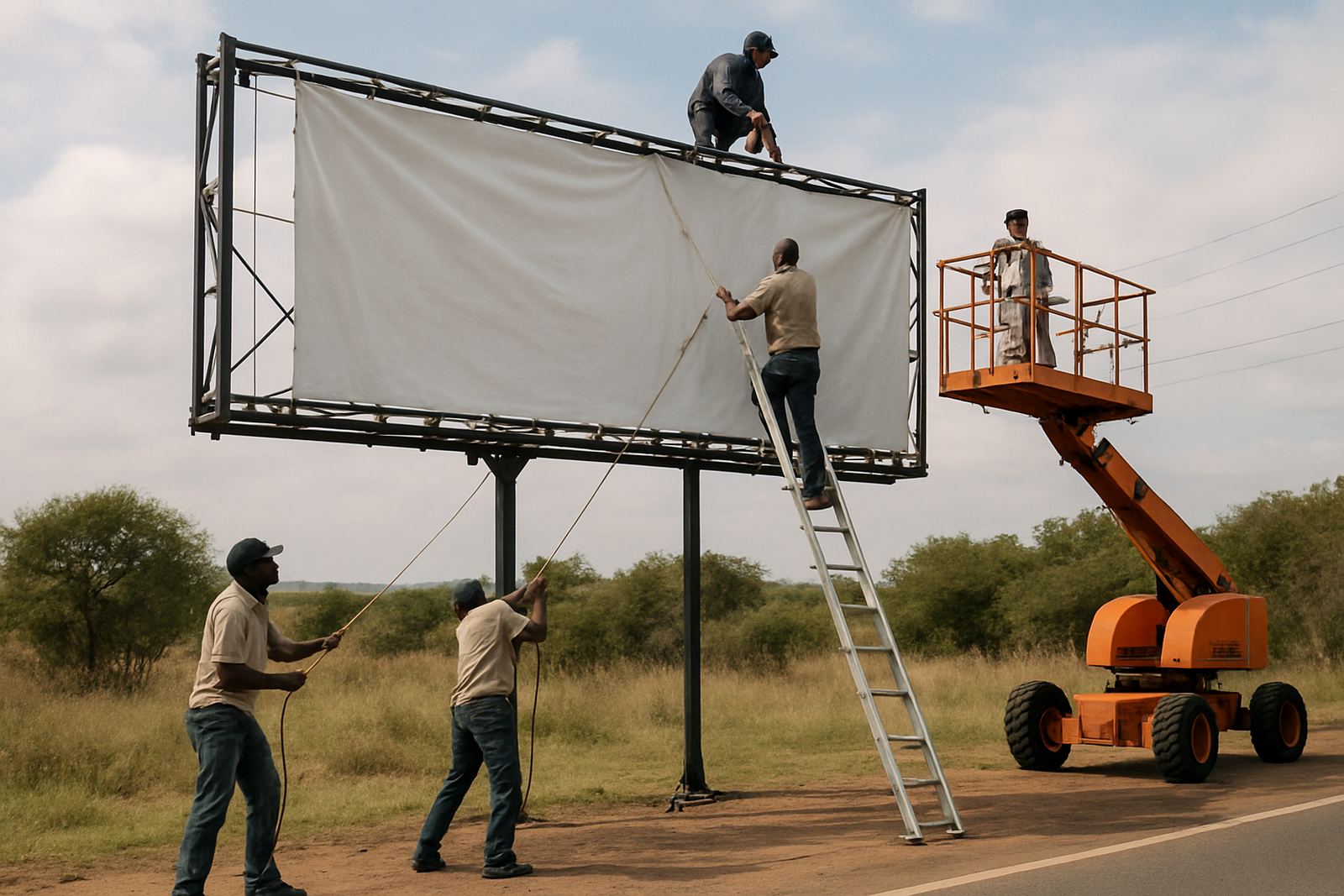
Installation starts with a site survey and structural coordination, then moves to foundation setting, steel erection, face mounting and final alignment. On busy roads we plan access, traffic accommodation and lifting time windows very carefully, because a crane or cherry picker needs enough space to work safely without blocking lanes. For municipal or roadside sites we also check setback distances, stormwater lines and any servitude restrictions before work begins.
Where the billboard includes lighting, power supply needs to be confirmed early. Some sites can take a dedicated electrical feed, while others need solar support or no lighting at all. If the design includes motion or LED content, we also confirm the load requirements, ventilation and cabinet access. Load-shedding should be factored into the brief from day one so there are no surprises later.
- Foundation design matched to soil conditions and wind load
- Crane or lifting plan for safe erection
- Electrical provision for lights, timers or controllers
- Access route for maintenance teams and replacement panels
- Approval pack for landowner, municipality or road authority
Lighting, power and visibility after dark
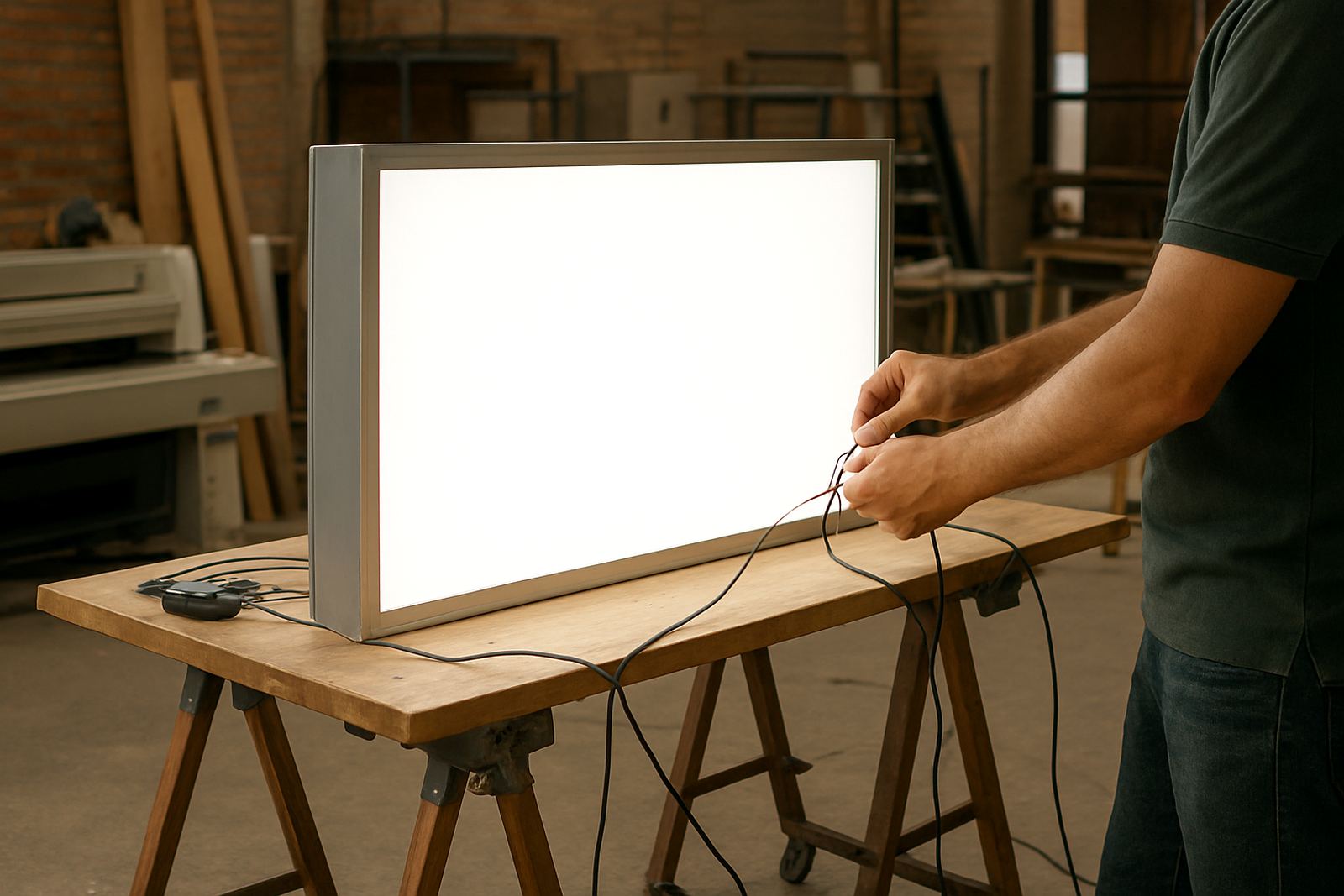
Some billboards are left unlit for daytime campaigns only, while others need night-time visibility for 24 hour exposure. Lighting can be done with external fittings aimed across the face, or with internal light boxes on suitable structures. For remote sites we may specify a solar-assisted solution, but that depends on available sun hours, battery space and how much power the message system needs. LED screens have a different requirement again, with dedicated supply and control equipment.
When planning lighting, it is worth checking how the site behaves in winter, during heavy rain and in load-shedding conditions. A good design keeps the face readable without creating glare for traffic or light spill for neighbours. If the billboard sits near homes, schools or municipal property, local rules on brightness and operating hours may also apply.
Care, servicing and campaign changeovers
Billboards need regular inspection, even when they look fine from the ground. We check for loose fixings, vinyl lift, corrosion at joints, water entry on illuminated units and any movement in the support structure after strong wind. In Gauteng, dust and winter dryness can build up on the face and frame, while coastal air in other regions can be harder on steel and fasteners.
Campaign changeovers should be planned with access in mind. If the skin is printed vinyl, the old face needs to come down cleanly and the substrate must be ready for the next install. On larger structures, safe access points, harness anchor points and replacement lead times matter. A missed maintenance cycle can turn into a visible defect quickly, especially on sites along main commuter routes.
- Inspect after storms and strong wind events
- Wash or clean faces where dust affects legibility
- Check lighting, timers and cable terminations
- Replace damaged vinyl before edges start lifting
- Schedule annual structural reviews for major units
What to check before you order a billboard
Before we finalise a billboard, we confirm the route, viewing distance and campaign duration. We also need to know whether the site is for a one-off promotion, a long term brand presence or a location that may change content later. The more accurate the brief, the easier it is to choose the right face size, structure and finish without adding unnecessary cost.
Key things to confirm include the available land area, ground conditions, setback from the road and whether there is any existing service infrastructure below ground. If the site sits in a windy corridor or on a raised embankment, we may need a stronger support design. It is also wise to decide early if the face must be lit, left static, or prepared for future digital use, because that affects the frame and service access from the start.
- Exact site position and road direction
- Required viewing distance and target traffic speed
- Single-face or double-face configuration
- Lighting requirement and power availability
- Approval responsibility and landowner consent
- Maintenance access and changeover frequency
Key facts
| Common face sizes | 6 m x 3 m, 12 m x 3 m, 18 m x 6 m and custom |
|---|---|
| Structure type | Single-face, double-face or cantilevered steel frame |
| Material finish | Galvanised steel with painted or powder-coated elements |
| Lighting options | External floodlighting, internal lighting or unlit |
| Foundation | Reinforced concrete footing sized to soil and wind load |
| Typical use | Roadside advertising, property launches, retail and public notices |