
What construction hoardings do on a live site
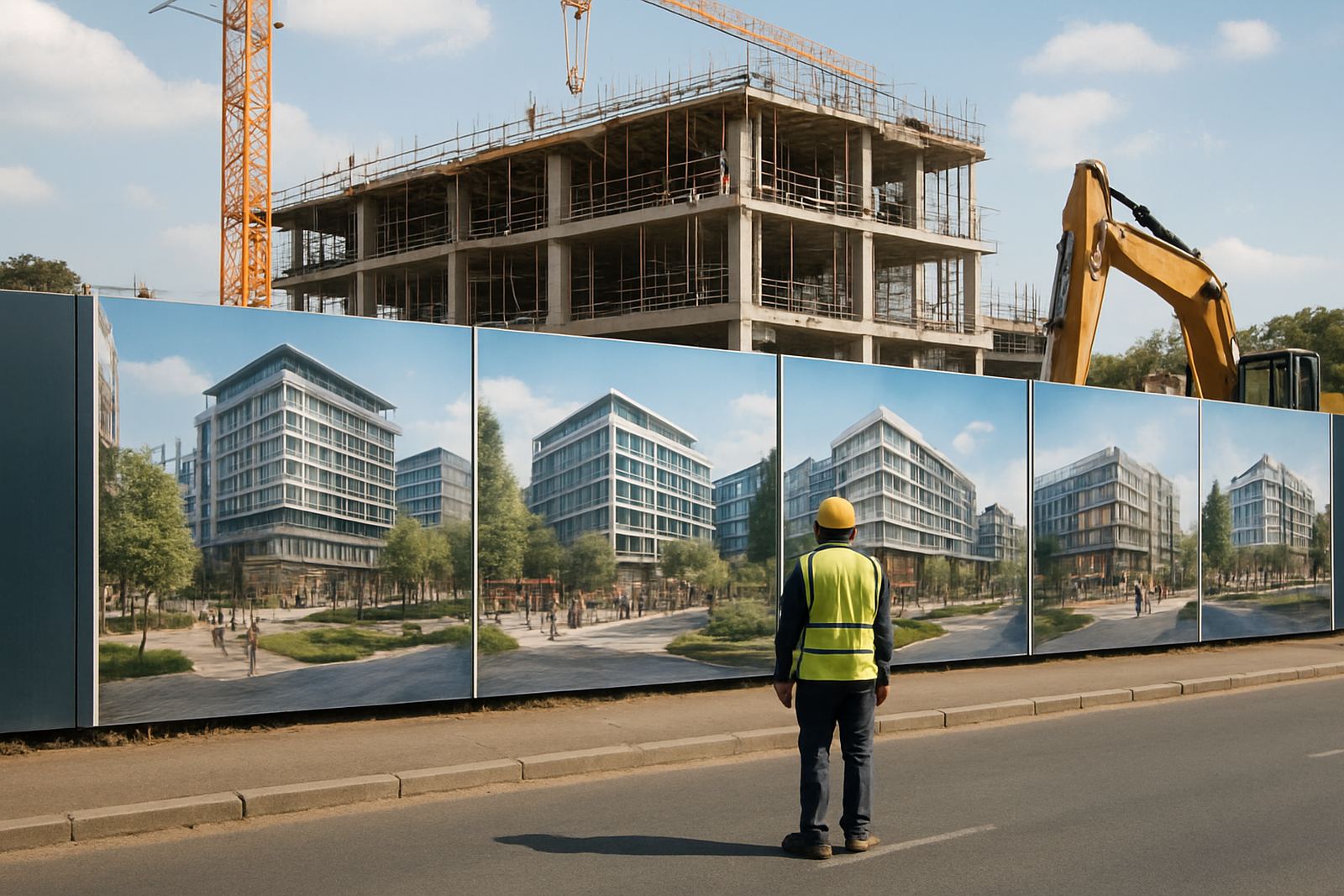
Construction hoardings are temporary or semi-permanent barrier systems fixed around a site boundary to control access, reduce dust spread and give passers-by a clean face while work is underway. On busy streets in Sandton, Midrand or central Pretoria they also carry your project name, renderings, safety notices and leasing messages so the site starts communicating before the building is complete.
We specify hoarding to suit the job, whether you need plain site screening, a branded frontage for a property launch, or a tougher panel system for long programme works. In practice that means matching the panel material, framing, fixing method and sign face to the site conditions, local by-laws and how long the hoarding must stay up. A short fit-out in Randburg is not treated the same as a two-year development on a windy corner in Germiston.
Typical uses include development perimeter screening, retail refurbishment, road-edge protection, municipal works compounds and temporary closures around plant movement. Where a project is near pedestrians or traffic, we also plan for visibility at night, anti-climb detailing and clear sightlines at gates.
Panel sizes, materials and finish options
Construction hoardings can be made in modular bays so the system can follow the actual site line, not just a drawing. Most panels are built in common widths of 1.2 m, 2.4 m or 3.0 m with heights from 2.1 m up to 3.6 m, depending on visibility needs and the approval conditions on the site.
For the skin, we use materials selected for exposure, wind and the expected duration of the project. In Gauteng that often means steel-framed panels with coated sheeting, printed vinyl over smooth board, or aluminium composite facing where a cleaner long-term finish is needed. At coastal jobs such as Durban, we allow for corrosion resistance because salt air will punish untreated metal very quickly.
- Plain hoarding for screening and security
- Printed branded panels for launches and tenant marketing
- Window cut-outs for selected viewing or leasing messages
- Integrated gates, access doors and lockable sections
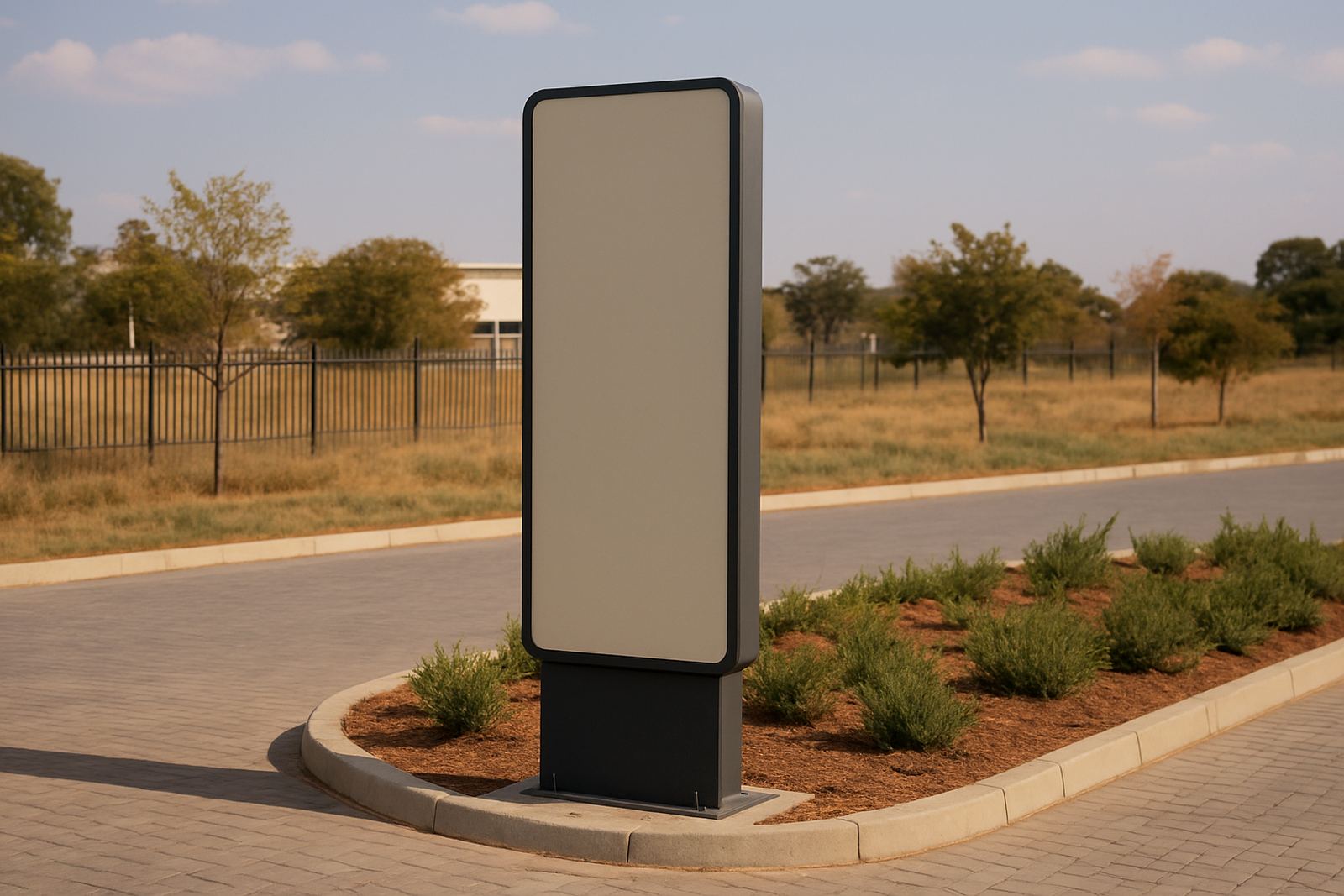
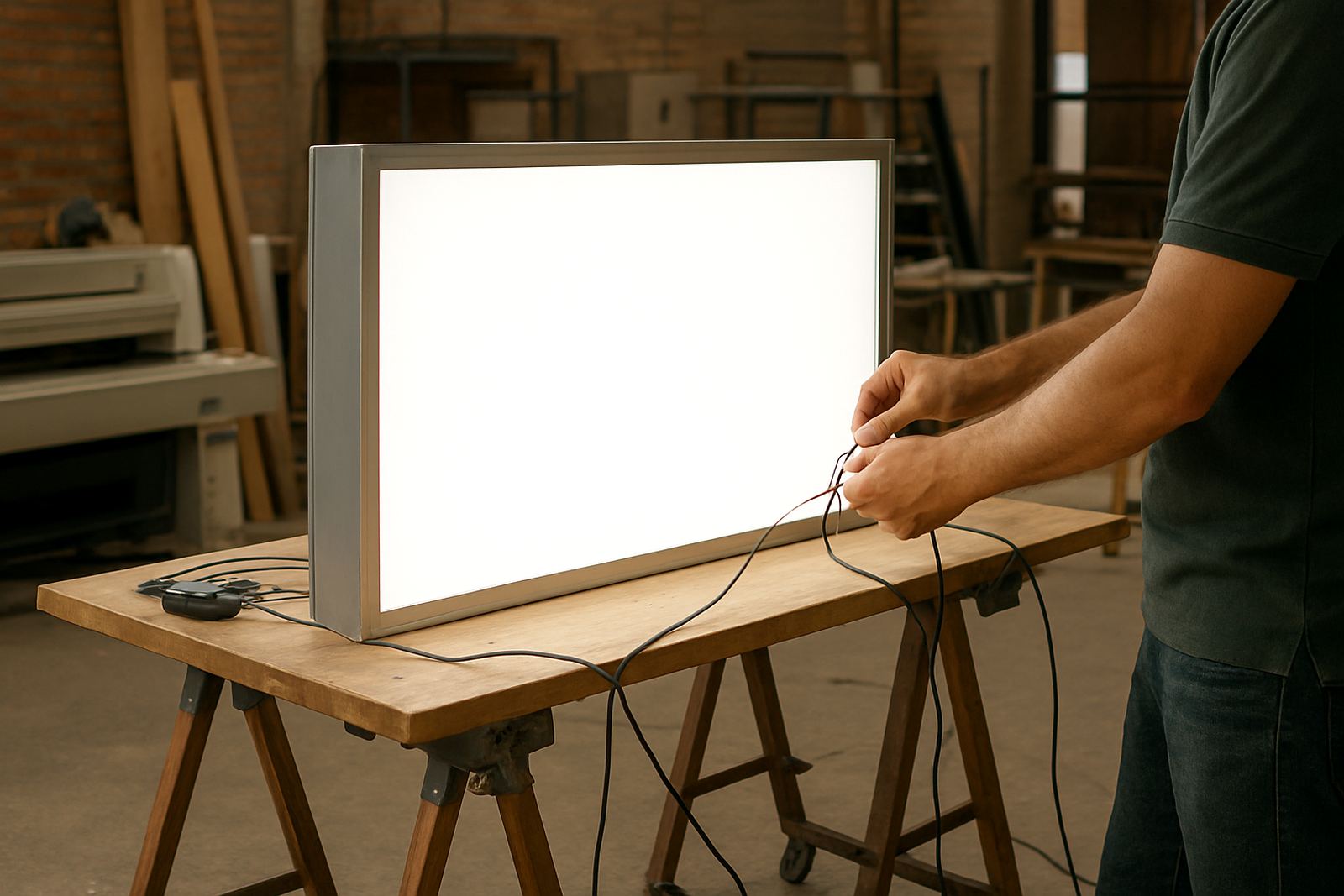
- Illuminated fascia panels where night visibility is important
Finishes can include full-colour printed graphics, matte painted boards, reflective safety strips, cut vinyl lettering or a combination of these. If a development needs a premium frontage, we can incorporate routered Perspex detail, fabricated lettering or aluminium framing to give the hoarding a tidier architectural look.
Where construction hoardings suit best
These systems are practical anywhere a site needs to stay presentable while work continues. They are especially useful along busy public fronts where a developer wants to protect the site and keep the brand visible at the same time. Shopping nodes, office parks, residential estates and municipal sites all benefit from a properly designed perimeter.
Hoardings suit projects with pedestrian exposure, heavy vehicle movement, public-facing leases, and phased construction. They are often used when you need to hide messy works at street level, create a safe buffer between the public and the site, or hold a clear message board for upcoming units, handover dates or direction signage. For sites with strong wind or sloped ground, we detail the fixing and support spacing carefully so the hoarding stays straight and serviceable.
- New developments and apartment blocks
- Retail upgrades and tenant changeovers
- Roadworks, civil works and utility installations
- Commercial refurbishments in active business districts
- Municipal upgrades, transport stops and public works
If a site is near schools, taxi routes or high foot traffic, the messaging needs to be clear and the edges need to be safe. That is where proper planning matters, because a hoarding is not just a billboard. It is a barrier, a permission-controlled structure and a public-facing sign system all in one.
Installation, fixing and power needs
Installation starts with a site survey so we can check ground levels, boundary lines, access points, services and any constraints from the landlord or municipality. We then determine the framing, support spacing, footing requirements and whether the hoarding will be free-standing, tied into existing structure, or anchored to temporary posts. On uneven ground or where there is vibration from nearby roads, we allow for extra bracing and proper leveling.
For standard unlit hoardings, no power is needed. Where the design includes light boxes, LED modules or illuminated tenant panels, we plan the electrical route, isolation points and safe cable protection from the start. If the site uses generators or temporary supply because of load-shedding, we can work with that and keep the electrical demand sensible. Gas is not normally required, although some fabrication processes and site services may involve hot work controls during installation.
Our rigging and installation planning covers access control, working-at-height requirements and after-hours operations where the site cannot be closed during the day. We also coordinate with other contractors so hoarding erection does not block plant movement, deliveries or municipal inspections.
Keeping the panels clean, straight and compliant
Hoardings need regular attention because they sit outdoors in dust, rain, sun and vandal-prone conditions. Printed vinyl can fade if it is not specified correctly, and hardware can loosen if the site takes heavy wind or repeated gate use. We recommend a maintenance plan from the outset, especially for long-duration projects in Johannesburg where dust and seasonal storms are part of the job.
Care usually includes washing the faces, checking fixings, replacing damaged graphics and inspecting gate hinges, posts and bracing. If the site is coastal or exposed to moisture, coatings and fasteners should be checked more often. A clean hoarding also matters commercially, because torn panels or crooked sections make a development look unfinished even when the structure inside is progressing well.
- Wash printed faces with non-abrasive cleaners
- Check for loose screws, popped rivets or damaged framing
- Replace torn vinyl before water gets behind the panel
- Inspect lighting and cable protection after storms
- Keep safety notices current and readable
We can also plan a scheduled service visit to review the condition of the hoarding, update branding as the project moves from excavation to completion, and hand the system over with the right care notes for the client or contractor.
Checks to make before you order 3D letters
Before ordering construction hoardings, it helps to have the basics in place so the panel system fits the site and the approvals do not slow the programme. The more accurate the brief, the cleaner the result and the fewer costly changes later.
Useful information includes the site boundary length, panel height preference, whether the hoarding needs gates or viewing windows, and whether there are any local signage restrictions. You should also confirm the lead time, whether the structure will stay up for a few months or several years, and if the branding must be changed in phases as the development progresses. A project in Centurion with leasing messages may need a different layout from a civic site in Germiston where safety and public direction matter more.
- Exact site measurements and boundary layout
- Required height, access points and gate positions
- Branding content, renders and safety wording
- Wind exposure, ground condition and nearby services
- Approval requirements from the property owner or municipality
- Desired lifespan and maintenance expectation
If you are not sure which panel build suits the site, we can assist with signage strategy, material specification and installation planning so the hoarding is practical from day one. That way the site stays protected and the public sees a proper face while the work continues.
Key facts
| Panel heights | 2.1 m to 3.6 m typical, with custom sizes available |
|---|---|
| Module widths | 1.2 m, 2.4 m and 3.0 m common bay sizes |
| Facing materials | Printed vinyl, coated board, aluminium composite, Perspex detail |
| Frame options | Steel framing with bracing, posts, gates and lockable access |
| Illumination | Optional light boxes, LED graphics or external lighting |
| Application areas | Developments, retail refurbs, roadworks, municipal and commercial sites |