What a frosted manifestation does on glass
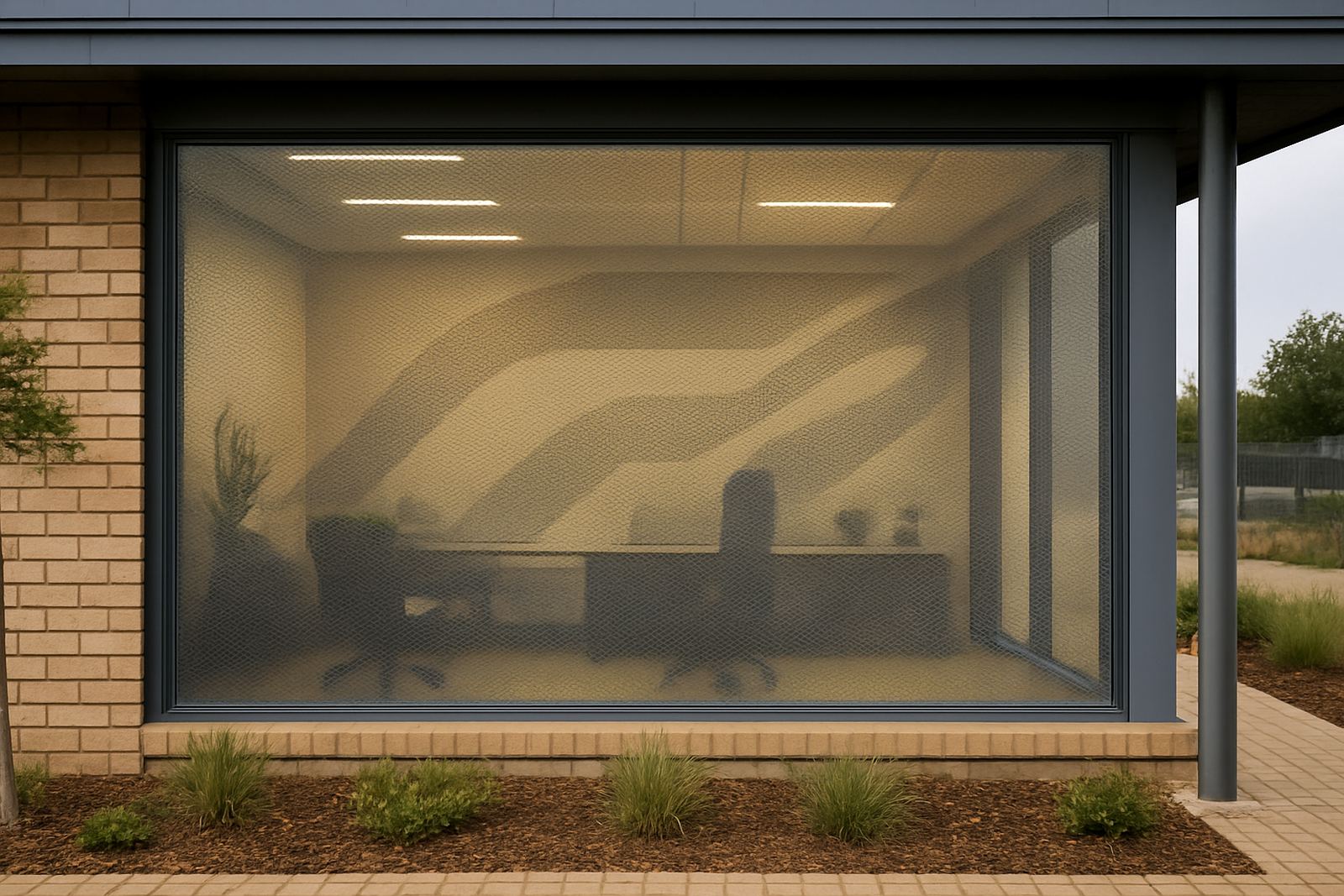
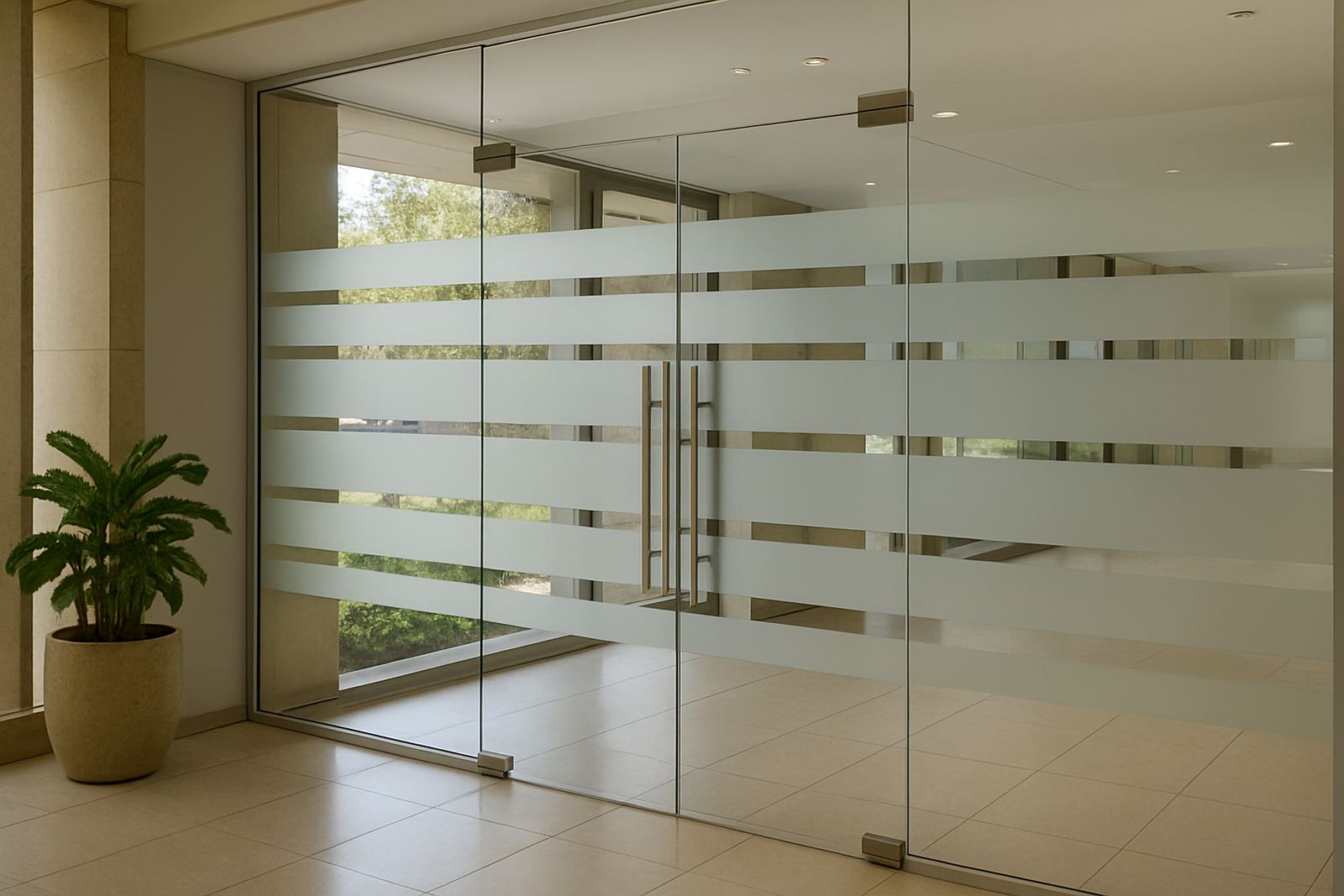
A frosted manifestation is a translucent film, etched-look vinyl or cut graphic fitted to glazing so the surface reads clearly at eye level. It helps prevent collisions, supports privacy in meeting rooms and clinics, and can carry simple branding, opening hours or directional marks without making the glass feel closed in.
In Johannesburg and Pretoria offices, schools, medical rooms and municipal buildings, this is often the first layer of glass treatment we recommend before anything more decorative. It is practical, neat and easy to keep up, which matters when a site has constant foot traffic, winter dust or coastal humidity coming in through open doors. If the glass must still admit light, frost is a better choice than full opaque film.
Sizes, coverage options and design styles
Frosted manifestations can be supplied as small safety markers or full-height panels. We can cut them as bands, blocks, dots, chevrons, wording, logos or a mix of these. For glass doors, a common arrangement is a visible strip at 900 mm to 1 500 mm from finished floor level, with extra marking where handles, seals or vision panels sit.
Typical options include:
- Full-height frosted coverage for private rooms or internal screens
- Partial frosting with clear borders for a lighter look
- Cut-out logos or lettering for branded privacy
- Directional graphics for passageways and reception areas
- Repeat patterns for long runs of glazed partitions
We also match the manifestation to the size of the glass so it does not look cramped. On larger facades, like a retail frontage in Sandton or a public office in Germiston, the proportion of the graphic matters just as much as the message.
Where frosted glass treatments work best
These are suitable anywhere people use glass as a barrier but still need visibility, light or wayfinding. They are common in head offices, training rooms, medical consulting rooms, schools, showrooms, bank branches, reception areas and tenant floors in commercial parks. They also work well on street-facing windows where privacy is needed after hours.
- Internal glass doors and meeting rooms
- Lobby screens and reception walls
- Clinic and medical practice glazing
- Shopfronts and tenant windows facing the street
- Municipal counters and public service areas
- Balustrade glass where safety marking is required
On coastal sites such as Durban, the material choice and edge sealing need more care because heat and humidity can affect adhesion over time. In Gauteng, the bigger challenge is often dust from busy roads and long sun exposure, so we check the orientation before we specify anything.
Installation, power needs and site conditions
Most frosted manifestations are non-electrical and do not need power or gas. They are fitted directly onto clean glass using approved adhesive film or a prepared application method, depending on the finish and whether the site needs temporary or permanent treatment. Where a project includes illuminated signs or adjacent LED screens, we coordinate the glass treatment so access, cable routes and working clearances are properly planned.
Installation usually needs clean, dry glass, a stable working area and enough time for the surface to cure before heavy handling. On active sites we plan around trading hours, security access and municipal rules for public-facing work. If the glass is part of a fire escape route or an emergency exit, the marking must be clear and not interfere with visibility or signage compliance.
For multi-floor buildings in Midrand or Centurion, lift access and loading restrictions can affect the install sequence. We factor that in early so the job does not stall on site, which is a common problem when the project is rushed.
Care, servicing and lifespan
Frosted manifestations are low maintenance. Clean them with a soft cloth, lukewarm water and a mild non-abrasive cleaner. Do not use scourers, harsh solvents or high-pressure washing, because those can lift the edges or dull the finish. If the area is near a kitchen, canteen or public entrance, a routine wipe-down is usually enough to keep it presentable.
Over time, the first signs of wear are usually edge lift, scuffing at door handle height or colour fade on printed elements. If a panel gets damaged, we can replace a section rather than remove the whole run, provided the original artwork was set out properly. That is one reason we encourage accurate measurement and a decent site survey before anything is ordered.
What to check before you order
Before production, we confirm the glass type, the exact dimensions, the height above finished floor level and whether the client wants privacy only or privacy plus branding. It also helps to know if the glass is clear, tinted, sandblasted or already carrying another film. Any existing defects, cracks or old adhesive residue should be noted early so there are no delays on install day.
- Glass size, thickness and finish
- Desired privacy level, from light frost to dense coverage
- Logo files, wording and any corporate colour references
- Door swing, handle positions and adjacent fittings
- Indoor or outdoor exposure, including sun and moisture
- Whether the site needs phased installation after hours
For developments, municipal premises and larger commercial spaces, we also look at visibility from both sides of the glass. What reads well from inside may need adjusting for the public side, especially where the message must be legible at a glance. A proper check now saves rework later.
How Deep3 handles frost work on live sites
Our team manages the full process from measurement and material specification through to fabrication and site installation. Sibusiso Mthembu oversees the project direction, while Leanne van Wyk, Sakhile Motsepe, Thandiwe Ndlovu, Riaan Smit and Omolemo Msiza handle operations, engineering, visual setup, production and rigging coordination. That matters when a glazed space sits inside a live office, a retail environment or a public building with limited access.
We work from Modderfontein and service Sandton, Randburg, Germiston, Pretoria, Centurion, Midrand and Durban, with projects across Gauteng and the rest of Africa. Whether the brief is a simple safety strip on a door or a full privacy treatment across a glazed office stack, the aim is the same: make the glass safer, cleaner and easy to maintain, without overcomplicating the job.
Key facts
| Product type | Frosted manifestation for glass partitions, doors and windows |
|---|---|
| Material options | Frosted vinyl, translucent adhesive film, printed frost and cut graphics |
| Typical thickness | 65 to 100 micron film, depending on finish and application |
| Standard sizes | Custom cut to glass size, with common door band heights of 900 mm to 1 500 mm |
| Use areas | Internal glazing, shopfronts, reception spaces, clinics, schools and public counters |
| Power or gas requirement | None for the film itself |