Start with the purpose of the glass
The first question is simple: what must the glass do every day? In a Sandton office you may need privacy for meeting rooms, while a retail front in Midrand may need passing foot traffic to see the offer inside. On a factory admin block in Germiston, the same glazing might need glare control, safety marking and a cleaner look. If you choose the film before you decide the purpose, you can end up with a finish that looks fine on day one but fails in practice.
We usually separate the job into four uses: privacy, branding, directional control and solar or glare reduction. One film can sometimes do two jobs, but not always well. Frosting gives privacy and a neat neutral look. Printed graphics give strong branding and can cover only selected areas. One-way vision helps you work with outward visibility and inward screening, although it depends on lighting. That last bit is often misunderstood by clients, especially on shopfronts with bright interiors at night.
- Ask who must see in and who must see out.
- Decide whether the film is for branding, privacy, safety, or all three.
- Check if the glass gets direct sun or heavy interior lighting.
- Note if the application is indoors, outdoors, or on a vehicle window.
When frosting is the right choice
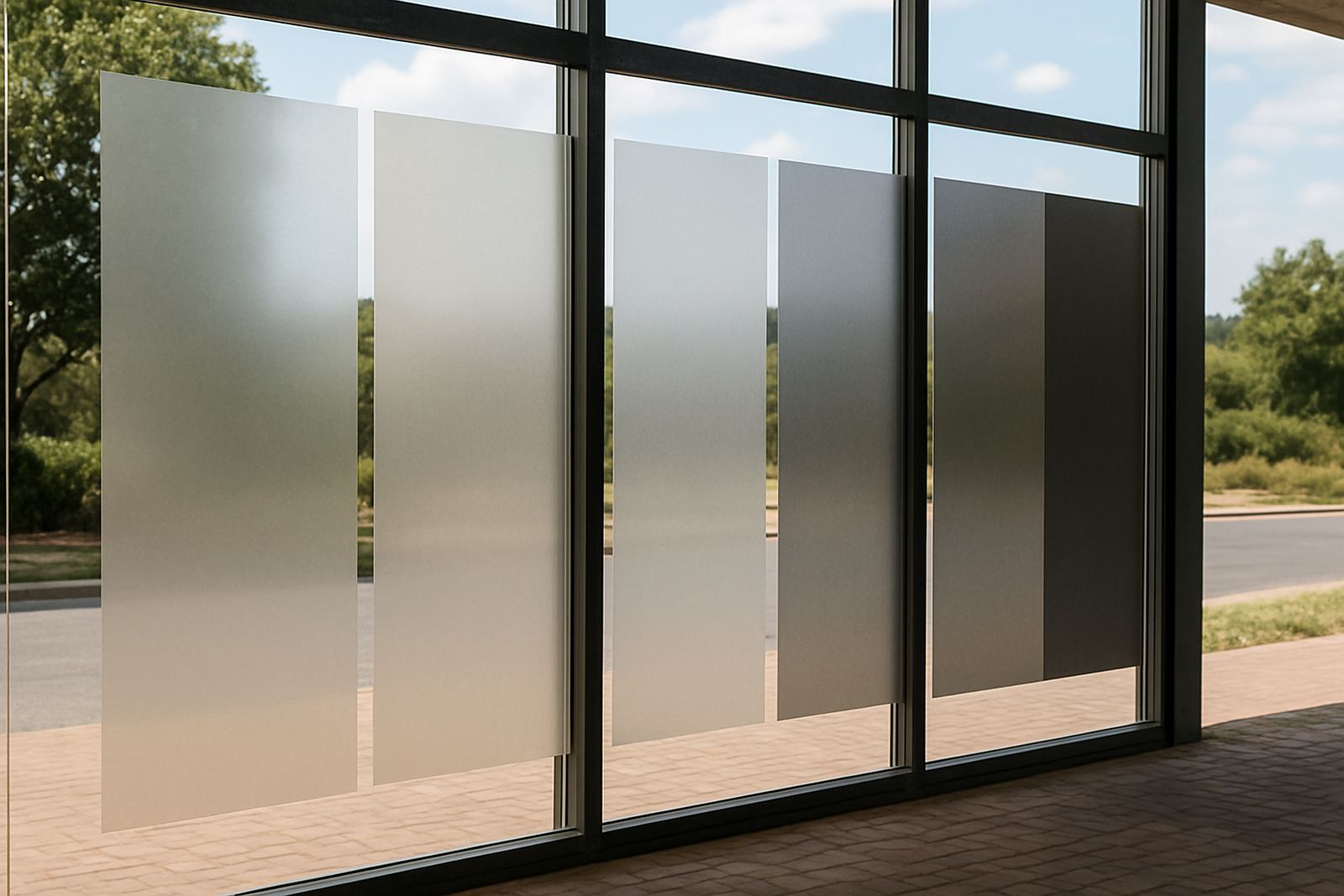
Frosted film is the safest starting point when you want privacy without making the space feel closed in. It works well on boardrooms, partition walls, reception areas and street-facing windows where natural light must stay in. In Pretoria and Centurion we often specify frosting for offices that need a tidy, professional finish without turning the glazing into a dark block.
It can be cut into bands, full panels, logos or simple patterns. That means it is not only for plain privacy, it can also carry a subtle brand mark. If you need consistent spacing and clean edges, the installation has to be measured carefully because small misalignments are easy to see on glass. Frosting also helps hide clutter behind the glass, which is useful in shops and admin spaces where storage sits close to the front. In humid coastal areas like Durban, it is worth checking edge adhesion and cleaning methods so the film lasts well.
- Best for privacy where daylight must stay.
- Good for meeting rooms, internal partitions and reception fronts.
- Can be plain, patterned, or cut with logos.
- Works well where you want a calmer look, not advertising.
When printed graphics make more sense
Printed window graphics are the better option when the glass must sell, direct or explain something. This is the choice for promotions, project branding, office names, safety messages and wayfinding on glazed areas. A printed graphic can be fully opaque, partly see-through, or combined with clear spaces for visibility. If a developer needs hoarding-style messaging on a show unit or a municipality needs public information on a customer service centre, print gives far more flexibility than plain frosting.
It is also the best route when colour matters. Matching a corporate colour on glass can support the rest of the signage package, from pylons to reception signs. The print must be planned with the viewing distance in mind. Text that reads well at 2 metres may disappear at 10 metres if the contrast is weak. On larger glass areas, especially along roads in Johannesburg, we also check how sun angle and reflections affect readability during the day. Small typo here and there is not the goal, but the layout should still stay clean and readable.
- Choose print when the film must communicate a message.
- Use strong contrast for road-facing or high-glare windows.
- Allow for viewing distance, not just close-up appearance.
- Specify whether the graphic is full coverage or partial coverage.
One-way vision film and where it fails
One-way vision film is often used on shopfronts, vehicle windows and street-facing glass where you want people inside to see out while those outside see the graphic face. It can work very well in the right conditions, but it is not a magic solution. Visibility depends on light levels, and the rule is easy to remember: the brighter side is the side people see less through.
That means a brightly lit interior at night can reduce privacy, while a dim interior in daylight can reduce outward clarity. For this reason, one-way vision is best for controlled environments where lighting can be managed. It is popular on buses, fleet vehicles, security rooms and retail windows that need both branding and some outward visibility. On dusty industrial sites, regular cleaning matters because perforations can pick up dirt and reduce the effect. If the film is used on a vehicle, the glass curve and window heating elements must be checked before production starts.
- Best where there is a clear light difference between inside and outside.
- Works well for vehicles, retail windows and controlled office areas.
- Not ideal if the interior is always brighter than the outside.
- Needs more maintenance than solid film because dirt affects performance.
A practical site checklist before you order
Before anything is cut, the site should be measured and checked properly. In Gauteng, dust, heat and load-shedding can all affect timing and installation conditions. If the surface is on new glass, make sure construction dust and sealant are fully cleared. If the site is operational, confirm access hours, security rules and whether installation must happen after trading or before first opening. For municipal sites, approval requirements can also shape what can be shown, how big it may be, and where it can sit on the glass.
A good checklist saves repeat visits and avoids wasted material. It also helps the sign off process when several people are involved, such as property managers, tenants and municipal stakeholders. We often ask for window schedules, site photos from inside and outside, and any power or lighting details if the film sits near illuminated signage. The more precise the brief, the fewer surprises on site and the cleaner the finish.
- Measure every panel separately, not as one guessed total.
- Confirm glass type, tint, curves and any existing film.
- Check access, working hours and safety restrictions.
- Confirm if the finish must be removable later.
How Deep3 helps you choose the right film
Across Modderfontein, Johannesburg, Sandton, Midrand, Randburg, Germiston, Pretoria, Centurion and Durban, we assess the full signage picture rather than only the film itself. That means considering how window film works with wayfinding, light boxes, fabricated lettering, external signs and any nearby LED screens. Where film is used on a retail frontage or in a developer sales suite, the finish needs to support the full frontage instead of competing with it.
We handle signage strategy, site surveys, design development, material specification, approval support, fabrication management and installation management. For clients who need more than a basic decorative finish, this helps keep the result practical from first measurement to final handover. Whether the goal is privacy in a boardroom, branding on a shopfront or visibility control on vehicle glass, the right film should suit the space, the budget and the maintenance plan.
If you are unsure between frosting, printed graphics and one-way vision, start with the question of function. Once that is clear, the right material usually becomes obvious.