Start with the surface, not the design
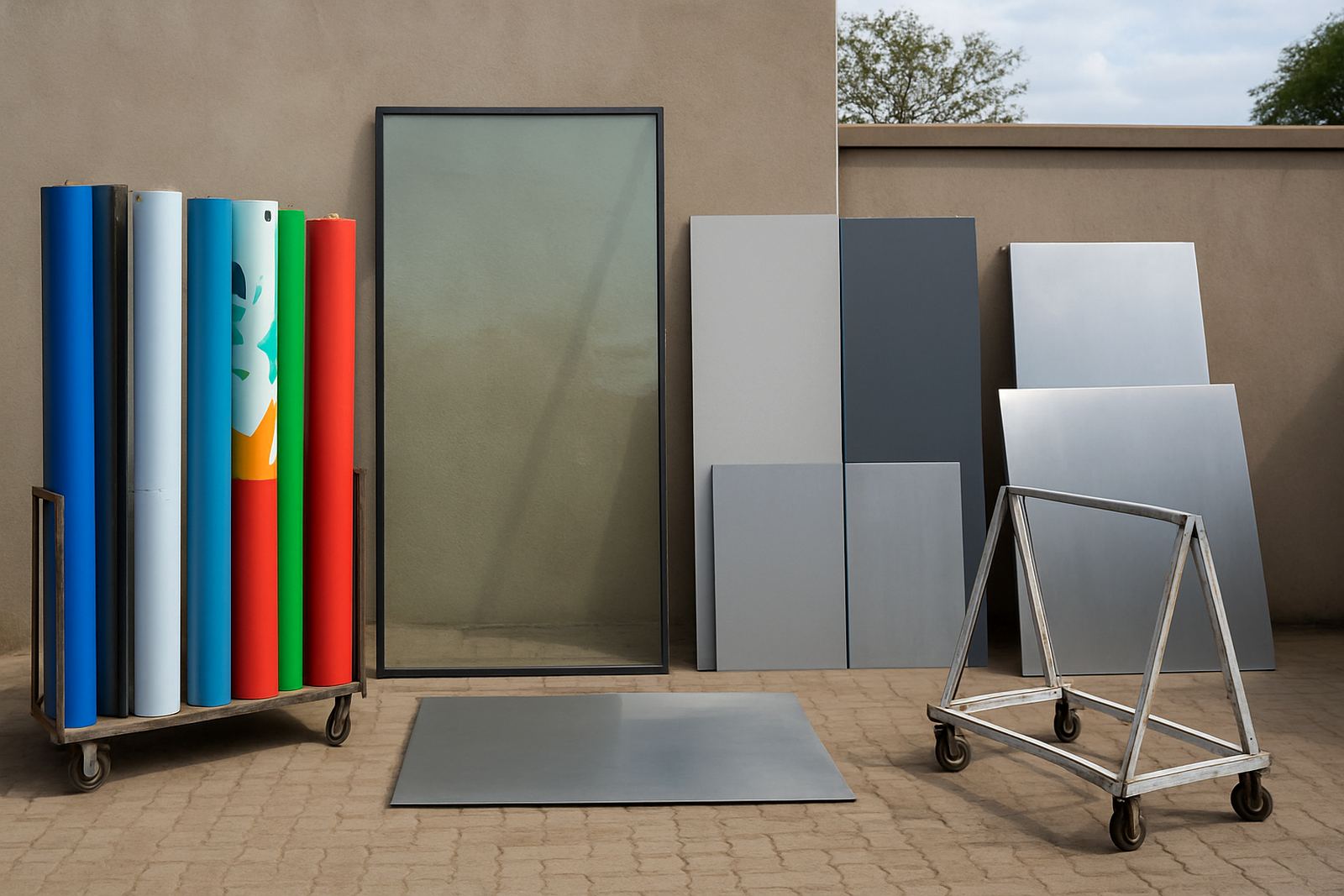
The first question is not what the graphic should look like, but where it must stick and how it will be used. Smooth glass, painted walls, aluminium panels, corrugated sheets and vehicle panels all behave differently. A vinyl that holds well on a flat indoor wall may fail on a dusty site hoarding or on a truck that sees daily vibration and sun.
For Johannesburg and the surrounding areas, temperature swings matter too. Morning chill, midday heat and dust can affect adhesive grab, especially on outdoor work in Midrand, Germiston or Pretoria. On coastal jobs further afield, humidity and salt air add more pressure, so material choice and edge sealing become even more important.
- Check whether the surface is smooth, textured, curved or riveted.
- Confirm if the application is indoor, outdoor or on a moving vehicle.
- Ask how long the vinyl must stay up before replacement.
- Note any cleaning, heat or weather exposure the surface gets.
When printed vinyl makes sense
Printed vinyl is the practical choice when you need full colour artwork, gradients, photos or detailed branding. It suits shopfront graphics, wall murals, temporary promotions, event branding and large site boards where the message needs impact at a distance. If the artwork carries a lot of visual detail, printed vinyl usually gives the cleanest result.
Choose the finish based on the setting. Gloss can give strong colour on interior panels, while matt helps reduce glare on bright exterior walls and glass. For longer outdoor runs, ask about UV resistance and a protective laminate. That extra layer can help the print last better in strong sun and on exposed façades.
Printed vinyl also works well when a project needs colour matched panels across several branches. A consistent graphic system is easier to maintain than trying to repaint signs every few months. For developments, retail centres and municipal sites, that consistency matters.
- Best for full colour logos, images and detailed layouts.
- Useful for short to medium term campaigns and permanent branding.
- Can be laminated for extra scuff and weather resistance.
- Suitable for flat panels, hoardings and glass with the right adhesive.
Use cut vinyl for cleaner, simpler messages
Cut vinyl is the right fit when the message is simple and you want crisp lettering, logos or directional information. It is common on office doors, windows, directional signs, site notices and retail fascia panels. Because the vinyl is cut to shape rather than printed, you get sharp edges and a neat finish that works well for text-led signage.
This option is often more cost-effective for single colour wording and wayfinding. It also tends to suit corporate spaces where a restrained look is needed. For example, unit numbers, department names, opening hours and directional arrows can be done neatly in cut vinyl without overcomplicating the sign face.
Colour choice should take into account contrast and visibility. Dark lettering on light glass, or light lettering on dark panels, improves legibility. On busy roads in Sandton or Randburg, a sign that reads clearly in a second is more useful than one with too many colours. It is simple, but it must be planned properly.
Choose perforated vinyl for glass with visibility both ways
Perforated vinyl is designed for glass areas where you want outward branding without completely blocking the view from inside. It is commonly used on office windows, retail fronts, fleet windows and customer-facing areas where privacy helps but daylight still matters. From outside, the printed face carries the message. From inside, people can still see out through the small perforations.
It is important to understand the lighting conditions. During the day, perforated vinyl performs well because the outside is brighter than the inside. At night, if the interior lights are on and the exterior is dark, the effect reverses and the view through the glass changes. For this reason, it is not a privacy solution in every setting, so the use case must be checked carefully.
- Best for glass façades, windows and vehicle glass.
- Useful when you want branding without losing too much natural light.
- Works best where daytime visibility from outside is the priority.
- Needs careful sizing and edge finishing to avoid lifting.
Match the adhesive and finish to the job
The adhesive is as important as the printed face. Permanent adhesive suits long-term branding, while removable options are better for promotions, leased premises or seasonal campaigns. On painted walls, some finishes may leave residue or pull paint if the surface was poorly prepared, so that must be checked before installation. On glass, a clean surface and correct curing time are essential.
Finishes also affect performance. Matt is usually better for readability and reduced glare. Gloss can add punch to colour but may reflect too much in strong sun. For outdoor work in areas with heavy dust or regular washing, a protective laminate can help protect the surface from scratches and cleaning wear. If the vinyl will be exposed to equipment, foot traffic or frequent handling, do not skip that step.
Preparation matters too. Surfaces should be dry, clean and free of dust, polish or old adhesive. A rushed application on a dirty surface often fails early, and that costs more in the long run than doing it properly first time.
A practical checklist before ordering vinyl signage
Before signing off on vinyl signage, work through the practical details. This avoids expensive reprints and helps the finished sign do its job on site. It also gives the installer the information needed for accurate sizing, material selection and timing.
- What surface is the vinyl going onto, and is it flat or curved?
- Will the sign be indoors, outdoors or on a moving vehicle?
- How long must it last before replacement or redesign?
- Is the message full colour, single colour or partially translucent?
- Will the sign need privacy, visibility through glass, or both?
- Are there municipal or site approval rules to allow for?
- Is there a need for aftercare, maintenance or replacement panels later?
For projects in Modderfontein, Johannesburg, or across Gauteng and the rest of Africa, these basics help keep vinyl signage practical and cost-controlled. Whether the job is a shop window in Centurion, a hoarding in Midrand or a fleet marking in Durban, the right vinyl starts with the right brief.